road-trip

Best Time to Drive Patagonia: Month-by-Month Guide for Self-Drive Road Trips

Discover the best time to drive through Patagonia with our detailed month-by-month guide covering weather, road conditions, crowds, and pricing for optimal road trip planning.

PatagoniaHub Team
21 min read
January 6, 2026

Best Time to Drive Patagonia: Month-by-Month Guide for Self-Drive Road Trips

Choosing when to embark on your Patagonia road trip is one of the most critical decisions you'll make—it directly impacts weather conditions, road accessibility, crowds, prices, and the overall experience. Unlike many destinations where the "best time" is straightforward, Patagonia presents a nuanced decision matrix where each season offers distinct advantages and challenges.

This comprehensive month-by-month guide provides the detailed information you need to make an informed decision based on your priorities, budget, and tolerance for crowds versus solitude, comfort versus adventure.

Understanding Patagonia's Seasons

Patagonia's location in the Southern Hemisphere means seasons are reversed from North America and Europe:

Season Months Characteristics
Summer Dec - Feb Warmest, longest days, peak tourist season
Fall Mar - May Cooling, shoulder season, changing colors
Winter Jun - Aug Cold, short days, many services closed
Spring Sep - Nov Warming, shoulder season, wildflowers

What Makes Patagonia Unique

Unlike typical seasonal patterns, Patagonia presents several unique characteristics:

Wind Dominance: Wind is the defining weather element in Patagonia, often more significant than temperature. Summer paradoxically brings the strongest winds (peak in January-February), while fall and spring can actually be calmer.

Extreme Daylight Variation: In peak summer (December-January), you'll have 18-20 hours of daylight, allowing driving until 10 PM. In winter, daylight shrinks to just 8-10 hours, severely limiting daily driving range.

Microclimates: Patagonia spans Chilean rainforests to Argentine deserts. Weather in Puerto Natales (wet, cool) differs dramatically from El Calafate (dry, warmer), even when just 250 km apart.

Weather Unpredictability: Patagonian weather is famously volatile. "Four seasons in one day" is not a cliché—it's reality. Even in summer, be prepared for sudden rain, wind shifts, or temperature drops.

January: Peak Summer - Best Weather, Biggest Crowds

January represents the absolute peak of Patagonia's tourism season—and for good reason.

Weather Conditions

Temperature Ranges:

  • Daytime highs: 18-25°C (64-77°F) in eastern Patagonia
  • Daytime highs: 12-18°C (54-64°F) in western/mountainous areas
  • Nighttime lows: 5-10°C (41-50°F)

Wind: Strongest of the year. Expect sustained 50-100 km/h (30-60 mph) winds regularly, with gusts exceeding 120 km/h (75 mph). The famous Patagonian wind reaches its peak intensity.

Precipitation: Low rainfall in Argentine Patagonia (10-30mm monthly), moderate in Chilean Patagonia (40-70mm). Brief afternoon storms possible but generally sunny.

Daylight: 18-20 hours. Sunrise around 5:30 AM, sunset around 10:30 PM. This extended light is a massive advantage for road trips—you can drive comfortably until late evening.

Road Conditions

All roads open and fully accessible. Gravel roads are dry and well-maintained. No snow or ice concerns except at extreme high elevations. Ferry schedules operate at maximum frequency. The Carretera Austral is entirely accessible.

Crowds and Availability

Tourist numbers peak in January, especially in Torres del Paine and El Chaltén. Popular viewpoints often crowded at midday. Accommodation books 2-3 months ahead. Rental car prices reach annual highs. Ferry bookings highly competitive.

Highlights and Activities

Summer wildflowers still blooming in early January. Penguins visible at rookeries. Long daylight perfect for photography. Wildlife most active. All hiking trails fully open. Water sports and kayaking ideal.

Costs

Car rental: 600-1,000+ USD/week for SUV. Accommodation: 150-300 USD/night mid-range. Fuel prices normal. Park entry fees applied. Restaurant meals: 30-50 USD.

Best For

First-time visitors, families, those prioritizing guaranteed good weather and all amenities. Photographers seeking long daylight hours.

Verdict

Best overall conditions, highest prices and crowds. Go if you have limited time flexibility or want guaranteed open roads. Expect company at popular sites and prices 40-60% above shoulder season.


February: Still Summer - Excellent Conditions, Slightly Less Crowded

February maintains summer conditions while crowds begin thinning slightly as international visitors return to work.

Weather Conditions

Temperature Ranges:

  • Daytime highs: 18-24°C (64-75°F)
  • Nighttime lows: 6-10°C (43-50°F)

Wind: Still very strong, though peaks slightly lower than January. Sustained 45-90 km/h (28-56 mph) with 100+ km/h gusts common. Remaining very manageable with proper techniques.

Precipitation: Similar to January—generally dry with occasional afternoon storms. Argentine Patagonia remains drier.

Daylight: Still 17-19 hours. Sunset around 10 PM. Excellent for late-day drives.

Road Conditions

Perfect. All routes open, gravel roads maintained, no weather-related closures.

Crowds and Availability

Tourist numbers declining from January peak but still high. Popular sites busy but slightly more breathing room. Accommodation still requires advance booking. Rental cars available but prices remain elevated.

Highlights and Activities

Wildflowers declining but still present. Chinstrap penguins visible. Lambing season ongoing (young guanacos visible). Excellent hiking conditions. Wildlife photography exceptional.

Costs

Car rental: 500-850 USD/week. Accommodation: 120-250 USD/night. Slightly lower than January but still expensive.

Best For

Those seeking excellent weather without absolute peak-season crowds. Budget travelers flexible on dates can find slight savings.

Verdict

Best balance of weather, crowds, and price. Consider February if January feels too crowded or if seeking marginal savings. A sensible peak-season choice.


March: Early Fall - Golden Shoulder Season

March offers spectacular autumn scenery, decent weather, and significantly fewer tourists than summer.

Weather Conditions

Temperature Ranges:

  • Daytime highs: 16-22°C (61-72°F)
  • Nighttime lows: 3-8°C (37-46°F)

Wind: Moderating from summer peak. 35-70 km/h (22-44 mph) sustained, with gusts to 90-100 km/h (56-62 mph). Calmer than January-February but still substantial.

Precipitation: Increasing slightly. Argentine Patagonia remains dry (40-60mm), Chilean Patagonia moderate (70-100mm). More overcast days.

Daylight: 15-16 hours. Sunrise 6:30 AM, sunset 9:30 PM. Still excellent for photography.

Road Conditions

Excellent. All roads open and well-maintained. Occasional rain but no weather-related closures. Gravel roads still dry.

Crowds and Availability

Crowds drop 40-50% from summer peaks. Accommodation readily available. Rental cars abundant. No need for advance bookings at most sites. Ferry reservations less critical.

Highlights and Activities

Autumn colors peak—lenga trees turn brilliant reds and oranges. Guanacos more visible. Photography conditions exceptional with dramatic fall clouds. Fewer crowds at popular viewpoints. Weather still reasonable for hiking.

Costs

Car rental: 350-600 USD/week (30-40% cheaper than peak). Accommodation: 80-150 USD/night. Restaurant meals: 20-35 USD. Significant savings compared to summer.

Best For

Budget travelers, photographers seeking dramatic fall colors, those avoiding summer crowds. Ideal for 2-3 week trips.

Verdict

Excellent value and conditions. March is the sweet spot for many travelers—weather still good, prices drop significantly, crowds vanish. Shoulder season at its best.


April: Late Fall - Quiet but Unpredictable

April transitions from fall to early winter. Weather becomes increasingly variable. Some services begin closing.

Weather Conditions

Temperature Ranges:

  • Daytime highs: 12-18°C (54-64°F)
  • Nighttime lows: -2 to 3°C (28-37°F)

Wind: Continuing to moderate. 30-60 km/h (19-37 mph) sustained. More calm periods possible.

Precipitation: Increasing significantly. Argentine Patagonia 60-100mm, Chilean Patagonia 120-180mm. Snow possible on high passes (though rare at lower elevations).

Daylight: 13-14 hours. Sunset around 8 PM. Noticeably shorter days limiting driving time.

Road Conditions

Generally good but weather-dependent. High mountain passes occasionally close due to snow, requiring route flexibility. Gravel roads can be wet. Check forecasts daily.

Crowds and Availability

Very quiet. Tourist season winding down. Many accommodations and restaurants closing for off-season. Limited services in smaller towns. Still affordable but reduced availability.

Highlights and Activities

Fall colors fading. Reduced wildlife visibility. Fewer tourists means solitude and authentic encounters. Weather unpredictable—prepare for rain, wind, and possible cold.

Costs

Car rental: 250-450 USD/week. Accommodation: 50-100 USD/night. Restaurant options limited. Rock-bottom prices but reduced choices.

Best For

Budget travelers comfortable with uncertainty. Those seeking complete solitude. Flexible itineraries that can adapt to weather.

Verdict

Budget option with adventure risk. April works for experienced travelers and good weather gamblers. Not ideal for first-timers or those with rigid itineraries. Plan flexibility is essential.


Winter in Patagonia is extreme. Most travelers and services vanish. Severe weather dominates. Most roads remain passable but conditions are challenging.

General Winter Characteristics

Temperature Ranges:

  • Daytime highs: 4-12°C (39-54°F)
  • Nighttime lows: -5 to 0°C (23-32°F)
  • Wind chill makes it feel much colder

Wind: Often calmer than summer, but consistently biting. 20-50 km/h (12-31 mph) typical. When it gusts, exposed areas become dangerous.

Precipitation: Heavy rainfall and frequent snowfall at higher elevations. Southern Carretera Austral often impassable. Road closures common due to snow.

Daylight: Extremely short. June-July only 8-10 hours. Early darkness limits daily driving. Requires realistic expectations about daily mileage.

Road Conditions by Area

Ruta 40 (Argentine): Generally passable but requires careful driving. Paved sections usually clear quickly. Occasional closures from heavy snow.

Carretera Austral: Southern section risky. Northern paved sections manageable. Ferry frequency reduced or suspended. Villa O'Higgins access often closed June-August.

Torres del Paine: Accessible but weather brutal. Park roads open but wind extreme. Viewing conditions often poor.

Winter Specifics

  • Rental cars harder to find; limited winter-ready vehicles
  • Many hotels close May-September
  • Restaurant options drastically reduced
  • Shorter daylight severely limits driving distances
  • Snow chains often required
  • Northern lights possible June-August (but rarely visible due to clouds)
  • Absolute solitude—few other travelers

Costs

Car rental: 150-300 USD/week (if available). Accommodation: 30-60 USD/night (if open). Rock-bottom prices but minimal services.

Best For

Experienced winter drivers seeking extreme solitude. Ski enthusiasts. Those with specific winter adventure goals.

Verdict

Not recommended for standard road trips. Winter is extreme. Only consider if you're experienced in winter driving, have flexible itineraries, and accept that many roads may be closed. Summer roads become your only option.


October: Spring Awakening - Budget Choice

October marks spring's arrival. Weather warms. Wildflowers emerge. Tourist infrastructure begins reopening.

Weather Conditions

Temperature Ranges:

  • Daytime highs: 10-16°C (50-61°F)
  • Nighttime lows: 0-5°C (32-41°F)

Wind: Moderate but can be gusty. 35-65 km/h (22-40 mph) typical. Spring winds can arrive suddenly as weather systems move through.

Precipitation: Decreasing from winter. 50-100mm rainfall typical. Snow on high passes occasional but not common.

Daylight: 14-15 hours. Sunrise around 7 AM, sunset around 8:30 PM. Growing daily.

Road Conditions

Generally good but variable. Most roads open but occasional high-altitude closures possible from late snow. Gravel roads can be wet. Spring weather means daily forecast checking necessary.

Crowds and Availability

Minimal tourists. Tourist season just beginning. Hotels reopening. Rental car prices recovering from winter lows. Ferry service resuming full schedules.

Highlights and Activities

Spring wildflowers emerging—calafate, ñirre, lenga. Guanacos with young. Early birds returning. Clear air after winter storms. Growing daylight for photography. Weather unpredictable but improving.

Costs

Car rental: 300-500 USD/week. Accommodation: 60-120 USD/night. Restaurant meals: 15-25 USD. Excellent value.

Best For

Budget travelers, those accepting weather variability. Perfect for flexible itineraries. Photographers seeking spring blooms and early light.

Verdict

Great value with adventure factor. October is underrated. Weather improving daily. Crowds minimal. Prices excellent. Plan flexibility is important.


November: Prime Shoulder Season

November combines spring weather with increasingly reliable conditions. Tourist season building but not yet overwhelming. This is arguably the best month for most travelers.

Weather Conditions

Temperature Ranges:

  • Daytime highs: 14-20°C (57-68°F)
  • Nighttime lows: 3-8°C (37-46°F)

Wind: Moderate. 35-70 km/h (22-44 mph) typical. More stable than October or March but still substantial.

Precipitation: Low rainfall. Argentine Patagonia 30-60mm, Chilean Patagonia 70-120mm. Mostly sunny days.

Daylight: 16-17 hours. Sunrise around 6 AM, sunset around 9:30 PM. Excellent for photography and driving.

Road Conditions

Excellent. All roads open and well-maintained. No weather-related closures expected. Gravel roads dry.

Crowds and Availability

Building but still reasonable. Tourism season ramping up but not yet summer peaks. Accommodation available with advance booking. Rental cars plentiful. Good balance between availability and price.

Highlights and Activities

Spring wildflowers at peak—lupins, orchids, calafate flowers throughout region. Lambing season—young guanacos, rheas, foxes visible. Long daylight perfect for photography. Hiking trails opening fully. Best light of the year—low-angle sun all day.

Costs

Car rental: 400-650 USD/week. Accommodation: 90-180 USD/night. Restaurant meals: 20-35 USD. Good value before peak season.

Best For

Most travelers. First-timers. Photographers. Those seeking balance of good weather, reasonable crowds, and decent pricing. Highly recommended.

Verdict

Arguably the best month. November combines excellent weather, beautiful scenery, fewer crowds than January-February, and much better conditions than shoulder seasons (March-April, October). Often considered the optimal choice.


December: Summer Begins - Rising Crowds and Prices

December marks summer's official start. Weather warming but not yet at January-February extremes. Prices and crowds beginning their surge.

Weather Conditions

Temperature Ranges:

  • Daytime highs: 16-22°C (61-72°F)
  • Nighttime lows: 4-8°C (39-46°F)

Wind: Strong but not yet January peaks. 40-80 km/h (25-50 mph) sustained. Increasing through month.

Precipitation: Low rainfall. Argentine Patagonia 10-30mm, Chilean Patagonia 40-70mm. Generally sunny.

Daylight: 17-20 hours. Sunrise before 5:30 AM, sunset after 10 PM by month-end. Excellent for long drives.

Road Conditions

Perfect. All roads open and accessible. Ferry schedules increasing. No weather-related concerns.

Crowds and Availability

Tourist numbers building rapidly, especially final weeks. December prices climb toward January levels. Early December better than late December. Accommodation harder to reserve. Rental car availability tightening.

Highlights and Activities

Late wildflowers still visible early December. Summer season amenities fully operational. Long daylight for photography. Weather warming. Peak wildlife activity. Hiking conditions excellent.

Costs

Car rental: 500-800 USD/week (increasing through month). Accommodation: 120-200 USD/night. Restaurant meals: 25-40 USD. Prices approaching January levels by month-end.

Best For

Those planning January-February trips but arriving earlier for slightly better prices. Those with work calendars dictating late-year travel.

Verdict

Transition month. December combines summer conditions with below-summer pricing (especially early December). Good choice if January-February fully booked but weather critical. Good value early month.


Best Months by Activity

Best for Hiking and Trekking

November, December, January: Long daylight hours, warmer temperatures, all trails fully open. March also excellent with fewer crowds and beautiful weather. Summer months offer longest days; shoulder seasons offer fewer crowds.

Best for Photography

November, March, April: Low sun angle all day provides dramatic light. Fall colors (March-April) and spring flowers (October-November) offer vibrant subjects. Fewer crowds mean cleaner compositions at popular viewpoints.

Best for Wildlife Viewing

November through March: Peak activity period. Spring (November) brings young animals. Summer (December-February) offers consistent visibility. Fall (March) sees active feeding before winter.

Best for Wildlife Photography

October-November or March-April: Lower sun angles create better light. Fewer tourists mean bolder wildlife behavior. Clearer air in fall. Spring brings new animals.

Best for Solitude and Adventure

April, October, May (early): Tourist season off-peak. Quiet roads and empty viewpoints. Prepare for weather variability and reduced services.

Best for Whale Watching (off-season)

November-March: Peak season for southern right whales and humpbacks near Peninsula Valdés (requires detour north of traditional Patagonia route).

Best for Budget Travel

April-May, September-October: Cheapest accommodation and rentals. Services limited but functional. Trade-off between price and comfort.

Best for Casual Road Trips

November-February: Most reliable weather, all amenities open, good value in November-December.


Months to Avoid

Definitely Avoid

June-July: Shortest days (8-10 hours), coldest temperatures, many services closed, depressing weather. Northern lights theoretically possible but rarely visible due to clouds.

Avoid Unless Experienced

May, August-September: Winter's tail end with weather still severe. Services operating limited hours. Road conditions unpredictable. Snow closure risks.

Late April: Services closing for off-season. Weather becoming unreliable. Many restaurants, hotels shutting down.

Avoid for First-Timers

Any shoulder season (April, October): Weather unpredictability, reduced services, shorter days make these challenging for those unfamiliar with conditions.


Shoulder Season Advantages

Despite their challenges, shoulder seasons (March-April, October-November) offer compelling advantages:

Price Savings

  • Accommodation: 30-60% cheaper than peak season
  • Rental cars: 20-50% cheaper
  • Activities: Some discounts available
  • Overall cost: Possible to cut 40% from budget compared to January

Fewer Crowds

  • Popular sites: One-tenth of summer crowds
  • Hiking trails: Solitude instead of lines
  • Restaurants: Immediate seating instead of waits
  • Photography: Clean compositions without crowds

Better Conditions for Some Activities

  • Autumn photography (March-April): Unbeatable light and colors
  • Spring photography (October-November): Dramatic blooms and low sun angles
  • Wildlife observation: Less disturbance from tourists

Authentic Experiences

  • Local interactions: Locals more accessible when not overwhelmed by tourism
  • Estancia visits: Better experiences at ranches
  • Restaurant meals: More personal service, creative menus

More Road Time Flexibility

  • Less traffic: Empty roads most days
  • Spontaneous detours: Change plans without booking conflicts
  • Flexible pace: Stay extra nights without reserving ahead

Psychological Benefits

  • Less crowded viewpoints: Enjoy moments of solitude at Patagonia's most dramatic sites
  • Reduced stress: No competitive jostling for parking or photography spots
  • Better sleep: Quieter accommodations, less noise

Quick Reference Comparison Chart

Month Temp(°C) Wind Rain Daylight Crowds Price Roads Best For
Jan 18-25 Extreme Low 18-20h Peak High Best First-timers, guaranteed weather
Feb 18-24 Very Strong Low 17-19h High High Best Excellent conditions
Mar 16-22 Strong Mod 15-16h Low Medium Best Fall colors, budget
Apr 12-18 Moderate High 13-14h Very Low Low Fair Solitude seekers, flexible
May-Aug 4-12 Variable Heavy 8-10h Minimal Very Low Poor Winter enthusiasts only
Sep 5-14 Variable Mod 11-13h Minimal Very Low Fair Early birds, budget
Oct 10-16 Moderate Mod 14-15h Low Low Good Spring blooms, budget
Nov 14-20 Strong Low 16-17h Low-Mod Medium Best Highly recommended
Dec 16-22 Strong Low 17-20h Building Med-High Best Early bookings, good value

Decision Matrix Quick Guide

Choose January-February IF:

  • First time visiting Patagonia
  • Limited time flexibility
  • Family with young children
  • Weather guarantees critical
  • Fine with crowds and premium pricing

Choose November or December IF:

  • Good balance of weather and price
  • Want to avoid January crowds
  • Flexible on exact timing
  • Comfortable in cool weather

Choose March IF:

  • Want excellent fall colors
  • Budget important
  • Comfortable with slightly unpredictable weather
  • Enjoy photography and solitude

Choose October IF:

  • Strong budget constraints
  • Flexible itinerary
  • Accept weather variability
  • Enjoy adventure and challenge

Avoid April-September UNLESS:

  • Experienced winter driver
  • Seeking extreme solitude
  • Have specific winter activity in mind (ski, northern lights attempt)
  • Very flexible on road closures and services

Making Your Decision

The Practical Approach

  1. Determine your travel constraints: Fixed dates? Vacation time available? Family school holidays?

  2. Identify your priorities: Weather certainty? Budget? Crowds? Specific activities?

  3. Assess your tolerance: Unpredictable weather? Gravel roads? Limited services?

  4. Check your calendar against our recommendations: Where do your preferences and options overlap?

  5. Book accordingly: Popular months need 2-3 months advance booking. Shoulder seasons more flexible.

The Bottom Line

For most travelers: November offers the best overall combination of weather, price, crowds, and conditions. It's the month we most frequently recommend.

For budget-focused: March and October provide excellent value with acceptable conditions.

For absolute best weather: January-February are reliable but come with crowds and expense.

For first-timers: Consider January-February despite premium pricing—the weather certainty is worth it.

For experienced travelers: October-November or March-April offer better value and authentic experiences.

For photographers: November-April for dramatic light; March-April specifically for fall colors.

The "best" time is ultimately your best time—the month that aligns your priorities with conditions and budget. Use this guide to make that choice with full information. Whatever month you choose, Patagonia in a self-drive road trip is an unforgettable adventure.


Frequently Asked Questions

What is the best month to drive through Patagonia?

January and February offer the best overall conditions with warm weather, long daylight hours (18-20 hours), and all roads and services open. However, these are the most expensive and crowded months. For better value with good conditions, November and March are excellent shoulder season choices with 30-50% lower prices and fewer tourists.

Can you drive in Patagonia during winter (June-August)?

Winter driving in Patagonia is challenging and not recommended for most travelers. Many accommodations close, southern sections of the Carretera Austral become impassable, and severe weather brings snow, ice, and extreme cold. Some roads are closed entirely. Only experienced winter drivers with proper equipment should attempt it, and even then, stick to main paved routes like the El Calafate-El Chaltén corridor.

What months should I avoid for a Patagonia road trip?

May through September (winter) should be avoided for road trips unless you're an experienced winter driver seeking extreme solitude. June and July have the shortest days (8-10 hours of daylight), severe weather, and many services closed. April can also be hit-or-miss as services begin closing and weather becomes unpredictable.

Is October a good time to drive Patagonia?

October is an excellent shoulder season choice offering good value (30-40% cheaper than summer), fewer crowds, and spring awakening with emerging wildflowers. However, expect variable weather with rain, some cooler temperatures, and occasional road closures in high mountain passes. It's ideal for budget-conscious travelers who don't mind layering clothes and having flexible itineraries.

How windy is Patagonia during the summer months?

Summer (December-February) experiences the strongest winds in Patagonia, with sustained speeds of 50-100 km/h (30-60 mph) being common, and gusts often exceeding 120 km/h (75 mph). The wind peaks in January and February. While challenging for drivers, the wind is manageable with proper techniques: reduce speed, grip the steering wheel firmly, and expect gusts when passing trucks or emerging from tree cover.

Image Generation Prompt
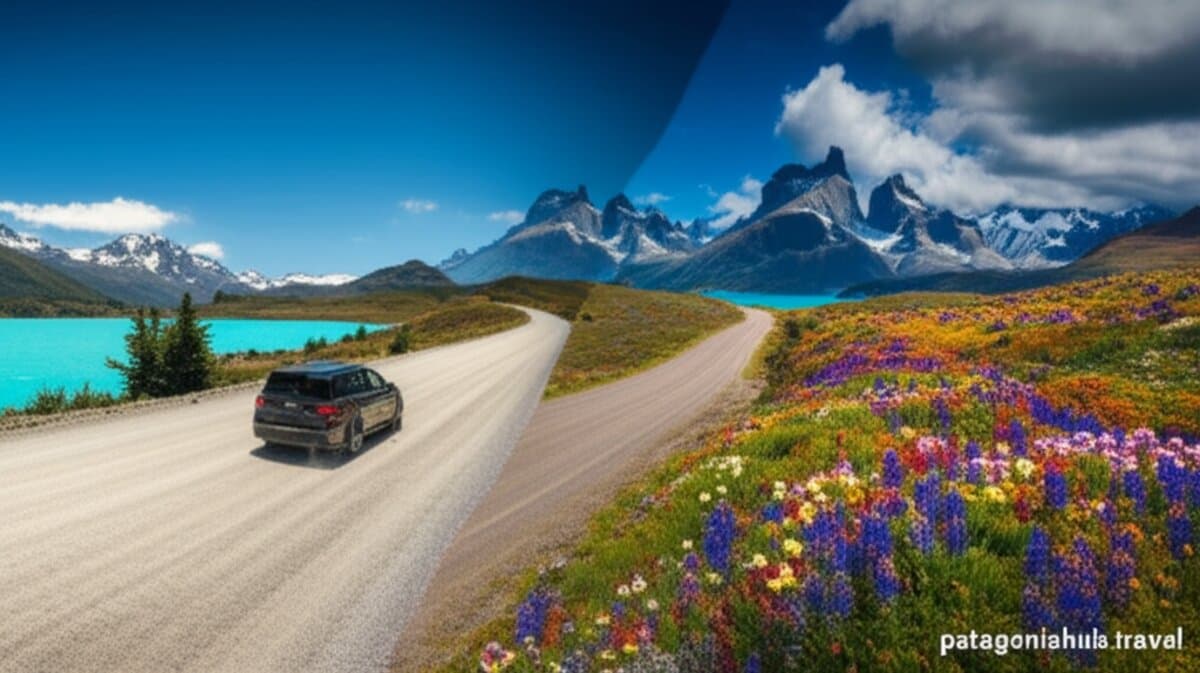
Create a cinematic split-screen photograph showing Patagonia's seasonal contrasts.
Left side: Summer scene with a car on a sun-drenched gravel road beside turquoise Lake Pehoé, with Torres del Paine peaks in background under blue skies.
Right side: Spring scene with the same road location featuring wildflowers blooming along the roadside, dramatic clouds, and patches of snow on distant peaks.
Style: Professional travel photography, 16:9 aspect ratio, high quality.
No watermarks. Include subtle 'patagoniahub.travel' branding in the bottom right corner.

Related Guides
Did you find this guide helpful?

Share:

|

|