Complete Guide to Renting a Car in Patagonia
Everything you need to know about renting a car in Patagonia. From choosing the right vehicle to navigating gravel roads and border crossings - your comprehensive guide to self-drive adventure.
Why Rent a Car in Patagonia?
Renting a car in Patagonia transforms your trip from a guided tour into a true adventure. With your own vehicle, you gain the freedom to:
- Stop anywhere - Pull over for that perfect photo of a guanaco herd or glacier viewpoint
- Set your own schedule - No more rushing to catch the tour bus
- Access remote areas - Reach trailheads and viewpoints not covered by public transport
- Save money on tours - A rental car often costs less than multiple day tours
Patagonia's vast distances and limited public transport make self-driving the most practical way to explore. The region spans both Chile and Argentina, with stunning landscapes connecting Torres del Paine, El Calafate, and beyond.
Do You Really Need a Car?
Before committing to a rental, consider your itinerary:
When a car is essential:
- Multi-day road trips (Punta Arenas to Torres del Paine)
- Visiting El Chalten and El Calafate together
- Exploring the Carretera Austral
- Traveling with young children or heavy gear
When public transport works:
- Single destination trips (Puerto Natales only)
- Budget travel with flexible time
- Solo travelers on main routes
If you're only visiting Puerto Natales and Torres del Paine for a few days, shuttle buses run regularly and tour buses cover the main attractions. However, a car gives you the flexibility to catch sunrise at Lago Grey or stay late watching condors at Mirador Condor.
Best Cities to Rent a Car
Punta Arenas - Best for international arrivals
Punta Arenas has the region's main international airport (PUQ) with direct flights from Santiago and seasonal connections from other cities. This makes it the most common starting point for Patagonia road trips.
Advantages:
- Largest selection of rental companies
- Often the lowest prices due to competition
- Direct access to Tierra del Fuego (ferry required)
Disadvantages:
- 3-hour drive to Torres del Paine
- Airport is 20km from the city center
Puerto Natales - Best for Torres del Paine focus
If your trip centers on Torres del Paine, consider flying into Punta Arenas and picking up your car in Puerto Natales.
Advantages:
- Just 1.5 hours from Torres del Paine
- More personalized service from local operators
- Can do a one-way rental from Punta Arenas
Disadvantages:
- Smaller selection of vehicles
- Slightly higher prices than Punta Arenas
El Calafate - Best for Argentina side
For trips focused on Perito Moreno Glacier and Los Glaciares National Park, El Calafate offers excellent rental options.
Advantages:
- Easy access to Perito Moreno Glacier
- Gateway to El Chalten
- Multiple international rental chains
Disadvantages:
- Cross-border rentals more complicated
- Higher prices than Chile
Choosing the Right Vehicle
2WD vs 4WD: What You Actually Need
The biggest debate among Patagonia travelers is whether to rent a 4WD. Here's the reality:
2WD is sufficient for:
- Route 9 (Puerto Natales to Torres del Paine)
- Ruta 40 (paved sections)
- El Calafate to El Chalten
- Most of Torres del Paine National Park
4WD is recommended for:
- Carretera Austral (especially northern sections)
- Winter travel (June-August)
- Remote estancias and off-route exploration
- After heavy rain on gravel roads
Vehicle Categories
| Category | Best For | Daily Rate |
|---|---|---|
| Compact | Solo/couple, paved roads | $40-60 USD |
| SUV/Crossover | Most travelers, mixed roads | $60-90 USD |
| 4x4 Truck | Adventure trips, poor roads | $90-150 USD |
| Van | Groups, camping gear | $100-180 USD |
Understanding Insurance Options
Insurance in Patagonia works differently than you might expect. Here's what you need to know:
Basic Coverage (CDW)
Collision Damage Waiver reduces your liability but doesn't eliminate it. You'll typically have a deductible of $1,000-2,500 USD.
Full Coverage (SCDW)
Super CDW reduces the deductible to zero or near-zero. Costs $15-30 extra per day but provides peace of mind on gravel roads.
Third Party Liability
Usually included but verify the coverage amount. Chilean and Argentine law requires minimum coverage.
Our Recommendation
We strongly recommend full coverage when driving on Patagonian gravel roads. A cracked windshield or rock damage is common and can cost hundreds to repair.
Border Crossing with a Rental Car
Crossing between Chile and Argentina with a rental car requires planning:
Required Documents:
- Poder Notarial - Notarized letter from the rental company authorizing the border crossing
- Vehicle registration (Padrón in Chile)
- Proof of insurance valid in both countries
- Your passport with entry stamps
Key Border Crossings for Tourists:
- Paso Integración Austral - Puerto Natales to El Calafate (most common)
- Paso Dorotea - Near Puerto Natales (secondary option)
- Paso San Sebastián - Tierra del Fuego
Important Tips:
- Border crossings close at night (typically 8pm-9am)
- Fresh fruits, vegetables, meat, and dairy cannot cross
- Declare everything - penalties for undeclared food are severe
- Plan extra time in high season (December-February)
Road Conditions and Driving Tips
What to Expect
Patagonia's roads range from excellent pavement to challenging gravel. Here's what you'll encounter:
Paved Roads:
- Route 9 (Puerto Natales to park entrance)
- Ruta 40 (major sections)
- Within cities
Gravel Roads (Ripio):
- Inside Torres del Paine
- Many routes in Argentina
- Carretera Austral sections
Essential Driving Tips
- Reduce speed on gravel - 50-60 km/h maximum
- Watch for wind - Patagonian winds can push vehicles, especially vans
- Fill up when you can - Gas stations are sparse (see our fuel guide)
- Carry cash - Some stations are cash-only
- Allow extra time - Gravel roads and scenery slow you down
Booking Tips and Best Practices
When to Book
- 3+ months ahead for December-February travel
- 1 month ahead for shoulder season
- 1-2 weeks for winter (May-August) - less demand
What to Check Before Booking
- Border crossing authorization (if needed)
- Mileage limits (unlimited is best)
- Insurance inclusions
- Additional driver fees
- One-way drop-off fees
- Pickup/return hours
Red Flags to Avoid
- Companies without physical offices
- No reviews or only negative reviews
- Extremely low prices (hidden fees likely)
- Refusal to provide written insurance terms
Sources & References
- SERNAC Chile - Chilean consumer protection agency with rental car regulations
- Dirección General de Tránsito Chile - Official Chilean traffic and driving regulations
- Ministerio de Transporte Argentina - Argentine transport ministry guidelines
- CONAF - Chilean forestry service (Torres del Paine park roads information)
- Vialidad Nacional Argentina - Argentine road conditions and Ruta 40 information
Ready to Book Your Adventure?
PatagoniaHub partners with trusted local rental companies that specialize in Patagonia travel. All our partners offer:
- Full insurance options
- Border crossing authorization
- 24/7 roadside assistance
- English-speaking support
Browse our car rental listings to compare options and book your Patagonia adventure.
Frequently Asked Questions
Do I need a 4WD in Patagonia?
For most main routes including Torres del Paine, a 2WD with good ground clearance is sufficient. However, 4WD is recommended for remote areas like the Carretera Austral or during winter months when roads may be icy.
Can I cross the border with a rental car?
Yes, but you need prior authorization from the rental company. They will provide you with a notarized letter (Poder Notarial) allowing the vehicle to cross. Not all companies allow this, so check before booking.
What is the minimum age to rent a car in Chile/Argentina?
Most rental companies require drivers to be at least 21-25 years old with a minimum of 1-2 years driving experience. Some companies charge an additional fee for drivers under 25.
Is my foreign driver's license valid in Patagonia?
Yes, most countries' licenses are accepted. However, we recommend carrying an International Driving Permit (IDP) alongside your national license, especially if it's not in Spanish or English.
Image Generation Prompt
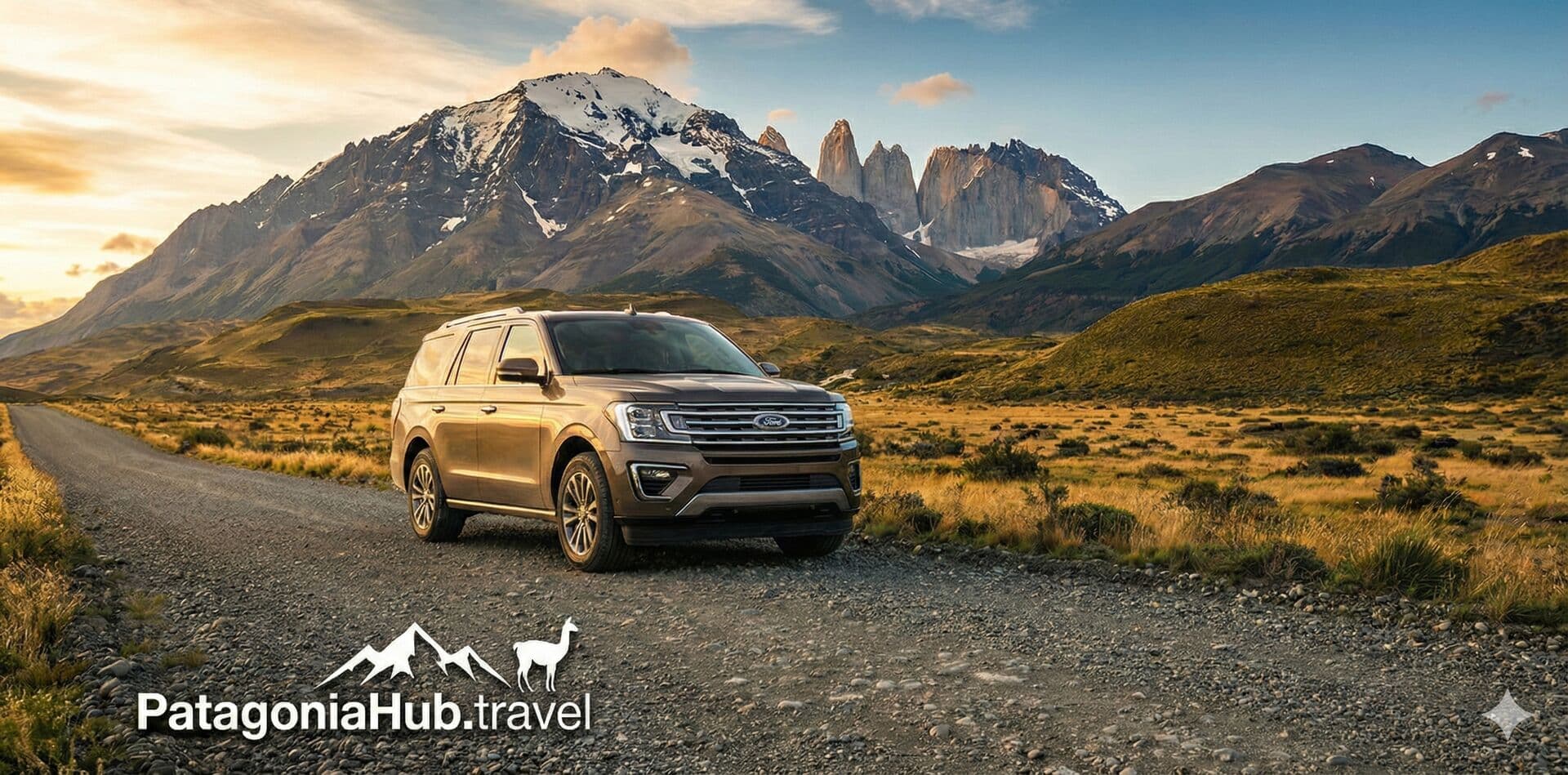
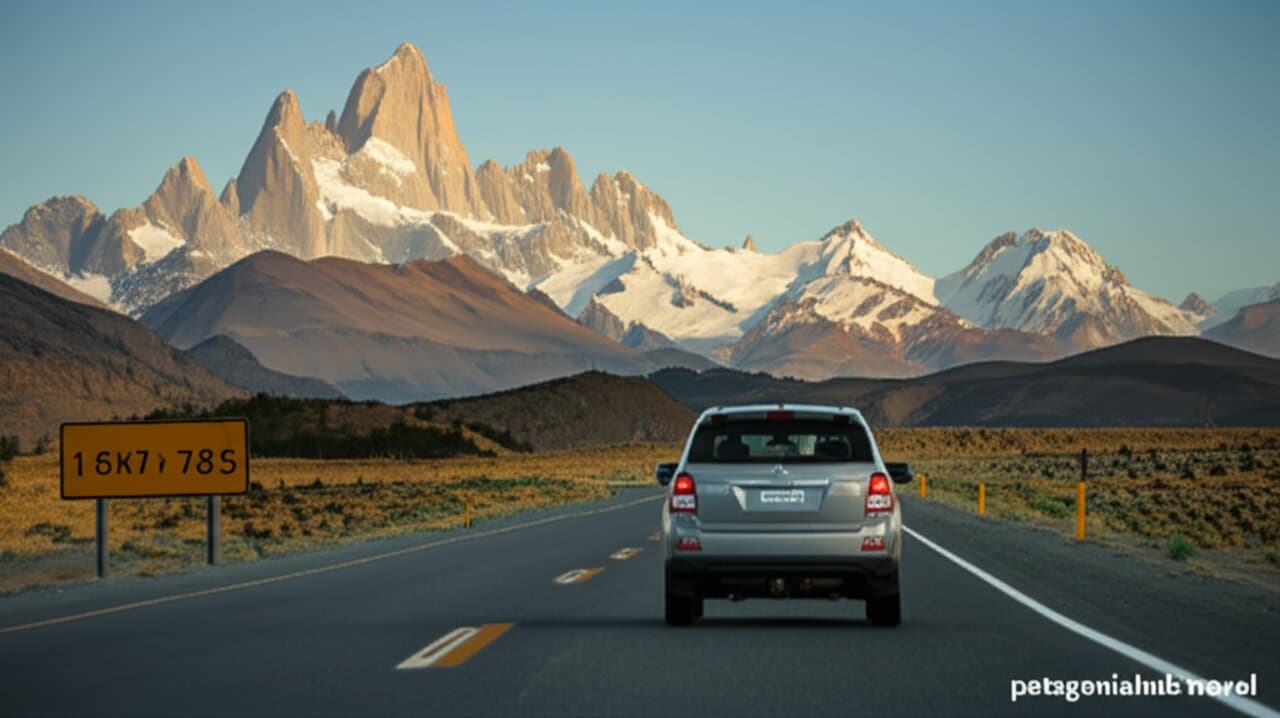
Create a cinematic, wide-angle landscape photograph of Patagonia featuring a modern SUV on a scenic gravel road with Torres del Paine mountains in the background. The image should have dramatic lighting with golden hour colors, showcasing the vast wilderness. Style: Professional travel photography, high quality, 16:9 aspect ratio. No people in focus, no watermarks. Include subtle 'patagoniahub.travel' branding in the bottom right corner.
Related Guides in This Series
El Calafate Car Rental: Companies, Prices & Essential Tips
Complete guide to renting a car in El Calafate, Argentina. Compare rental companies, understand pricing, learn border crossing rules, and get expert tips for exploring Patagonia from FTE airport.
Hidden Fees in Patagonia Car Rentals: What Companies Don't Tell You
Discover the hidden fees that can increase your Patagonia car rental costs by 50-80%. Learn about airport surcharges, insurance add-ons, equipment fees, and how to avoid surprise charges.
One-Way Car Rentals in Patagonia: Costs, Limitations & Options
Complete guide to one-way car rentals in Patagonia. Learn about drop-off fees, cross-border restrictions, available routes, and smart alternatives for linear itineraries.