One-Way Car Rentals in Patagonia: Costs, Limitations & Options
Complete guide to one-way car rentals in Patagonia. Learn about drop-off fees, cross-border restrictions, available routes, and smart alternatives for linear itineraries.

Planning a linear journey through Patagonia? The idea of renting a car in one location and dropping it off in another seems perfect for exploring this vast region. However, one-way car rentals in Patagonia face unique challenges that can significantly impact your budget and itinerary.
This guide provides realistic expectations about one-way rental availability, costs, cross-border restrictions, and smart alternatives to help you plan the most practical and cost-effective Patagonia road trip.
A one-way car rental allows you to pick up a vehicle in one city and return it to a different location. This is ideal for linear itineraries where you don't want to backtrack to your starting point.
Why travelers want one-way rentals in Patagonia:
- Linear routes: Drive the full Carretera Austral without returning north
- Cross-border trips: Pick up in Chile, drop off in Argentina (or vice versa)
- Time efficiency: Avoid retracing the same roads
- Regional exploration: Visit multiple destinations without circling back
Popular desired one-way routes:
| Route | Distance | Why It's Appealing |
|---|---|---|
| Punta Arenas → El Calafate | 280 km | Cross into Argentina, visit glaciers |
| El Calafate → Puerto Natales | 280 km | Argentina to Chilean Patagonia |
| Punta Arenas → Ushuaia | 600 km | Complete southern Patagonia traverse |
| Puerto Montt → Punta Arenas | 1,500+ km | Full Carretera Austral journey |
| El Calafate → Ushuaia | 790 km | Argentine Patagonia end-to-end |
Unfortunately, the reality of one-way availability and costs often forces travelers to reconsider their plans.
One-way car rentals in Patagonia are significantly more restricted than in North America or Europe. Here's what you need to know:
Within-country one-way rentals:
- Available on some routes but limited
- Typically cost $100-$400 USD extra in drop-off fees
- Not all rental locations participate in one-way programs
- Must be confirmed at booking (not always visible online)
Cross-border one-way rentals (Chile ↔ Argentina):
- Almost impossible to arrange
- Very few companies offer this service
- When available, expect to pay 2-3x normal rental rates
- Additional fees can exceed $500 USD
- Requires special permits and coordination
Why one-way rentals are so limited in Patagonia:
- Vehicle repatriation costs: Moving cars back to origin through remote areas is expensive
- Fleet imbalance: Popular routes create one-way demand that concentrates vehicles in certain cities
- Cross-border complexity: Different insurance, permits, and regulations between Chile and Argentina
- Small rental fleets: Local companies can't afford to have vehicles stranded far from their base
- Limited demand: Not enough travelers going the opposite direction to balance the flow
Frequently Asked Questions
Can I rent a car in Chile and drop it off in Argentina?
Cross-border one-way rentals between Chile and Argentina are extremely rare and expensive. Most rental companies don't offer this service. When available, expect to pay 2-3x the normal rental rate plus drop-off fees of $300-$500 USD or more. Round-trip rentals or renting separately in each country are more practical alternatives.
How much does a one-way car rental cost in Patagonia?
Within-country one-way rentals typically cost $100-$400 USD extra depending on distance. Short routes like Punta Arenas to Puerto Natales may cost $50-$100, while longer routes like El Calafate to Ushuaia can be $150-$250 or more. Cross-border one-way rentals, when available, can cost $300-$500+ in additional fees.
Which rental companies offer one-way rentals in Patagonia?
Major international companies like Europcar, Hertz, and Budget occasionally offer same-country one-way rentals on popular routes. However, availability is limited and must be confirmed at booking. Local Patagonian rental companies typically do not offer one-way rentals at all. Always verify one-way policies in writing before booking.
What are the best alternatives to one-way car rentals in Patagonia?
The most cost-effective alternatives include: (1) Round-trip rental from a central location like Punta Arenas or El Calafate, (2) Combining bus or flight for one leg of your journey with a car rental for the other, (3) Renting separately in Chile and Argentina for cross-border itineraries, or (4) Using organized transfer services for specific routes.
Image Generation Prompt
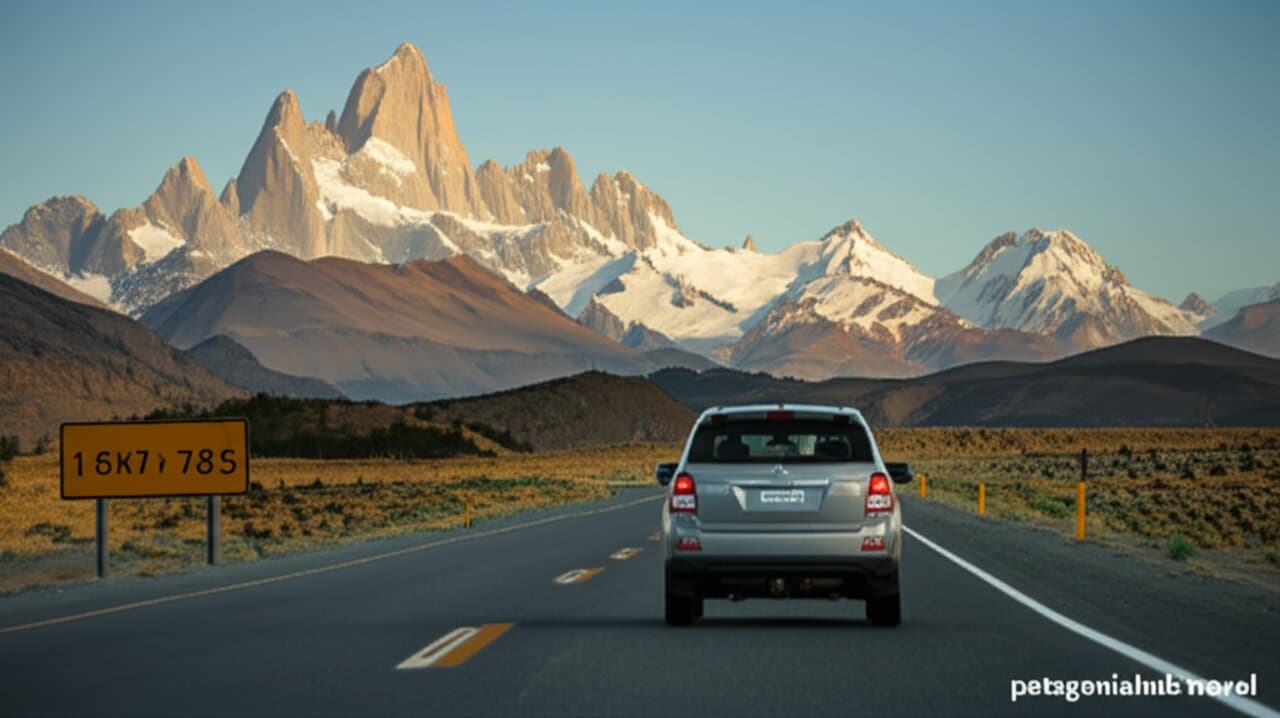
Create a focused photograph showing a rental car on a remote Patagonian highway with dramatic mountains in the background.
The car should be positioned as if on a one-way journey, facing toward distant peaks.
Include a subtle road sign or distance marker to emphasize the linear travel concept.
Style: Professional travel photography, 16:9 aspect ratio, golden hour lighting.
No watermarks. Include subtle 'patagoniahub.travel' branding in the bottom right corner.
Related Guides
El Calafate Car Rental: Companies, Prices & Essential Tips
Complete guide to renting a car in El Calafate, Argentina. Compare rental companies, understand pricing, learn border crossing rules, and get expert tips for exploring Patagonia from FTE airport.
Puerto Natales Car Rental vs Punta Arenas: Which Is Better?
Compare car rental options between Puerto Natales and Punta Arenas. Prices, selection, distance to Torres del Paine, and practical scenarios to help you decide.
Complete Guide to Renting a Car in Patagonia
Everything you need to know about renting a car in Patagonia. From choosing the right vehicle to navigating gravel roads and border crossings - your comprehensive guide to self-drive adventure.
Driving Patagonia? Ask us the awkward questions.
Border permits, one-way drop-offs, fuel gaps between towns — tell us your route and dates for El Calafate and we will come back with what actually works.
The advice is free. Booking a car or a tour through us afterwards is entirely optional.
Message written for you — edit or send as is.