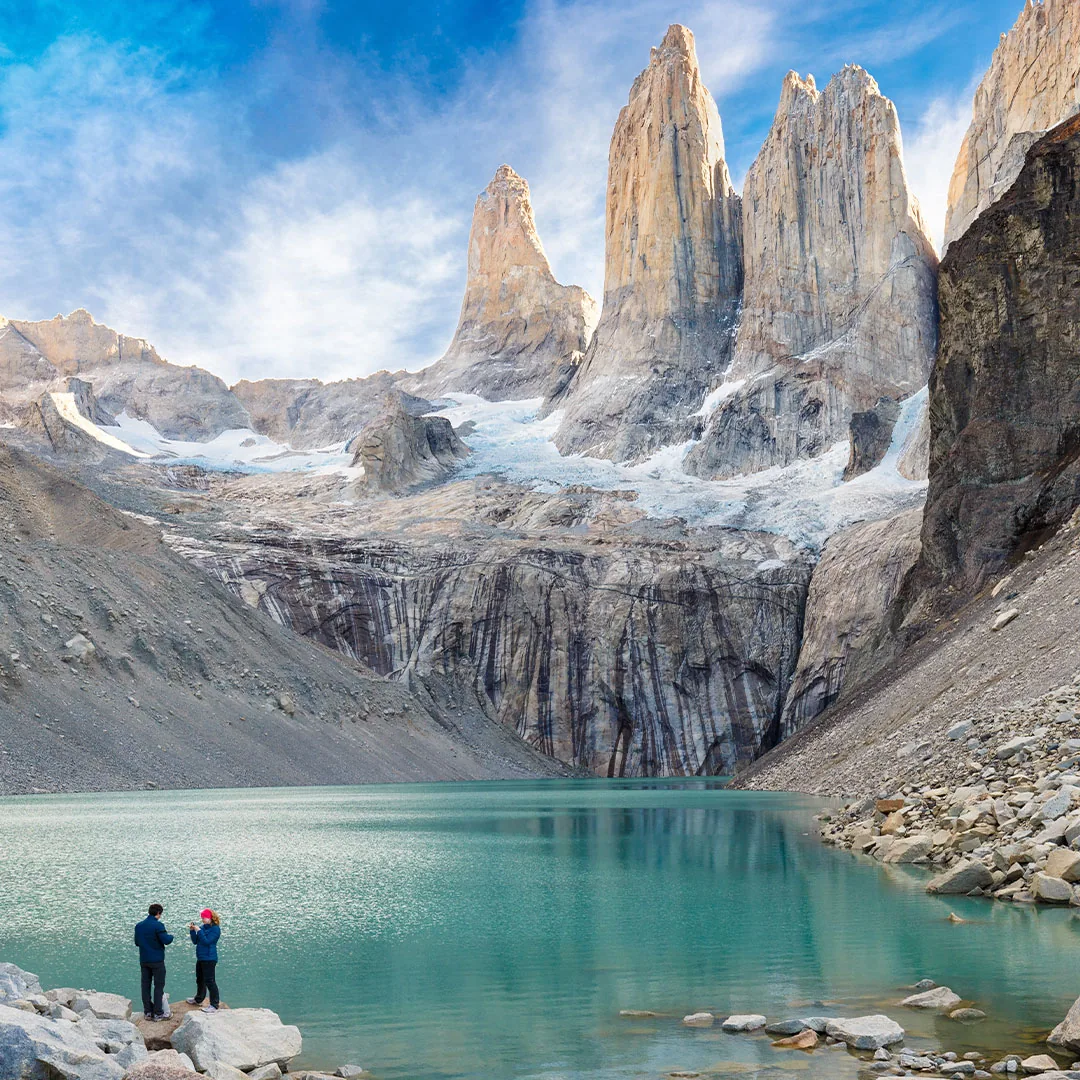
Explore Torres del Paine, Chile's iconic national park, with its towering granite spires, glistening glaciers, and vibrant wildlife. Discover essential tips for hiking the W Trek or O Circuit, navigating unpredictable Patagonian weather, and making the most of your adventure.
Updated for 2025–2026 Season
9 min read
By PatagoniaHub Travel Team|Verified local expertsLast updated: Sep 13, 2026
Chile, Magallanes7 highlights
Torres del Paine National Park, a UNESCO Biosphere Reserve, is the undisputed jewel in Chilean Patagonia's crown. Famous for its dramatic granite peaks – the 'Torres' (Towers) and 'Cuernos' (Horns) – and vast azure lakes, ancient glaciers, and diverse wildlife, it draws hikers and nature enthusiasts from around the globe. This remote wilderness offers some of the most spectacular trekking experiences on earth, from challenging multi-day circuits to rewarding day hikes.
Planning a trip to Torres del Paine requires careful consideration due to its remote location, unpredictable weather (often experiencing all four seasons in a single day), and the need for advanced bookings, especially for popular treks like the W and O Circuits. Renting a car provides unparalleled flexibility, allowing you to explore different park sectors at your own pace, access trailheads, and easily transport gear, avoiding rigid bus schedules on the gravel roads that crisscross the park.
Whether you're embarking on an epic backpacking journey, seeking a thrilling photography expedition, or simply looking to immerse yourself in raw Patagonian beauty, Torres del Paine promises an unforgettable adventure. Prepare for awe-inspiring landscapes around every bend, where guanacos roam freely, condors soar overhead, and the sheer scale of nature humbles all who visit.
Top Things to See & Do
Base de las Torres Hike
adventure
The quintessential day hike in Torres del Paine, leading to the iconic three granite towers. This challenging 8-10 hour trek culminates in breathtaking views of the towers reflecting in a glacial lagoon, especially stunning at sunrise.
Grey Glacier
nature
Witness the massive Grey Glacier, part of the Southern Patagonian Ice Field, with its colossal blue icebergs floating in Lago Grey. Take a boat tour or kayak for an up-close perspective, or hike to various viewpoints along the W and O circuits.
French Valley (Valle del Francés)
nature
Often considered the most beautiful section of the W Trek, this valley offers panoramic views of glaciers, towering granite walls, and cascading waterfalls. The challenging ascent is rewarded with a 360-degree spectacle from the Mirador Británico.
Mirador Cuernos del Paine
nature
A classic viewpoint offering stunning vistas of the 'Cuernos del Paine' (Horns of Paine), distinctively striped by sedimentary and granite layers. Accessible via the W Trek or shorter day hikes, it's a must-see for photographers.
Fauna Spotting
wildlife
Torres del Paine is home to a rich array of wildlife. Keep an eye out for guanacos, ñandus (rheas), foxes, and various bird species including the majestic Andean condor soaring above. Pumas are present but rarely seen.
Salto Grande Waterfall
nature
A powerful waterfall connecting Lago Nordenskjöld and Lago Pehoé, easily accessible by car or a short hike. The strong winds create dramatic spray, and it offers fantastic views of the Paine Massif in the background.
Lago Pehoé & Pehoé Campground
nature
Known for its incredibly vivid turquoise waters, Lago Pehoé provides some of the most iconic postcard views of the park. It's a key transport hub for catamaran services to the Paine Grande area and features stunning lakeside camping options.
Best Time to Visit
☀️
summer
December - February
Warmest temperatures (15-20°C/59-68°F), longest daylight hours (up to 16 hours), but also the strongest winds and highest chance of experiencing 'four seasons in one day'.
Peak season
Book all refugios, campsites, and transport well in advance – often 6+ months for the W and O treks. Expect high prices and crowded trails.
🍂
autumn
March - May
Cooler temperatures (5-15°C/41-59°F), crisp air, and stunning golden-red foliage. Winds generally start to calm, but snowfall can occur towards May.
Moderate crowds
This is a photographer's dream due to the vibrant Lenga tree colors. Services start to close down in late April, so check schedules carefully.
❄️
winter
June - August
Coldest temperatures (-5-5°C/23-41°F), shorter daylight hours, and significant snowfall. Roads can be icy, and some trails may be closed or require specialized gear.
Low crowds
A unique, tranquil experience. Many refugios are closed, and guided tours are often mandatory for treks. Pack extreme cold weather gear and consider snowshoes/crampons.
🌸
spring
September - November
Temperatures gradually rise (5-15°C/41-59°F), wildflowers begin to bloom, and wildlife is more active. Winds pick up towards late spring, mirroring summer conditions.
Renting a car in Puerto Natales offers maximum flexibility to reach park entrances like Laguna Amarga, Serrano, or Lago Sarmiento (approx. 112-150 km via Ruta Y-290 and Y-150). The roads are mostly gravel inside the park, so a 4x4 or high-clearance vehicle is recommended, especially during shoulder or winter seasons. This allows you to easily shuttle between different trailheads and viewpoints.
Puerto Natales (Gateway Town)
bus
2 - 2.5 hours
$10-15 USD one-way
Regular bus services operate from Puerto Natales bus terminal to the park entrances (Laguna Amarga, Pudeto, Admin). This is the most common public transport option, but you'll be reliant on bus schedules to move between points within the park.
Punta Arenas (Closest Major Airport)
car
3 - 4 hours
$100-200 USD/day (rental + fuel)
Fly into Presidente Carlos Ibáñez del Campo International Airport (PUQ) in Punta Arenas, then rent a car for the 250km drive to Puerto Natales via Ruta 9, and onward to the park. This provides a scenic drive and complete autonomy.
Where to Stay
Camping (inside park)
$10-40/night/night
For budget travelers and trekkers, camping offers an immersive experience. Book well in advance through CONAF, Fantastico Sur, and Vertice Patagonia websites. You can rent tents and gear at some campsites.
Refugio (inside park)
$70-150/night (bed only)/night
Refugios offer dorm-style beds, hot showers, and meals, providing comfort after a long hike. Book via Fantastico Sur or Vertice Patagonia. They are expensive but a welcome luxury on the multi-day treks.
Hotel/Hostel (Puerto Natales)
$30-200+/night/night
Puerto Natales serves as the main base. Stay here for easy access to tour operators, gear rentals, restaurants, and a comfortable bed before/after your park adventure. Drive your rental car daily into the park.
Luxury Hotel/Eco-Lodge (inside/bordering park)
$300-1000+/night/night
Indulge in unparalleled comfort and stunning views at high-end lodges like Hotel Las Torres, Explora, or Tierra Patagonia. These offer all-inclusive packages and guided excursions, perfect for those seeking luxury.
Driving Tips
1Most roads inside Torres del Paine National Park, like Ruta Y-290 and Y-150, are gravel (ripio). Drive slowly and carefully, reduce tire pressure slightly for better traction, and be prepared for washboard surfaces and potholes.
2Patagonian winds can be exceptionally strong, especially in open areas. Maintain a firm grip on the steering wheel, be aware of crosswinds, and anticipate gusts that can push your vehicle, particularly when passing larger vehicles.
3Fuel stations are scarce. The only one relatively close to the park is in Puerto Natales. Fill up completely before entering the park, as driving distances between key points can be significant, and you don't want to run out.
4Wildlife, especially guanacos, frequently cross the roads. Drive defensively, maintain safe speeds, and be ready to brake suddenly to avoid collisions with animals, particularly at dawn and dusk.
5Consider a higher-clearance vehicle or an SUV when renting, especially if traveling during shoulder seasons or winter. Standard cars might struggle with some of the more rugged sections of the gravel roads and river crossings.
Local Tips
Driving Distances from Torres del Paine National Park
Plan your road trip with approximate driving times and distances to nearby Patagonia destinations.
What's the difference between the W Trek and the O Circuit?
The W Trek is a 4-5 day, roughly 80 km trek that covers the most iconic sights of the park: Base de las Torres, French Valley, and Grey Glacier. The O Circuit is a more challenging 7-10 day, 130 km full loop of the Paine Massif, including the W sections and the quieter, less-traveled backside of the park. The O is more remote and requires more advanced planning.
Do I need permits or reservations to hike in Torres del Paine?
Yes, absolutely. All campsites and refugios within the park, especially along the W and O Treks, must be booked in advance, sometimes months ahead during peak season (Dec-Feb). You also pay an entrance fee upon arrival at the park. Entry without pre-booked accommodation is not permitted for multi-day treks.
What kind of gear should I bring for hiking?
Essential gear includes sturdy waterproof hiking boots, layered clothing (quick-dry base layers, fleece, waterproof/windproof outer shell), a daypack, water bottle/hydration system, hat, gloves, sunglasses, sunscreen, trekking poles, and a headlamp. For multi-day treks, a quality tent, sleeping bag, and cooking gear are also needed if camping.
A great shoulder season with fewer crowds than summer but increasingly favorable hiking conditions. Bookings are still essential for late spring travel.
El Calafate (Argentina)
bus
5 - 6 hours
$40-60 USD one-way
Cross-border bus services connect El Calafate, Argentina (home to Perito Moreno Glacier), directly to Puerto Natales, where you can then take another bus or rented car to Torres del Paine. Ensure you have all necessary border crossing documentation.
1Always pack layers, regardless of the season. Patagonian weather is famously unpredictable, often delivering sun, wind, rain, and even snow all in one day. A waterproof and windproof outer shell is essential.
2Learn a few basic Spanish phrases. While many in the tourism industry speak English, a little Spanish goes a long way with local service providers and can enhance your cultural experience.
3Don't skip Puerto Natales. It's more than just a gateway town; enjoy its burgeoning food scene, craft breweries, and artisan shops. It's an excellent place to prepare and wind down from your park adventures.
4Respect park regulations strictly. This includes staying on marked trails, not feeding wildlife, and packing out all your trash. Campfires are strictly forbidden outside designated areas due to fire risk.
5Try the local Patagonian lamb (cordero al palo). It's a regional specialty, slow-roasted over an open fire, and a delicious way to refuel after a day of hiking. Many restaurants in Puerto Natales offer it.
Driving in Torres del Paine is generally safe but requires caution. Roads are predominantly gravel (ripio), meaning slower speeds, careful maneuvering, and increased dust. Strong winds can be a hazard, and wildlife frequently crosses roads. A 4x4 or SUV is recommended for comfort and better handling, especially on rougher sections.
How many days should I allocate for Torres del Paine?
For a comprehensive experience, plan for at least 4-5 full days to complete the W Trek. If you're focused on day hikes and scenic drives, 2-3 days is sufficient. The full O Circuit requires 7-10 days. Consider adding travel days to and from Puerto Natales as well.
Can I visit Torres del Paine in winter?
Yes, but it's a very different experience. Winter (June-August) offers dramatic snowy landscapes, fewer crowds, and lower prices, but many services (refugios, transport) are closed. Some trails may require guides or specialized equipment (snowshoes, crampons). Roads can be icy, and daylight hours are short. It's ideal for intrepid travelers seeking solitude.
What are the common entry points to the park?
The main entry points are Laguna Amarga (most common for bus and car, connecting to the Base Torres hike), Sarmiento (for scenic drives and wildlife viewing, less access to main treks), and Serrano (another entry point with access to the Administration area and Serrano campground).