Best Photography Spots in Torres del Paine National Park
Torres del Paine National Park, a jewel of Chilean Patagonia, offers photographers an unparalleled tapestry of jagged granite peaks, shimmering turquoise lakes, ancient glaciers, and vast Patagonian steppes. Its dramatic and ever-changing landscapes provide endless opportunities to capture breathtaking images, from iconic mountain vistas bathed in golden light to elusive wildlife amidst rugged terrain. This guide will help you navigate its most photogenic spots and prepare for its unique challenges.
9 min readUpdated for 2026–2027 SeasonPhotography in Torres del Paine is an adventure, a dance with the elements, and an immensely rewarding experience. The park is renowned for its iconic Paine Massif, featuring the Cuernos del Paine and the Towers themselves, which dominate the skyline. Beyond these famous peaks, photographers can find solace and stunning compositions among glacial lakes, roaring rivers, and diverse wildlife including guanacos, rheas, and condors. The weather in Patagonia is notoriously fickle, often presenting four seasons in a single day, which demands flexibility and preparedness. However, these rapidly changing conditions can also create incredibly dynamic light and dramatic skies, turning ordinary scenes into extraordinary photographic moments. Embracing the journey, and the challenges it brings, is key to capturing the true essence of this magnificent wilderness.
Photography Spots
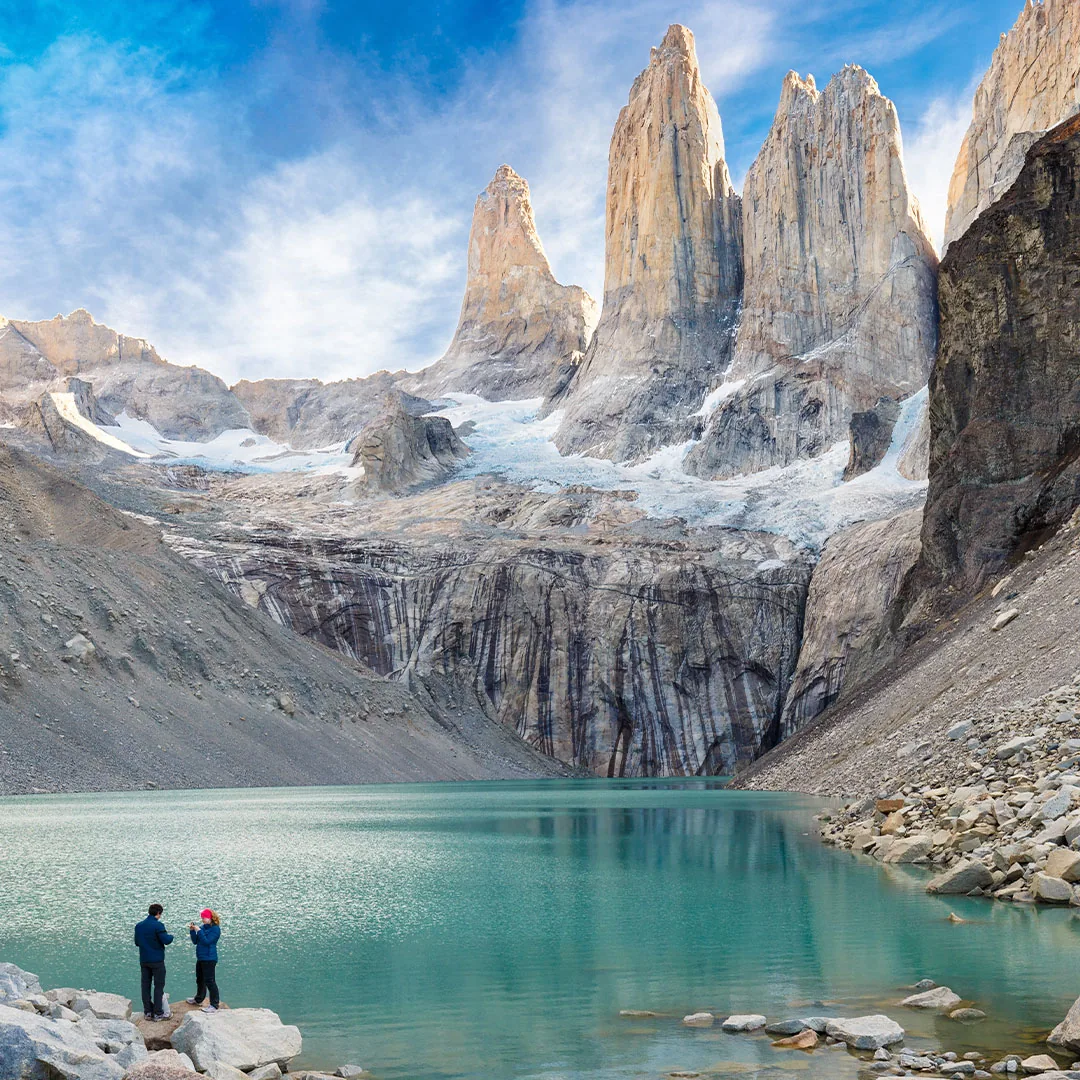
Mirador Base Torres
Best Time: Sunrise
Best Season: Spring, Summer, Fall
Getting There: This is a challenging 8-10 hour round-trip hike (18-22 km) starting from Refugio Las Torres. The final ascent is a steep moraine scramble. A rental car is essential to reach the starting point at Hotel Las Torres, parking is available.
Start the hike in the dark to reach the base of the towers before sunrise. A headlamp is crucial. Use a wide-angle lens for the epic scale and a sturdy tripod for low-light conditions and long exposures to smooth the water reflections. Pack layers as temperatures can drop significantly.
Lago Pehoé & Salto Grande
Best Time: Sunset, Golden Hour
Best Season: All seasons, but especially vibrant in Fall
Getting There: Easily accessible by rental car via the Y-150 and Y-160 roads. There are several viewpoints along the road overlooking Lago Pehoé, and a short walk from the parking area leads to Salto Grande waterfall.
Frame the iconic Cuernos del Paine across Lago Pehoé with its distinct blue waters. At Salto Grande, experiment with long exposures to blur the waterfall's motion. The strong Patagonian winds often create ripples on the lake, adding texture. A polarizing filter can enhance the blue of the water and cut glare.
Grey Glacier Viewpoint (from land trail)
Best Time: Mid-day to late afternoon
Best Season: Summer (December-March) for best trail conditions
Getting There: Drive your rental car to the Hotel Lago Grey parking lot. From there, a moderate 1.5-hour hike along a well-marked trail leads to a viewpoint overlooking Grey Glacier and its icebergs.
A telephoto lens is useful to capture the details of the glacier and ice formations. Focus on the contrast between the blue ice and the rugged mountains. Consider incorporating some of the Patagonian scrub in the foreground for added depth. Be mindful of wind.
Laguna Amarga Entrance
Best Time: Golden Hour, early morning or late afternoon
Best Season: Spring for wildflowers, Summer for long daylight, Fall for colors
Getting There: Located at the eastern entrance to the park, directly accessible by rental car via the Y-150 road. This is one of the main entry points, offering stunning views of the Towers from a distance.
This area is excellent for wildlife photography, especially guanacos and rheas grazing with the Paine Massif as a backdrop. A telephoto lens (200-400mm) is highly recommended. The reflections of the Towers in the small lagoons (Laguna Amarga and Laguna Azul) can be spectacular during calm conditions.
Mirador Nordenskjöld
Best Time: Sunrise, Blue Hour
Best Season: All seasons, especially vivid during fall foliage
Getting There: Easily accessible by rental car. This viewpoint is directly off the main park road (Y-150), between Laguna Amarga and the Salto Grande turnoff. There's a designated pull-off and viewing platform.
This roadside stop offers iconic views of Nordenskjöld Lake with the dramatic Cuernos del Paine and Almirante Nieto peak. Look for reflections on the lake during calm mornings. The soft light of sunrise or the moody tones of blue hour work exceptionally well here. Use a wide-angle lens to capture the vastness.
Sarmiento Lake Viewpoint
Best Time: Early morning, late afternoon
Best Season: All seasons for landscape, Spring/Summer for wildlife spotting
Getting There: Drive your rental car along the Y-150 road towards the park's eastern entrance (Laguna Amarga). There are several unofficial pull-offs providing excellent views of the lake.
Sarmiento Lake is known for its unique calcified formations along its shores and is a prime location to spot guanacos and sometimes pumas. Capture the distinct geological features in the foreground with the Paine Massif in the background. Pay attention to the light raking across the formations for texture. A telephoto lens is useful for wildlife.
Rent a Car in Patagonia
Browse Car RentalsGear Recommendations
Wide-angle Lens (16-35mm equivalent)
Essential for capturing the monumental scale of the Patagonian landscapes, from the towering granite peaks to expansive glacial lakes. It allows you to fit entire vistas into a single frame.
Telephoto Lens (70-200mm or 100-400mm equivalent)
Crucial for isolating distant peaks, compressing landscapes, and most importantly, for wildlife photography (guanacos, condors, foxes) without disturbing them. Patagonia is rich in elusive fauna.
Sturdy Tripod
Indispensable for sharp images in low light (sunrise/sunset, blue hour, night sky), long exposures (waterfalls, silky clouds), and mitigating the effects of Patagonia's infamous strong winds. Lightweight travel tripods may struggle here.
Weather-Sealed Camera Body and Lenses
Patagonia's weather is highly unpredictable, with strong winds, rain, and even snow possible any day of the year. Weather-sealed gear offers vital protection against moisture and dust, ensuring your equipment functions reliably.
Graduated Neutral Density (GND) Filters and Polarizer
GND filters help balance exposure between bright skies and darker foregrounds, especially during sunrise/sunset. A polarizer enhances the blue of the sky and water, reduces glare, and saturates colors in landscapes.
Extra Batteries
Cold temperatures rapidly drain camera batteries. Always carry at least two spare, fully charged batteries. Keeping them warm in an inside pocket when not in use can extend their life.
Rain Cover for Camera and Backpack
Even with weather-sealed gear, an additional rain cover for your camera and a waterproof cover for your backpack provide an extra layer of protection against sudden Patagonian downpours.
Best Light
Torres del Paine, situated at a high southern latitude, offers particularly long and magical golden and blue hours during the spring and summer months (October to March). Golden hour can stretch for an hour or more after sunrise and before sunset, casting a warm, ethereal glow on the granite peaks of the Paine Massif, turning them fiery red or orange. For sunrise, position yourself to catch the first light hitting the Torres del Paine or Cuernos del Paine. For sunset, look for vantage points that allow the setting sun to illuminate the western faces of the mountains. Blue hour, preceding sunrise and following sunset, bathes the landscape in soft, cool tones, creating a tranquil and often moody atmosphere perfect for capturing the deep blues of the lakes and the intricate textures of the ice.
Weather Considerations
Patagonia's weather is famously unpredictable and can change dramatically within minutes. Photographers must be prepared for strong, persistent winds (sometimes gale-force), sudden rain showers, snow (even in summer), and rapidly shifting cloud cover. This variability, while challenging, can also lead to incredibly dramatic and unique photographic opportunities – think stormy skies over the Cuernos, sun rays breaking through clouds, or rainbows. Always dress in layers, including waterproof and windproof outer shells. Protect your gear from moisture and dust, and be ready to adapt your shooting plans to the prevailing conditions. Safety first – high winds can make standing on exposed viewpoints dangerous.
Rent a Car in Patagonia
Explore this destination at your own pace. Find the perfect rental car for your Patagonia adventure.
Free planning advice from people who know Patagonia
Tell us what you are planning for Puerto Natales and we will come back with advice on routes, timing and logistics.
The advice is free. Booking a car or a tour through us afterwards is entirely optional.
Message written for you — edit or send as is.
Explore more: Torres del Paine National Park
📸 More Photo Spots
Explore More
Discover more guides and resources for this destination
Destination Guide
Planning
Best Time to Visit
Best Time to Visit Torres del Paine National Park 2026 — Month-by-Month Guide
How to Get There
How to Get to Torres del Paine National Park 2026 — Flights, Driving & Transport
Budget Guide
Torres del Paine National Park on a Budget 2026 — Costs, Tips & Money-Saving Guide
Seasonal Guide
Autumn in Torres del Paine 2026 — Weather, Activities & Tips
Seasonal Guide
Spring in Torres del Paine 2026 — Weather, Activities & Tips
Seasonal Guide
Summer in Torres del Paine 2026 — Weather, Activities & Tips
Seasonal Guide
Winter in Torres del Paine 2026 — Weather, Activities & Tips
Travel Tips
Essential Travel Tips for Torres del Paine National Park (2026)
Where to Stay
Where to Stay in Torres del Paine National Park (2026) — Neighborhoods & Hotels
Weather & Climate
Torres del Paine National Park Weather Guide (2026) — Monthly Climate, Temperatures & Best Time
Adventures
Activities
Glacier Trekking in Torres del Paine 2026 — Best Spots, Tips & What to Expect
Activities
Hiking in Torres del Paine 2026 — Best Spots, Tips & What to Expect
Activities
Horse Riding in Torres del Paine 2026 — Best Spots, Tips & What to Expect
Activities
Photography in Torres del Paine 2026 — Best Spots, Tips & What to Expect
Camping Guide
Camping in Torres del Paine National Park 2026 — Campsites, Tips & Gear Guide
Day Trips
Best Day Trips from Torres del Paine National Park 2026 — Distances & Driving Guide
Hidden Gems
Hidden Gems in Torres del Paine National Park (2026) — Secret Spots & Local Tips
Family Guide
Family Travel Guide to Torres del Paine National Park (2026) — Kid-Friendly Tips
Hiking Trails
Hiking Trails in Torres del Paine National Park (2026) — Best Hikes, Difficulty & Maps
Culture & Nature
Food Guide
Food Guide: Torres del Paine National Park 2026 — Local Cuisine & Restaurants
Wildlife Guide
Where to See Andean condor in Torres del Paine 2026 — Guide & Best Spots
Wildlife Guide
Where to See Flamingo in Torres del Paine 2026 — Guide & Best Spots
Wildlife Guide
Where to See Foxes in Torres del Paine 2026 — Guide & Best Spots
Wildlife Guide
Where to See Guanaco in Torres del Paine 2026 — Guide & Best Spots
Wildlife Guide
Where to See Huemul Deer in Torres del Paine 2026 — Guide
Wildlife Guide
Where to See Pumas in Torres del Paine 2026 — Guide & Best Spots
Road Trips
Car Rental
Car Rental in Torres del Paine National Park 2026 — Prices, Tips & Road Guide
Road Conditions
Road Conditions in Torres del Paine National Park (2026) — Driving Guide & Fuel Stations
Driving Routes
Driving from El Calafate to Torres del Paine 2026 — Road Guide, Distance & Tips
Driving Routes
Driving from Puerto Natales to Torres del Paine 2026 — Road Guide, Distance & Tips
Driving Routes
Driving from Punta Arenas to Torres del Paine 2026 — Road Guide, Distance & Tips
Road Trip Itineraries
14-Day Complete Patagonia Road Trip — Complete Itinerary 2026
Road Trip Itineraries
21-Day Patagonia Grand Tour — Complete Itinerary 2026
Road Trip Itineraries
4-Day Torres del Paine W-Trek — Complete Hiking Itinerary 2026
Road Trip Itineraries
6-Day Puma Tracking in Torres del Paine — Wildlife Safari 2026
Road Trip Itineraries
7-Day Photography Masterclass Patagonia — Photo Trip Itinerary 2026
Road Trip Itineraries
7-Day Torres del Paine & El Calafate Road Trip — Complete Itinerary 2026
Road Trip Itineraries
8-Day Torres del Paine & Ushuaia — Tierra del Fuego Itinerary 2026
Compare
Destination Comparison
Best Hiking: Torres del Paine vs El Chaltén 2026 — Trail-by-Trail Comparison
Destination Comparison
Budget Patagonia: Chile vs Argentina 2026 — Where Your Money Goes Further
Destination Comparison
Camping vs Hotels in Patagonia 2026 — Which Accommodation Style Is Right for You?
Destination Comparison
Cerro Castillo National Park vs Torres del Paine 2026 — Which Is Better for You?
Destination Comparison
Chilean Patagonia vs Argentine Patagonia 2026 — Which Is Better for You?
Destination Comparison
El Calafate vs Torres del Paine 2026 — Which Is Better for You?
Destination Comparison
El Chaltén vs Torres del Paine 2026 — Which Is Better for You?
Destination Comparison
Northern Patagonia vs Southern Patagonia 2026 — Which Region Should You Visit?
Destination Comparison
Patagonia First-Time vs Returning Visitors 2026 — What to Do Each Time
Destination Comparison
Patagonia for Families vs Couples 2026 — Best Destinations by Travel Group
Destination Comparison
Patagonia in 1 Week vs 2 Weeks 2026 — How to Plan the Right Trip Length
Destination Comparison
Perito Moreno Glacier vs Grey Glacier (Torres del Paine) 2026 — Which Is Better for You?
Destination Comparison
Self-Drive vs Guided Tour in Patagonia 2026 — Which Travel Style Fits You?
Destination Comparison
Patagonia in Summer vs Patagonia in Winter 2026 — Which Is Better for You?
Destination Comparison
Torres del Paine vs Bariloche 2026 — Which Is Better for You?
Destination Comparison
Torres del Paine vs Los Glaciares (El Chaltén) 2026 — Which Is Better for You?
Destination Comparison
Torres del Paine vs Perito Moreno Glacier 2026 — Which Is Better for You?
Destination Comparison
Torres del Paine vs Tierra del Fuego 2026 — Which Is Better for You?
Destination Comparison
Ushuaia vs Torres del Paine 2026 — Which Is Better for You?
Destination Comparison
W Trek (Torres del Paine) vs O Circuit (Torres del Paine) 2026 — Which Is Better for You?
Explore More Guides
View all →Best Photography Spots in Aluminé 2026 — Locations & Tips
Best Photography Spots in Carretera Austral 2026 — Locations & Tips
Best Photography Spots in Caviahue-Copahue 2026 — Locations & Tips
Best Photography Spots in Cerro Castillo National Park 2026 — Locations & Tips
Best Photography Spots in Chaitén 2026 — Locations & Tips
Best Photography Spots in Chile Chico 2026 — Locations & Tips
Frequently Asked Questions
What is the best time of year for photography in Torres del Paine?
The shoulder seasons (October-November for Spring and March-April for Fall) offer fewer crowds, stunning colors (spring wildflowers or fall foliage), and potentially dramatic weather. Summer (December-February) has the longest daylight hours and most stable trekking conditions, but also the most visitors. Winter (May-September) offers snowy landscapes and incredible light but limited access and very cold temperatures.
Do I need a special permit to photograph in the park?
You will need to pay the entrance fee to Torres del Paine National Park. No additional photography permits are generally required for personal, non-commercial use. However, always check the CONAF (Chilean National Forest Corporation) website for the latest regulations, especially regarding drone use or commercial filming.
What are some tips for wildlife photography in Torres del Paine?
Patience is key. Use a telephoto lens (300mm+ recommended) and keep a respectful distance from animals like guanacos, foxes, and condors. Early mornings and late afternoons are often best for spotting wildlife. Look for tracks or signs, and move slowly and quietly.
Is it safe to photograph at night in the park?
Night photography can be spectacular, especially for capturing the Milky Way over the Paine Massif due to minimal light pollution. However, it requires extreme caution. Dress warmly, carry a headlamp, inform others of your plans, and be aware of wildlife. It's best to stay near accessible roads or well-known viewpoints rather than venturing into remote areas after dark.
How can I deal with the strong Patagonian winds while photographing?
A sturdy tripod is essential. Use a remote shutter release or self-timer to avoid camera shake. Keep your body between the wind and your camera. Consider low angles to minimize wind impact. Be prepared for dust and flying debris, protecting your lens. If possible, seek sheltered spots for tricky shots.
Can I fly a drone in Torres del Paine National Park?
No, drone use is strictly prohibited within Torres del Paine National Park to protect wildlife, preserve the natural environment, and ensure visitor safety and privacy. Violations can result in significant fines and confiscation of equipment. Always respect park regulations.
What kind of road conditions should I expect for my rental car?
The main roads within Torres del Paine are mostly gravel and can be rough, bumpy, and dusty. A 4x4 vehicle is not strictly necessary but can provide more comfort and better traction, especially after rain or snow. Drive slowly and carefully, and be aware of potholes and guanacos on the road.