4-Day Torres del Paine W-Trek
Tackle the legendary W-Trek in Torres del Paine National Park over four unforgettable days. This challenging route takes you past the thundering Glacier Grey, through the dramatic French Valley, and up to the iconic base of the Torres, delivering some of the most spectacular scenery on Earth.

The W-Trek is the crown jewel of Patagonian hiking, a multi-day adventure through some of the most dramatic mountain scenery in the Southern Hemisphere. This 4-day itinerary covers approximately 80 km of trail, weaving between granite towers, turquoise lakes, ancient glaciers, and windswept valleys. Starting and ending from Puerto Natales, you will need a rental car to reach the park and trailheads efficiently, giving you flexibility to start early and avoid crowds.
This route is designed for fit hikers comfortable with long days on the trail. You will stay in a mix of refugios and campsites along the way, all of which must be booked months in advance during peak season. The trail is well-marked but demanding, with significant elevation gain and exposure to Patagonia's notoriously wild weather. Proper preparation, quality gear, and a reliable vehicle for the drive to and from the park are essential for a successful W-Trek experience.
Best Season
November to March (austral summer). December and January offer the longest daylight hours, critical for this demanding trek. February and March bring slightly fewer crowds and calmer winds.
Day-by-Day Itinerary
Puerto Natales to Glacier Grey
Depart Puerto Natales early in the morning and drive to the Pudeto catamaran dock or the Paine Grande ranger station, depending on your chosen route direction. After registering at the park entrance, take the catamaran across Lago Pehoé to Paine Grande. From here, begin the trek westward to Glacier Grey, a stunning 11 km walk along the shores of Lago Grey with increasingly dramatic views of the glacier and floating icebergs. The trail passes through lenga forests and exposed ridgelines before arriving at Refugio Grey, where you will spend the night with the glacier as your backdrop.
Glacier Grey to French Valley
Retrace your steps from Refugio Grey back to Paine Grande (11 km), then continue eastward along the shores of Lago Nordenskjöld toward the French Valley. The total hiking distance today is around 20 km, making it the longest day on the trek. After reaching Campamento Francés or Refugio Los Cuernos, drop your pack and embark on the steep climb into the French Valley itself. This dramatic amphitheater of granite walls and hanging glaciers is one of the most awe-inspiring sights in all of Patagonia. Listen for the rumble of avalanches echoing off the surrounding peaks.
French Valley to Base Las Torres
Continue eastward from your overnight location, trekking approximately 14 km along the northern shore of Lago Nordenskjöld toward Refugio Chileno or Campamento Torres. The trail offers spectacular views of the Cuernos del Paine and the lake below. In the afternoon, if energy permits, begin the ascent toward the Torres lookout, gaining about 400 meters through a steep boulder field. Alternatively, rest at camp and save the final push for a predawn start the next morning. The campsite at Campamento Torres sits in a beautiful forest clearing at the base of the final ascent.
Base Las Torres & Return to Puerto Natales
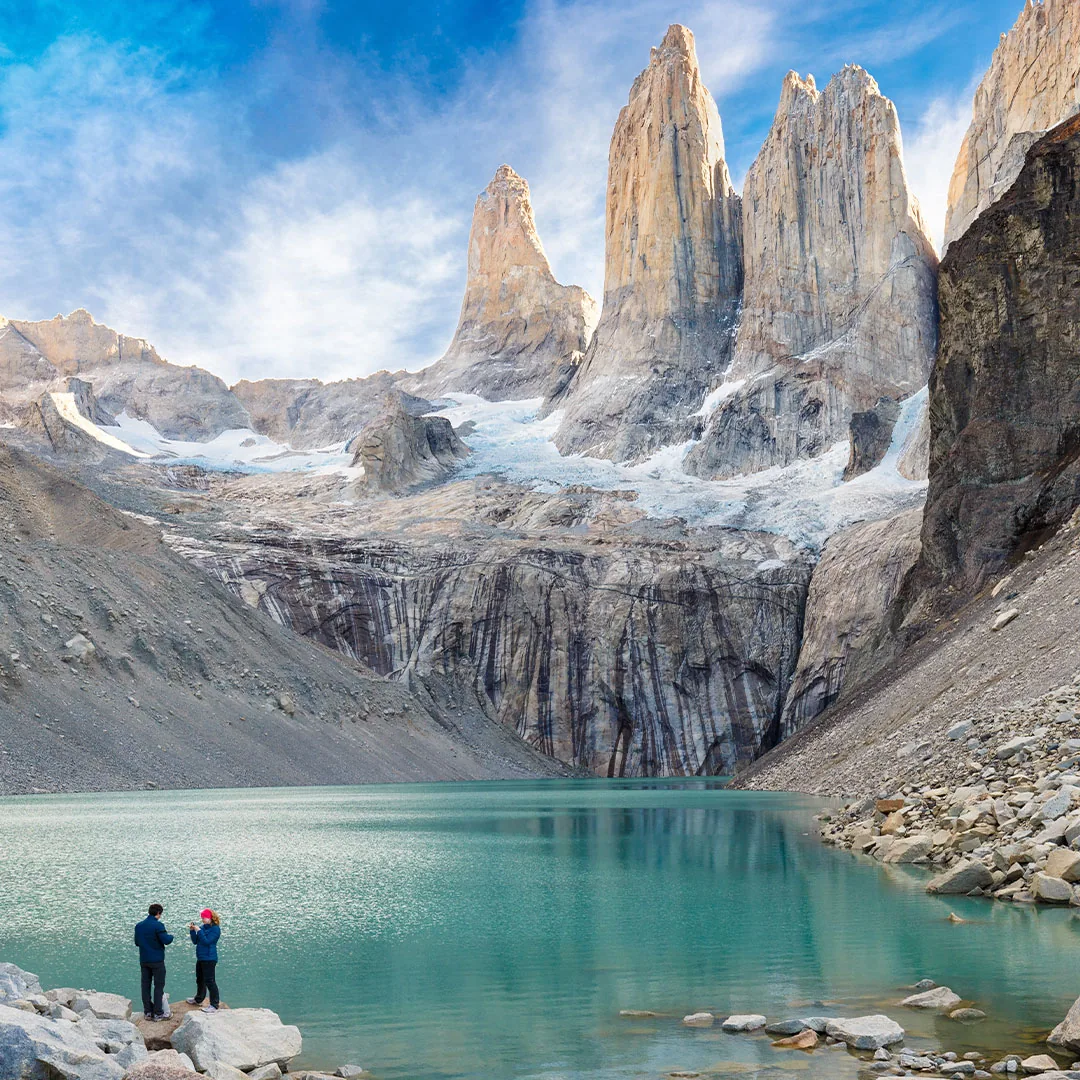
Rise before dawn for the steep 1.5-hour ascent through the moraine to the Torres viewpoint. Watching the sun illuminate the three granite towers of Torres del Paine is a once-in-a-lifetime experience, the turquoise glacial lake at their base adding to the spectacle. After soaking in the views, descend back to camp, collect your gear, and hike the final 8 km downhill to the Laguna Amarga park entrance. Retrieve your rental car and drive back to Puerto Natales, reflecting on four extraordinary days of Patagonian trekking.
Trip Highlights
- ★Sunrise at the base of the Torres del Paine granite towers
- ★Glacier Grey and its floating icebergs
- ★French Valley amphitheater of granite and ice
- ★Panoramic views of Lago Nordenskjöld and Cuernos del Paine
- ★Catamaran crossing on Lago Pehoé
- ★Wildlife encounters with guanacos and condors
Packing List
- Waterproof hiking boots (broken in)
- 40-60L backpack with rain cover
- Layered clothing system (base, mid, shell)
- Waterproof and windproof jacket and pants
- Sleeping bag rated to -5°C (if camping)
- Trekking poles
- Headlamp with extra batteries
- Sunscreen SPF 50+ and sunglasses
- Water purification tablets or filter
- High-energy snacks and electrolytes
- First aid kit with blister treatment
- Dry bags for electronics
Rent a Car in Patagonia
Browse Car RentalsPlan This Route
Use our interactive route planner to customize this itinerary with your own stops, dates, and preferences.
Open Route PlannerBudget Estimate (2 People)
| Accommodation | $250–$500 (refugios/campsites, 3 nights on trail + 1 Puerto Natales) |
| Food | $150–$300 (mix of refugio meals and packed food) |
| Activities | $80–$120 (park entry + catamaran) |
| Total | $730–$1,310 per person |
Cost Overview — Torres del Paine National Park
Daily Cost (USD)
Cost by Category
Trip Cost Estimate
Total for 4 days · Based on mid-range daily budget
Before You Go
- !Good physical fitness for 6-8 hours of hiking per day with a loaded pack
- !Pre-booked refugio or campsite reservations (essential, book 3-6 months ahead)
- !Valid park entrance ticket purchased online
- !Rental car reserved through PatagoniaHub for Puerto Natales pickup
- !Travel insurance covering emergency evacuation
Driving Patagonia? Ask us the awkward questions.
Border permits, one-way drop-offs, fuel gaps between towns — tell us your route and dates for Puerto Natales and we will come back with what actually works.
The advice is free. Booking a car or a tour through us afterwards is entirely optional.
Message written for you — edit or send as is.
Explore more: Torres Del Paine
🗺️ More Itineraries
📋 Practical Info for Torres Del Paine
Rent a Car in Patagonia
Explore this destination at your own pace. Find the perfect rental car for your Patagonia adventure.
Explore More
Discover more guides and resources for this destination
Destination Guide
Planning
Best Time to Visit
Best Time to Visit Torres del Paine National Park 2026 — Month-by-Month Guide
How to Get There
How to Get to Torres del Paine National Park 2026 — Flights, Driving & Transport
Budget Guide
Torres del Paine National Park on a Budget 2026 — Costs, Tips & Money-Saving Guide
Seasonal Guide
Autumn in Torres del Paine 2026 — Weather, Activities & Tips
Seasonal Guide
Spring in Torres del Paine 2026 — Weather, Activities & Tips
Seasonal Guide
Summer in Torres del Paine 2026 — Weather, Activities & Tips
Seasonal Guide
Winter in Torres del Paine 2026 — Weather, Activities & Tips
Travel Tips
Essential Travel Tips for Torres del Paine National Park (2026)
Where to Stay
Where to Stay in Torres del Paine National Park (2026) — Neighborhoods & Hotels
Weather & Climate
Torres del Paine National Park Weather Guide (2026) — Monthly Climate, Temperatures & Best Time
Adventures
Activities
Glacier Trekking in Torres del Paine 2026 — Best Spots, Tips & What to Expect
Activities
Hiking in Torres del Paine 2026 — Best Spots, Tips & What to Expect
Activities
Horse Riding in Torres del Paine 2026 — Best Spots, Tips & What to Expect
Activities
Photography in Torres del Paine 2026 — Best Spots, Tips & What to Expect
Camping Guide
Camping in Torres del Paine National Park 2026 — Campsites, Tips & Gear Guide
Day Trips
Best Day Trips from Torres del Paine National Park 2026 — Distances & Driving Guide
Hidden Gems
Hidden Gems in Torres del Paine National Park (2026) — Secret Spots & Local Tips
Family Guide
Family Travel Guide to Torres del Paine National Park (2026) — Kid-Friendly Tips
Hiking Trails
Hiking Trails in Torres del Paine National Park (2026) — Best Hikes, Difficulty & Maps
Culture & Nature
Food Guide
Food Guide: Torres del Paine National Park 2026 — Local Cuisine & Restaurants
Wildlife Guide
Where to See Andean condor in Torres del Paine 2026 — Guide & Best Spots
Wildlife Guide
Where to See Flamingo in Torres del Paine 2026 — Guide & Best Spots
Wildlife Guide
Where to See Foxes in Torres del Paine 2026 — Guide & Best Spots
Wildlife Guide
Where to See Guanaco in Torres del Paine 2026 — Guide & Best Spots
Wildlife Guide
Where to See Huemul Deer in Torres del Paine 2026 — Guide
Wildlife Guide
Where to See Pumas in Torres del Paine 2026 — Guide & Best Spots
Photography Spots
Best Photography Spots in Torres del Paine National Park 2026 — Locations & Tips
Road Trips
Car Rental
Car Rental in Torres del Paine National Park 2026 — Prices, Tips & Road Guide
Road Conditions
Road Conditions in Torres del Paine National Park (2026) — Driving Guide & Fuel Stations
Driving Routes
Driving from El Calafate to Torres del Paine 2026 — Road Guide, Distance & Tips
Driving Routes
Driving from Puerto Natales to Torres del Paine 2026 — Road Guide, Distance & Tips
Driving Routes
Driving from Punta Arenas to Torres del Paine 2026 — Road Guide, Distance & Tips
Compare
Destination Comparison
Best Hiking: Torres del Paine vs El Chaltén 2026 — Trail-by-Trail Comparison
Destination Comparison
Budget Patagonia: Chile vs Argentina 2026 — Where Your Money Goes Further
Destination Comparison
Camping vs Hotels in Patagonia 2026 — Which Accommodation Style Is Right for You?
Destination Comparison
Cerro Castillo National Park vs Torres del Paine 2026 — Which Is Better for You?
Destination Comparison
Chilean Patagonia vs Argentine Patagonia 2026 — Which Is Better for You?
Destination Comparison
El Calafate vs Torres del Paine 2026 — Which Is Better for You?
Destination Comparison
El Chaltén vs Torres del Paine 2026 — Which Is Better for You?
Destination Comparison
Northern Patagonia vs Southern Patagonia 2026 — Which Region Should You Visit?
Destination Comparison
Patagonia First-Time vs Returning Visitors 2026 — What to Do Each Time
Destination Comparison
Patagonia for Families vs Couples 2026 — Best Destinations by Travel Group
Destination Comparison
Patagonia in 1 Week vs 2 Weeks 2026 — How to Plan the Right Trip Length
Destination Comparison
Perito Moreno Glacier vs Grey Glacier (Torres del Paine) 2026 — Which Is Better for You?
Destination Comparison
Self-Drive vs Guided Tour in Patagonia 2026 — Which Travel Style Fits You?
Destination Comparison
Patagonia in Summer vs Patagonia in Winter 2026 — Which Is Better for You?
Destination Comparison
Torres del Paine vs Bariloche 2026 — Which Is Better for You?
Destination Comparison
Torres del Paine vs Los Glaciares (El Chaltén) 2026 — Which Is Better for You?
Destination Comparison
Torres del Paine vs Perito Moreno Glacier 2026 — Which Is Better for You?
Destination Comparison
Torres del Paine vs Tierra del Fuego 2026 — Which Is Better for You?
Destination Comparison
Ushuaia vs Torres del Paine 2026 — Which Is Better for You?
Destination Comparison
W Trek (Torres del Paine) vs O Circuit (Torres del Paine) 2026 — Which Is Better for You?
Explore More Guides
View all →3-Day Bariloche Lakes Circuit — Short Getaway Itinerary 2026
3-Day El Calafate Glacier Express — Complete Itinerary 2026
3-Day Marble Caves & General Carrera Lake Adventure — Complete Itinerary 2026
3-Day Punta Arenas to Tierra del Fuego Expedition — Complete Itinerary 2026
4-Day Penguin Safari Punta Arenas — Wildlife Itinerary 2026
5-Day Autumn Colors Road Trip Around Bariloche — Complete Itinerary 2026
Frequently Asked Questions
Do I need a car for the W-Trek?
Yes, a rental car is highly recommended to drive from Puerto Natales to the park trailheads. It gives you flexibility to start early, avoid bus schedules, and explore the area on your rest day. PatagoniaHub offers convenient pickup in Puerto Natales.
How far in advance should I book refugios?
For peak season (December-February), book at least 3-6 months in advance. Refugios and campsites inside Torres del Paine sell out extremely quickly. There are two main operators: Vertice and Fantástico Sur.
Is the W-Trek suitable for beginners?
The W-Trek is rated challenging. You should be comfortable hiking 15-20 km per day with a loaded backpack over uneven terrain. Prior multi-day hiking experience is strongly recommended.
What happens if the weather is bad?
Patagonian weather is notoriously unpredictable. Rain, wind, and even snow can occur at any time, even in summer. Having proper waterproof and windproof gear is essential. Trail closures due to extreme weather are rare but possible.
Can I do the W-Trek in 3 days instead of 4?
It is possible but extremely demanding, requiring 25+ km days with significant elevation. The 4-day version allows you to enjoy each section more fully and reduces the risk of injury or exhaustion.
Where do I park my rental car?
You can park at the Pudeto catamaran dock or at the Laguna Amarga park entrance, depending on your route direction. Both have parking areas, though they are not guarded. Do not leave valuables visible in the vehicle.