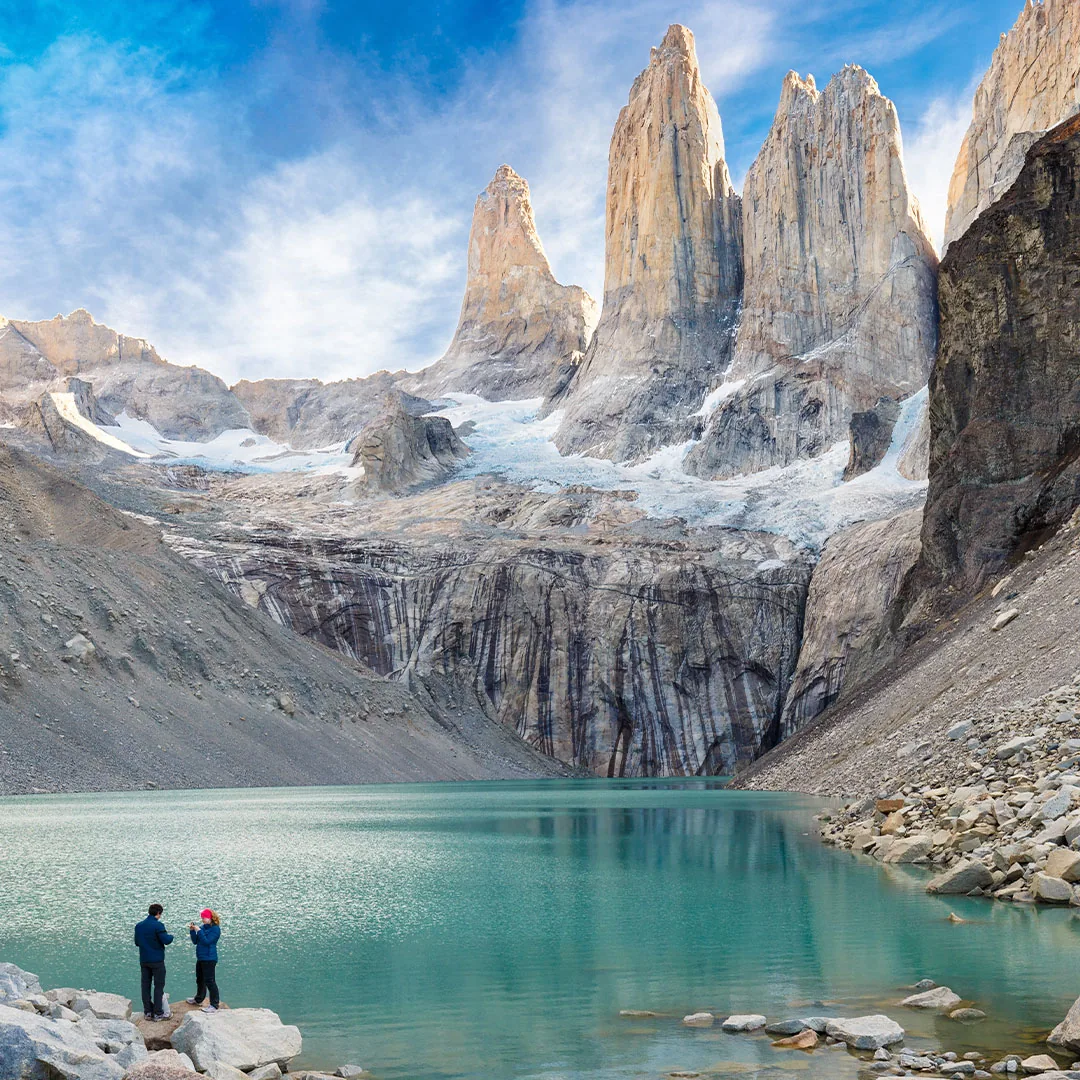
Glacier Trekking — Torres del Paine National Park
Embark on an unforgettable glacier trekking adventure to Grey Glacier in Torres del Paine, Chile. Experience the raw power of Patagonia's ancient ice fields, navigating stunning blue crevasses and seracs. This moderate difficulty expedition offers breathtaking views within the iconic W Trek, providing a unique perspective on one of the world's most dramatic landscapes.
Updated for 2026–2027 Season7 min read
Glacier trekking in Torres del Paine offers an unparalleled opportunity to connect intimately with one of Patagonia's most magnificent natural wonders: Grey Glacier. This colossal ice mass, part of the Southern Patagonian Ice Field, flows into Lago Grey, calving enormous icebergs that drift across the lake. Unlike merely viewing it from a distance, a glacier trek allows you to don crampons and walk directly onto its surface, providing a profound sense of scale and an up-close look at its intricate ice formations.
This adventure typically begins with a scenic boat ride across Lago Grey, navigating around vibrant blue icebergs, before disembarking near the glacier's edge. From there, expert guides lead you safely onto the ice, revealing a world of crevasses, moulins, and ice caves. It's an immersive experience that combines the thrill of exploration with the stunning beauty of the Patagonian wilderness, making it a highlight for many visitors to Torres del Paine. The unique environment demands respect and preparation, ensuring a memorable and safe journey into this icy realm.
Experiences
Grey Glacier Ice Trek (Classic)
moderateThis is the quintessential glacier trekking experience. It involves a boat transfer across Lago Grey to reach the glacier's eastern side, followed by a hike to the ice. Participants are equipped with crampons and an ice axe (provided) and led by certified mountain guides onto the glacier for an exploration of its fascinating ice formations, crevasses, and seracs.
W Trek with Grey Glacier Extension
challengingFor trekkers undertaking the multi-day W Trek, adding a glacier trekking excursion at Refugio Grey is a popular option. This integrates the ice trek into your hiking itinerary, typically on the day you reach or depart from Refugio Grey. It requires booking the excursion separately and often involves an early start or late finish.
Kayaking and Glacier Trek Combo
moderateSome operators offer a combination of kayaking in Lago Grey, allowing you to paddle amongst the icebergs, followed by or preceded by the glacier trekking experience. This provides an even more diverse perspective of Grey Glacier, from water level to walking on its surface.
Gear Checklist
- ✓Waterproof and windproof outer layers (jacket and pants)
- ✓Warm layers (fleece or down jacket)
- ✓Waterproof hiking boots (mid-ankle support recommended)
- ✓Warm hat, gloves, and neck gaiter
- ✓Sunglasses (essential for glacier glare)
- ✓Sunscreen and lip balm with SPF
- ✓Small backpack (for water, snacks, extra layers)
- ✓Water bottle or hydration pack
Get There by Car
Browse Car RentalsBook Your Adventure
Most activities in Patagonia require your own transport. Rent a car and unlock every experience.
Browse Car RentalsCost Breakdown
| Tier | Price Range (USD) |
|---|---|
| Budget | USD 200 - 300 (guided trek only, self-arranged transport) |
| Mid-Range | USD 350 - 550 (guided trek, boat transfer, basic park transport) |
| Premium | USD 600 - 900+ (guided trek, private transfers, high-end accommodation options) |
Notes: Costs typically include the boat transfer to the glacier, all necessary ice equipment (crampons, ice axe, harness), and certified mountain guides. Park entry fees (currently USD 35 for foreign adults) are almost always extra. Prices do not usually include food, water, or personal gear rental (except ice equipment). Private transport adds significantly to the cost.
Best Season
The best season for glacier trekking in Torres del Paine is from October to April (Southern Hemisphere summer and shoulder seasons). During these months, the weather is generally milder, days are longer, and tour operators are fully operational. December to February offers the warmest temperatures and most stable conditions, though it's also the busiest. Shoulder months like October, November, March, and April can offer fewer crowds and beautiful autumn colors or spring blooms, with still good trekking conditions.
Safety Notes
- !Always trek with a certified guide: Venturing onto a glacier without proper training and equipment is extremely dangerous due to hidden crevasses and unstable ice.
- !Be prepared for extreme weather: Patagonia's weather can change rapidly. High winds, rain, or snow can occur even in summer. Proper layering and waterproof gear are crucial.
- !Physical demands: Glacier trekking requires good balance and steady footing. If you have mobility issues or certain health conditions, consult with your doctor and the tour operator beforehand.
- !Stay on marked paths: Even with a guide, it's vital to stay within the designated safe zones and follow the guide's footsteps carefully.
Getting There
To reach Torres del Paine National Park, most travelers fly into Punta Arenas (PUQ) or El Calafate (FTE) and then take a bus or shuttle to Puerto Natales, the gateway town. From Puerto Natales, public buses regularly go into Torres del Paine, dropping off at various park entrances or refugios. For glacier trekking specifically to Grey Glacier, you need to reach Hotel Lago Grey or Refugio Grey. If driving a rental car from Puerto Natales (approx. 2-2.5 hours), take Ruta 9 north, then follow signs for Torres del Paine. Enter the park via the Amarga or Serrano entrance, pay your park fee, and continue towards the sector of Lago Grey. Having a rental car offers significant flexibility, allowing you to drive directly to the Hotel Lago Grey area, which is where the catamaran departs for the glacier trekking point. This is particularly advantageous for early morning departures or if you plan to stay at a more remote lodge, as public transport options to Lago Grey can be limited or require transfers. Parking is available at Hotel Lago Grey. From the Hotel, a short walk or shuttle can take you to the boat departure point for the glacier. If you are hiking the W Trek, you would approach Refugio Grey via the trail from Paine Grande.
Tips
- 1Book in advance: Glacier treks have limited spots, especially during peak season. Secure your booking months ahead.
- 2Physical fitness: While rated moderate, the trek involves walking on uneven, slippery surfaces. A reasonable level of fitness is required.
- 3Layer up: Patagonia's weather is highly unpredictable. Dress in layers that you can easily add or remove.
- 4Protect against sun and glare: The sun reflected off the ice can be intense. Wear high-SPF sunscreen, sunglasses, and a wide-brimmed hat.
- 5Listen to your guide: Always follow the instructions of your certified guides; they are paramount for your safety on the ice.
- 6Bring snacks and water: The trek is several hours long, and you'll need to stay hydrated and energized. Carry plenty of water and some high-energy snacks.
- 7Consider combining: If you're doing the W Trek, plan your itinerary to include the glacier excursion for a seamless experience.
Planning the trails? Ask before you commit to dates.
Which days to book, what to skip, how to reach the trailhead — tell us your plans for Puerto Natales and we will come back with advice on timing and logistics.
The advice is free. Booking a car or a tour through us afterwards is entirely optional.
Message written for you — edit or send as is.
Before you hit the trail: Torres del Paine National Park
🎯 More Activities
📋 Practical Info for Torres del Paine National Park
Get There by Car
Most activities in Torres del Paine National Park require your own vehicle
Explore Torres del Paine National Park
More guides for this destination
Explore More
Discover more guides and resources for this destination
Destination Guide
Planning
Best Time to Visit
Best Time to Visit Torres del Paine National Park 2026 — Month-by-Month Guide
How to Get There
How to Get to Torres del Paine National Park 2026 — Flights, Driving & Transport
Budget Guide
Torres del Paine National Park on a Budget 2026 — Costs, Tips & Money-Saving Guide
Seasonal Guide
Autumn in Torres del Paine 2026 — Weather, Activities & Tips
Seasonal Guide
Spring in Torres del Paine 2026 — Weather, Activities & Tips
Seasonal Guide
Summer in Torres del Paine 2026 — Weather, Activities & Tips
Seasonal Guide
Winter in Torres del Paine 2026 — Weather, Activities & Tips
Travel Tips
Essential Travel Tips for Torres del Paine National Park (2026)
Where to Stay
Where to Stay in Torres del Paine National Park (2026) — Neighborhoods & Hotels
Weather & Climate
Torres del Paine National Park Weather Guide (2026) — Monthly Climate, Temperatures & Best Time
Adventures
Camping Guide
Camping in Torres del Paine National Park 2026 — Campsites, Tips & Gear Guide
Day Trips
Best Day Trips from Torres del Paine National Park 2026 — Distances & Driving Guide
Hidden Gems
Hidden Gems in Torres del Paine National Park (2026) — Secret Spots & Local Tips
Family Guide
Family Travel Guide to Torres del Paine National Park (2026) — Kid-Friendly Tips
Hiking Trails
Hiking Trails in Torres del Paine National Park (2026) — Best Hikes, Difficulty & Maps
Culture & Nature
Food Guide
Food Guide: Torres del Paine National Park 2026 — Local Cuisine & Restaurants
Wildlife Guide
Where to See Andean condor in Torres del Paine 2026 — Guide & Best Spots
Wildlife Guide
Where to See Flamingo in Torres del Paine 2026 — Guide & Best Spots
Wildlife Guide
Where to See Foxes in Torres del Paine 2026 — Guide & Best Spots
Wildlife Guide
Where to See Guanaco in Torres del Paine 2026 — Guide & Best Spots
Wildlife Guide
Where to See Huemul Deer in Torres del Paine 2026 — Guide
Wildlife Guide
Where to See Pumas in Torres del Paine 2026 — Guide & Best Spots
Photography Spots
Best Photography Spots in Torres del Paine National Park 2026 — Locations & Tips
Road Trips
Car Rental
Car Rental in Torres del Paine National Park 2026 — Prices, Tips & Road Guide
Road Conditions
Road Conditions in Torres del Paine National Park (2026) — Driving Guide & Fuel Stations
Driving Routes
Driving from El Calafate to Torres del Paine 2026 — Road Guide, Distance & Tips
Driving Routes
Driving from Puerto Natales to Torres del Paine 2026 — Road Guide, Distance & Tips
Driving Routes
Driving from Punta Arenas to Torres del Paine 2026 — Road Guide, Distance & Tips
Road Trip Itineraries
14-Day Complete Patagonia Road Trip — Complete Itinerary 2026
Road Trip Itineraries
21-Day Patagonia Grand Tour — Complete Itinerary 2026
Road Trip Itineraries
4-Day Torres del Paine W-Trek — Complete Hiking Itinerary 2026
Road Trip Itineraries
6-Day Puma Tracking in Torres del Paine — Wildlife Safari 2026
Road Trip Itineraries
7-Day Photography Masterclass Patagonia — Photo Trip Itinerary 2026
Road Trip Itineraries
7-Day Torres del Paine & El Calafate Road Trip — Complete Itinerary 2026
Road Trip Itineraries
8-Day Torres del Paine & Ushuaia — Tierra del Fuego Itinerary 2026
Compare
Destination Comparison
Best Hiking: Torres del Paine vs El Chaltén 2026 — Trail-by-Trail Comparison
Destination Comparison
Budget Patagonia: Chile vs Argentina 2026 — Where Your Money Goes Further
Destination Comparison
Camping vs Hotels in Patagonia 2026 — Which Accommodation Style Is Right for You?
Destination Comparison
Cerro Castillo National Park vs Torres del Paine 2026 — Which Is Better for You?
Destination Comparison
Chilean Patagonia vs Argentine Patagonia 2026 — Which Is Better for You?
Destination Comparison
El Calafate vs Torres del Paine 2026 — Which Is Better for You?
Destination Comparison
El Chaltén vs Torres del Paine 2026 — Which Is Better for You?
Destination Comparison
Northern Patagonia vs Southern Patagonia 2026 — Which Region Should You Visit?
Destination Comparison
Patagonia First-Time vs Returning Visitors 2026 — What to Do Each Time
Destination Comparison
Patagonia for Families vs Couples 2026 — Best Destinations by Travel Group
Destination Comparison
Patagonia in 1 Week vs 2 Weeks 2026 — How to Plan the Right Trip Length
Destination Comparison
Perito Moreno Glacier vs Grey Glacier (Torres del Paine) 2026 — Which Is Better for You?
Destination Comparison
Self-Drive vs Guided Tour in Patagonia 2026 — Which Travel Style Fits You?
Destination Comparison
Patagonia in Summer vs Patagonia in Winter 2026 — Which Is Better for You?
Destination Comparison
Torres del Paine vs Bariloche 2026 — Which Is Better for You?
Destination Comparison
Torres del Paine vs Los Glaciares (El Chaltén) 2026 — Which Is Better for You?
Destination Comparison
Torres del Paine vs Perito Moreno Glacier 2026 — Which Is Better for You?
Destination Comparison
Torres del Paine vs Tierra del Fuego 2026 — Which Is Better for You?
Destination Comparison
Ushuaia vs Torres del Paine 2026 — Which Is Better for You?
Destination Comparison
W Trek (Torres del Paine) vs O Circuit (Torres del Paine) 2026 — Which Is Better for You?
Explore More Guides
View all →Boat Tours in El Calafate 2026 — Best Spots, Tips & What to Expect
Boat Tours in Perito Moreno Glacier 2026 — Best Spots, Tips & What to Expect
Boat Tours in Puerto Natales 2026 — Best Spots, Tips & What to Expect
Boat Tours in Ushuaia 2026 — Best Spots, Tips & What to Expect
Boat Tours in Villa La Angostura 2026 — Best Spots, Tips & What to Expect
Cycling in Carretera Austral 2026 — Best Spots, Tips & What to Expect
Frequently Asked Questions
Do I need prior experience for glacier trekking?
No prior experience in glacier trekking is required. All necessary equipment like crampons and ice axes are provided, and certified guides will teach you how to use them safely on the ice.
Is there an age limit for glacier trekking?
Most operators have an age limit, typically between 15 and 75 years old, though this can vary. Minors usually require parental consent. Check with your chosen tour operator for specific requirements.
What is included in a typical glacier trekking tour?
Most tours include the boat transfer across Lago Grey, the services of a professional mountain guide, and all essential technical equipment (crampons, ice axe, harness). Park entrance fees and personal gear are usually not included.
How physically demanding is the glacier trek?
It's generally rated as moderate. While you don't need to be an athlete, you should be able to walk comfortably for several hours over uneven, potentially slippery terrain. The use of crampons takes some getting used to but is manageable for most.
Can I do the glacier trek as part of the W Trek?
Absolutely! It's a popular addition. Many hikers schedule the glacier trek when they reach or depart from Refugio Grey. You'll need to book the glacier excursion in advance and ensure it fits into your W Trek itinerary.
What happens if the weather is bad?
Tours may be cancelled or modified in extreme weather conditions (e.g., strong winds making the boat crossing unsafe). Operators usually offer rescheduling or refunds in such cases. Always be prepared for all types of weather in Patagonia.
Do I need to bring my own waterproof boots?
Yes, waterproof hiking boots are essential. While some operators might offer rental boots, it's always best to bring your own comfortable, broken-in, waterproof boots for the best experience and fit.