Do You Need 4WD in Patagonia?
Complete analysis of vehicle requirements for Patagonia road trips. Compare 2WD vs 4WD options, route-specific recommendations, seasonal considerations, and real traveler insights for choosing the right vehicle.
Do You Need 4WD in Patagonia? A Complete Vehicle Guide
When planning your Patagonia road trip, one question dominates the research phase: Do I really need 4WD? The answer is more nuanced than a simple yes or no. Your actual vehicle needs depend on your specific routes, travel season, comfort level, and budget.
The Quick Answer
For most travelers on main routes during summer: A 2WD vehicle is sufficient. Ruta 9 (the main north-south highway), Routes 3 and 5, and primary roads to Torres del Paine are all paved or well-maintained gravel roads accessible with standard vehicles.
When 4WD becomes essential: Winter travel (June-August), remote Ruta 40 sections during wet seasons, and the Carretera Austral in poor conditions.
Reality for most visitors: A high-clearance 2WD SUV represents the sweet spot—offering clearance over gravel ruts, fuel efficiency, comfort, and rental availability without the premium cost of 4WD.
Vehicle Type Comparison
Compact 2WD Cars (Sedan, Hatchback)
Pros:
- Cheapest rental rates (sometimes 40-50% less than 4WD)
- Excellent fuel economy in Patagonia's remote areas
- Easier to drive, maneuver in towns
- Comfortable for paved roads
Cons:
- Low ground clearance risks bottoming out on rough gravel
- Limited passenger and luggage space
- Uncomfortable on washboard roads
- May get stuck on secondary roads after rain
- Tires more prone to punctures
Best for: Budget travelers staying on main paved routes (Ruta 9, Route 5 to Calafate). Not recommended for off-season travel or remote sections.
High-Clearance 2WD Vehicles (SUV-Style)
Pros:
- 200-250mm ground clearance handles most Patagonia gravel roads
- Significantly cheaper than 4WD (20-30% premium over sedans)
- Much more comfortable than sedans on rough sections
- Adequate for summer season main routes
- Better tire options available
Cons:
- Can struggle on severely rutted roads or deep river crossings
- 2WD traction limited on muddy or icy surfaces
- Less capable in snow (seasonal risk)
Best for: Most summer travelers. Popular rentals in Patagonia include Chevrolet Tracker, Ford EcoSport, and similar compact SUVs. This is the most popular choice for a reason.
4WD and AWD Vehicles
Pros:
- Constant traction on any surface (mud, snow, ice, gravel ruts)
- Higher payload capacity for camping gear
- Better control in wind and on steep descents
- Peace of mind for flexibility in route changes
- Resale value holds better
Cons:
- 40-80% rental premium over 2WD vehicles
- Higher fuel consumption (important in remote areas)
- Overkill for summer main routes
- Larger vehicles attract attention; campsite parking can be tight
Best for: Winter travelers, those exploring extreme sections of Ruta 40 or Carretera Austral, group trips where sharing costs helps justify the expense, travelers wanting maximum flexibility.
Route-Specific Analysis
Ruta 9 (Main Highway)
This north-south spine of Patagonia connecting Puerto Montt to Ushuaia is mostly paved (2WD suitable) with some well-maintained gravel sections. Even compact cars manage this route, though you'll feel bumps more acutely. A high-clearance 2WD vehicle is comfortable; 4WD is unnecessary except during rare winter storms.
Ruta 40
This legendary route varies dramatically by section:
- Northern sections (Salta to El Chaltén): Mostly paved or maintained gravel. 2WD acceptable in summer, high-clearance recommended.
- Central sections (El Chaltén to Tres Lagos): Remote gravel with river crossings. High-clearance 2WD is minimum; 4WD strongly preferred after rain or in shoulder seasons.
- Southern sections (Gobernador Gregores to Río Gallegos): Improved in recent years but still isolated. High-clearance 2WD manages in summer; 4WD for reliable access.
Reality: Summer travelers with flexible schedules who don't mind occasional rough patches can do Ruta 40 in high-clearance 2WD. Those wanting assured passage should consider 4WD.
Carretera Austral
This legendary Chilean route through pristine wilderness is more demanding:
- Summer (December-February): High-clearance 2WD navigates most sections, though some steep rocky climbs challenge lower vehicles.
- Shoulder seasons: Mud and rain create traction challenges; 4WD increasingly valuable.
- Winter/early spring: 4WD strongly recommended. Snow, ice, and waterlogged sections become serious obstacles.
Torres del Paine National Park
- Main circuits and access roads: Fully accessible in a high-clearance 2WD vehicle year-round.
- Secondary tracks and backcountry access: Benefit from 4WD, though experienced drivers manage in 2WD during dry season.
Secondary Gravel Roads
Patagonia's network of farm access roads, mine roads, and scenic byways offers spectacular views but limited maintenance. A high-clearance vehicle becomes essential; 4WD adds significant safety margin if exploring multiple remote routes in a single trip.
Seasonal Considerations
Summer (January-February)
Optimal conditions. Most gravel roads are dry and passable. A high-clearance 2WD vehicle handles nearly all routes intended for tourists. Vehicle choice becomes a comfort and budget question rather than capability issue.
Vehicle recommendation: High-clearance 2WD SUV balances cost, comfort, and capability.
Shoulder Seasons (December, March)
Weather becomes variable. Temperature swings create road conditions ranging from dusty gravel to muddy tracks. Winter transitions see occasional light snow and icy patches, particularly in Carretera Austral and higher-altitude routes.
Vehicle recommendation: 4WD becomes valuable insurance. If committed to certain routes regardless of conditions, upgrade to 4WD.
Winter (June-August)
Snow, ice, and poor visibility dominate. Most tourists avoid winter driving, but those attempting it should seriously consider 4WD. Snow chains are essential regardless. Ice on mountain passes creates life-threatening situations for 2WD vehicles. Some sections of Carretera Austral and extreme Ruta 40 sections become dangerous in 2WD.
Vehicle recommendation: 4WD mandatory for winter, plus dedicated winter tires and chains.
Driving Techniques for 2WD on Patagonia Gravel
If you choose 2WD, these techniques improve confidence and safety:
Tire pressure management: Lower pressure slightly (consult your rental agreement) to increase contact patch on gravel. Increase again for paved sections.
Speed modulation: 40-60 km/h on rough gravel maintains traction. Faster speeds increase skidding risk; slower speeds increase time on exposed sections.
Smooth inputs: Avoid sudden steering or braking. Gravel requires gentle, anticipatory inputs. Think of the road as thin ice requiring constant finesse.
Rut navigation: Straddle ruts rather than driving in them, which can trap wheels. Slightly elevated lines often provide better traction.
River crossing awareness: Scout depth first. Walking the river identifies best approach. Never attempt if water level rises to the door sill.
Descent control: On steep grades, use low gear (4WD or 3) with steady braking rather than riding brakes. Allows engine braking to control speed.
When to Upgrade to 4WD
Budget Impact
Upgrading from a high-clearance 2WD to 4WD typically costs USD $30-50/day additional rental fees. Over a 10-day trip, that's USD $300-500. Compare against:
- Peace of mind value (subjective but real)
- Flexibility to change plans based on weather
- Fuel cost difference (4WD uses 15-25% more fuel)
- Risk tolerance for mechanical issues
For many travelers, the extra cost isn't justified for summer main routes. It becomes justified for multi-week expeditions exploring remote sections regardless of season.
Peace of Mind vs. Actual Need
Research tour operators; most high-end luxury lodges on Carretera Austral operate primarily with 2WD or high-clearance 2WD SUVs even in shoulder seasons. This suggests actual need for 4WD is lower than perceived need.
However, confidence matters. If vehicle anxiety prevents you from enjoying scenery, 4WD's psychological benefit justifies the cost.
Insurance Considerations
Standard rental insurance typically costs extra for 4WD vehicles. Some Patagonia rental companies offer comprehensive packages with 4WD included. Compare total cost, not just daily rate.
Rental Options and Availability
Patagonia's rental market reflects this debate:
- Budget companies: Compact 2WD cars and high-clearance 2WD SUVs dominate inventory. Cheapest options but less capable.
- Mid-range agencies: Mix of high-clearance 2WD and newer 4WD SUVs. Best selection for value travelers.
- Premium companies: Newer 4WD vehicles, additional insurance options, premium support services.
Pro tip: Book 4WD in advance during peak season (December-February) if you decide to upgrade. Last-minute availability is limited, and daily rates increase significantly.
Real Traveler Experiences
Independent surveys of Patagonia road trippers reveal consistent patterns:
- 82% of summer visitors use 2WD vehicles (primarily high-clearance SUVs) without regret.
- Breakdown experiences among 2WD visitors average 5% annually—comparable to 4WD rates.
- Satisfaction with high-clearance 2WD: 4.2/5 stars on average. Primary complaints focus on bumpy rides on washboard sections, not capability failures.
- 4WD satisfaction: 4.6/5 stars. Premium mainly for weather certainty and reduced stress.
- Most common regret: Renting undersized vehicles (compact 2WD sedans) when upgrading to high-clearance 2WD would have been worth the modest cost difference.
The Verdict: Choose Your Adventure
Rent 2WD sedan if: Traveling solo or as couple, staying exclusively on main routes (Ruta 9, Route 5), visiting in peak summer, budget-conscious, comfortable on paved roads.
Rent high-clearance 2WD if: Small group, interested in secondary routes but not extreme exploration, traveling December through March, want comfort plus capability without premium pricing. This is the statistically most popular choice for good reason.
Rent 4WD if: Winter travel, exploring extreme sections of Ruta 40 or Carretera Austral regardless of season, want maximum flexibility to change plans, traveling with people nervous about roads, peak season and budget allows.
Patagonia rewards explorers. The vehicle you choose should match your destinations, not intimidate you into staying on main highways. For most travelers, Patagonia's wonders are fully accessible from a comfortable high-clearance 2WD vehicle. The difference between good and great road trips is rarely about 4WD—it's about attitude, time, and willingness to embrace the landscape.
Pack your camera, embrace the gravel, and decide vehicle matters based on where you're actually going, not where your fears imagine you might go.
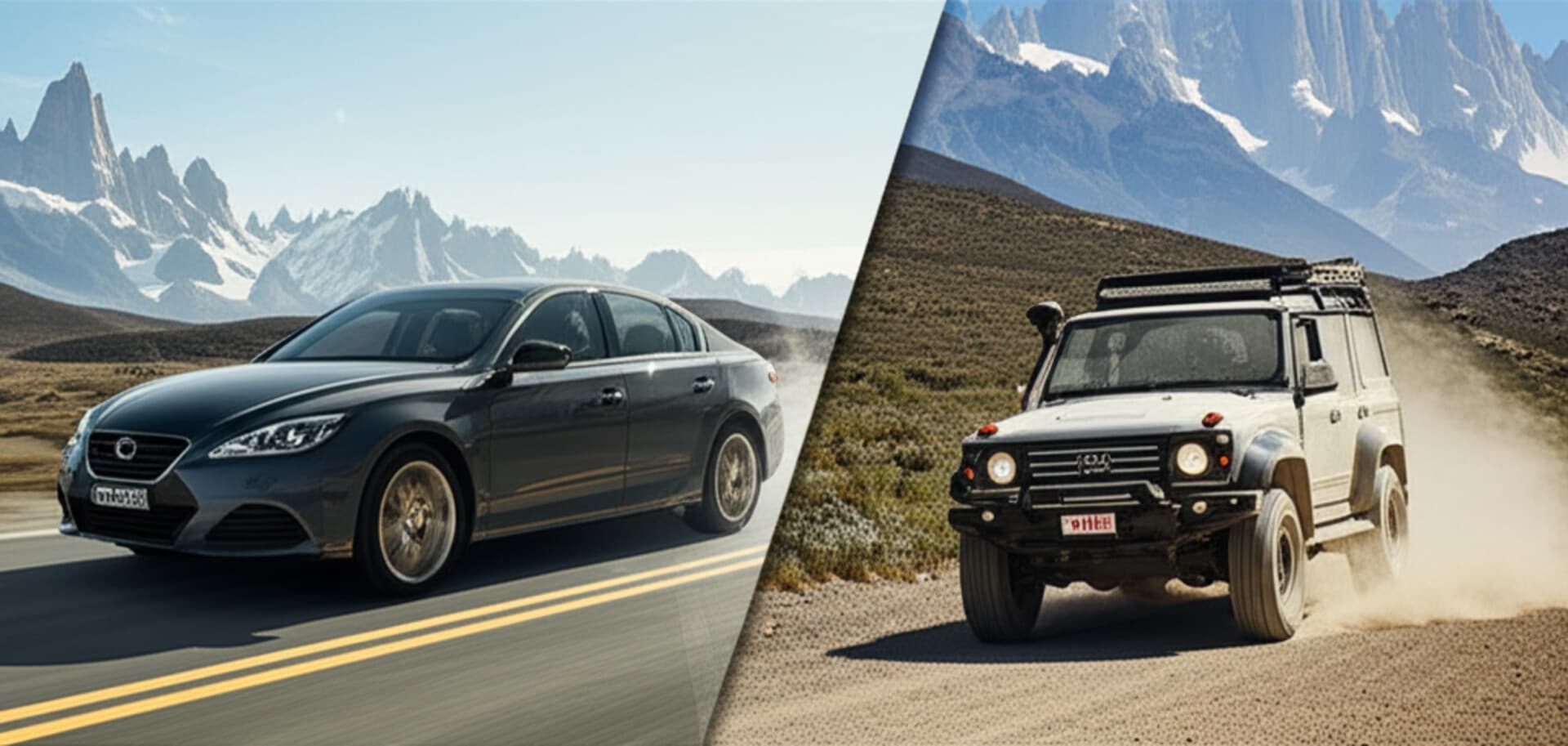
Image Generation Prompt
A split-view comparison showing a compact sedan navigating a paved highway on the left and a rugged 4WD SUV on a gravel mountain road on the right, both in Patagonia with dramatic mountain landscapes. Dust clouds visible behind the 4WD vehicle. Bright daylight, high contrast, representing the contrast between 2WD and 4WD requirements
