Argentina to Chile by Car: Insurance Requirements Explained (2026)
Clear guide to car insurance requirements for crossing the Argentina-Chile border. Learn about mandatory coverage, cross-border policies, rental company insurance, and what documents you need at the border.
Why Cross-Border Insurance Matters
Driving between Argentina and Chile in Patagonia seems straightforward - after all, you're crossing between two Mercosur countries with shared insurance agreements. But here's the reality: most rental car insurance policies do NOT automatically cover both countries, and showing up at the border without proper documentation can result in being turned away or forced to purchase expensive last-minute coverage.
This guide explains exactly what insurance you need, what rental companies actually provide, and how to verify you're properly covered before you reach the border checkpoint.
Chile Insurance Requirements
Mandatory Minimum Coverage
Chile requires all vehicles to carry:
1. Third-Party Liability Insurance
- Minimum coverage: UF 2,000 (approximately $80,000 USD as of 2026)
- Covers damage to other vehicles, property, and injuries to third parties
- Must be valid throughout your stay in Chile
2. SOAP (Seguro Obligatorio de Accidentes Personales)
- Mandatory personal accident insurance
- Covers medical expenses for driver and passengers in case of accident
- All rental cars registered in Chile automatically include SOAP
- If entering with a foreign-registered vehicle, you may need to purchase SOAP at the border
Types of Coverage
Mandatory: Third-party liability (responsabilidad civil)
Optional but Recommended:
- Collision Damage Waiver (CDW) - covers damage to your rental car
- Theft protection
- Personal effects coverage
- Supplementary liability (higher limits than minimum)
Chilean Insurance Documents
Border officials will check:
- Certificado de Seguro: Insurance policy certificate
- SOAP Certificate: Personal accident coverage proof
- Vehicle Registration (Padrón): Must match insured vehicle
Argentina Insurance Requirements
Mandatory Minimum Coverage
Argentina requires:
1. Third-Party Liability Insurance
- Minimum coverage: Approximately $100,000 USD (varies by province)
- Covers property damage and bodily injury to third parties
- Must comply with Argentine insurance law (Law 24.449)
2. Mercosur Insurance Recognition
- Argentina recognizes insurance from Chile, Brazil, Paraguay, and Uruguay
- Your policy must explicitly state it's valid in Argentina
- Simple "international coverage" is NOT sufficient
Key Differences from Chile
- Higher minimum coverage amounts required
- More emphasis on Mercosur documentation
- Provincial variations (some provinces require higher limits)
- Stricter enforcement at border crossings
Argentine Insurance Documents
Border officials will verify:
- Mercosur Insurance Card (Tarjeta Verde/Green Card): Proof of cross-border coverage
- Policy Certificate: Must list Argentina as covered territory
- Proof of Payment: Some crossings request payment confirmation
Cross-Border Coverage: The Critical Details
Why Standard Rental Insurance Isn't Enough
Most rental car insurance policies in Chile or Argentina are territory-limited:
❌ What rental companies often include by default:
- Coverage ONLY in the country where you rented the car
- Third-party liability limited to that country
- CDW/theft protection valid in one country only
✅ What you actually need:
- Explicit cross-border extension listing both Chile AND Argentina
- Mercosur insurance card or equivalent documentation
- Written confirmation from the rental company
- Emergency contact numbers valid in both countries
The "Both Countries" Rule
Your insurance certificate must explicitly list both countries. Language like "international coverage" or "South America" is insufficient. Border officials look for:
- "Válido en Chile y Argentina" (Spanish)
- "Valid in Chile and Argentina" (English)
- Both country names printed on the policy certificate
- Mercosur green card showing both territories
Example of rejection: A tourist renting in Santiago with "international coverage" was denied entry at Paso Integración Austral because the policy only listed Chile. They had to return to Chile and purchase additional insurance, losing 4 hours.
What Rental Companies Provide
Standard Rental Insurance Package
Most rental companies in Chile and Argentina include:
1. Third-Party Liability
- Usually meets minimum requirements for the rental country
- May NOT extend to the other country without add-on
2. Collision Damage Waiver (CDW)
- Covers damage to the rental vehicle
- Often has a deductible (typically $500-$1,500 USD)
- Territory-limited unless you purchase extension
3. Theft Protection
- Protects against vehicle theft
- Usually includes deductible
- May not cover contents/personal belongings
4. SOAP (Chile rentals only)
- Automatically included with Chilean-registered vehicles
- Not included with Argentine rentals entering Chile
Cross-Border Extension Add-On
To cross the border legally, you need:
Cross-Border Insurance Extension
- Cost: $10-$25 USD per day (varies by rental company)
- Coverage: Extends all policies to both countries
- Documentation: Provides Mercosur card or equivalent
- Advance notice: Request 10-14 days before pickup
- Not available: Some budget rental companies don't offer this
What Major Rental Companies Offer
| Company | Cross-Border Available? | Typical Daily Cost | Advance Notice | Notes |
|---|---|---|---|---|
| Hertz | Yes | $15-$20/day | 7 days | Includes Mercosur card |
| Europcar | Yes | $12-$18/day | 10 days | Good documentation |
| Budget | Yes | $10-$15/day | 7 days | Limited to certain vehicle types |
| Avis | Yes | $18-$25/day | 14 days | Higher cost but comprehensive |
| Local operators | Sometimes | $20-$30/day | 14+ days | Often unreliable documentation |
What You Might Need to Purchase Separately
Supplementary Liability Coverage
When you need it:
- Rental company only provides minimum coverage (UF 2,000 in Chile)
- You want higher protection limits ($200,000+ USD)
- Driving a luxury or high-value vehicle
Where to buy:
- Third-party insurance brokers (AAA Chile, Assist Card)
- Some credit cards provide supplementary coverage (verify cross-border validity)
- Travel insurance with auto liability add-on
Cost: $8-$15 USD per day for additional $100,000 coverage
Border Insurance (Last Resort)
If you arrive at the border without proper coverage:
Insurance brokers operate at major crossings:
- Paso Integración Austral (Cancha Carrera): 2-3 brokers near Chilean side
- Dorotea Crossing: 1 broker on Argentine side
- San Sebastián (Tierra del Fuego): Limited availability
Typical Offering:
- 7-day minimum policy
- $15-$30 USD per day
- Basic third-party liability only (no CDW/theft)
- Process adds 30-60 minutes to crossing time
- Cash or debit card payment only (no credit cards)
Reality check: This is emergency insurance at inflated prices. Always arrange proper coverage with your rental company beforehand.
Personal Effects Coverage
Standard rental insurance does NOT cover:
- Contents of the vehicle (luggage, cameras, laptops)
- Personal belongings stolen from the car
- Items damaged during an accident
Options:
- Travel insurance with baggage coverage ($50-$150 for trip)
- Homeowner's/renter's insurance extension
- Credit card trip protection (check cross-border validity)
How to Verify Your Coverage Before Crossing
Documents to Request from Your Rental Company
Before leaving the rental office, obtain:
1. Insurance Certificate (Certificado de Seguro)
- Must list policy number, coverage dates, and covered territories
- Should explicitly mention both Chile and Argentina
- Keep physical copy (not just digital)
2. Mercosur Green Card (Tarjeta Verde)
- Standardized proof of cross-border insurance
- Lists all covered countries
- Border officials recognize this immediately
3. SOAP Certificate (if applicable)
- Chilean rentals include this automatically
- Argentine vehicles entering Chile must show proof of equivalent coverage
4. Emergency Contact Information
- 24/7 rental company phone number
- Insurance company claims hotline
- Separate numbers for Chile and Argentina if available
5. Written Authorization (Poder Notarial)
- Notarized letter permitting cross-border travel
- Often combined with insurance certificate
- Required by customs, not just insurance verification
Questions to Ask Your Rental Agent
Before signing the contract, confirm:
- ✅ "Is my insurance valid in BOTH Chile and Argentina?"
- ✅ "Can I see the Mercosur card or equivalent document?"
- ✅ "What is the deductible if I have an accident in Argentina/Chile?"
- ✅ "Does the cross-border coverage include CDW and theft protection?"
- ✅ "What phone number do I call if I have an accident across the border?"
- ✅ "Do I need to purchase additional SOAP coverage for Argentina?"
Red flag responses:
- "Insurance is included" (without specifying both countries)
- "International coverage applies" (vague - not specific)
- "You can buy insurance at the border if needed" (unreliable)
- Agent cannot show you the actual insurance documents
What Border Officials Check
Chile Border Entry (from Argentina)
Documents verified:
- Proof of insurance valid in Chile - Policy certificate or Mercosur card
- SOAP certificate - Or confirmation that Chilean-registered vehicle has SOAP
- Vehicle registration (Padrón) - Must match insured vehicle
- VIN match - Officials compare vehicle identification number to documents
Process:
- Present documents at Chilean customs window (after Argentine exit)
- Officer scans/photocopies insurance certificate
- Verification takes 2-5 minutes if documents are in order
- No payment or fees required if insurance is valid
If insurance is missing/invalid:
- Officer directs you to insurance broker office (if available)
- May require you to return to Argentina to arrange coverage
- Border crossing can take 1-2+ hours to resolve
Argentina Border Entry (from Chile)
Documents verified:
- Mercosur insurance card - Shows coverage in Argentina
- Policy certificate - Must list Argentina as covered territory
- Proof of payment - Some crossings request insurance payment confirmation
- Vehicle ownership/rental authorization - Confirms you're legally operating the vehicle
Process:
- Present insurance documents at Argentine customs (after Chilean exit)
- Officer checks Mercosur card validity
- May request additional proof if using non-standard insurance
- Takes 3-7 minutes with proper documentation
Common issues:
- Chilean insurance without explicit Argentine coverage (rejected)
- Expired Mercosur cards (must renew before crossing)
- Missing proof of payment (sometimes waived, sometimes required)
Common Problems and How to Avoid Them
Problem 1: Insurance Not Valid in Other Country
Scenario: You rent a car in Santiago. The contract says "full coverage" but doesn't mention Argentina. At Paso Integración Austral, Argentine officials reject your entry because the policy only covers Chile.
Prevention:
- Always request cross-border extension when booking
- Verify both countries are listed on insurance certificate before leaving rental office
- Ask to see the Mercosur card or equivalent proof
If it happens:
- Turn back and contact rental company immediately
- Some companies can email emergency authorization (not always accepted)
- May need to purchase border insurance ($15-$30/day minimum 7 days)
Problem 2: Missing SOAP Documentation
Scenario: You're driving an Argentine-registered rental into Chile. Chilean officials request SOAP certificate, which your rental didn't provide.
Prevention:
- Clarify SOAP coverage when renting in Argentina
- Request explicit confirmation that coverage extends to Chile
- Chilean rentals include SOAP automatically; Argentine rentals may not
If it happens:
- Purchase SOAP at the border (available at most Chilean entry points)
- Cost: approximately $15-$25 USD for 30-day coverage
- Process adds 20-40 minutes to crossing
Problem 3: Deductible Surprises
Scenario: You have a minor accident in Argentina. Your rental company insurance covers it, but you're shocked to learn the deductible is $1,500 USD - and it applies separately in Argentina because of the cross-border extension.
Prevention:
- Ask about deductibles for BOTH countries when renting
- Some cross-border policies have separate deductibles per country
- Consider purchasing deductible reduction coverage ($8-$12/day)
Reality:
- Standard CDW deductibles: $500-$1,500 USD
- Cross-border deductibles: Often $800-$2,000 USD
- Premium "zero deductible" coverage: +$15-$25/day
Problem 4: Credit Card Insurance Doesn't Cover Cross-Border
Scenario: You decline rental insurance, relying on your credit card's auto coverage. After a windshield crack in Argentina, you discover the credit card only covers rentals in the country of departure (Chile), not cross-border travel.
Prevention:
- Call credit card company BEFORE trip to verify cross-border coverage
- Request written confirmation via email
- Most credit card insurance excludes international border crossings
Reality check:
- Only premium travel credit cards (World Elite Mastercard, Visa Infinite) sometimes cover cross-border
- Even then, coverage is often secondary (only after rental company insurance)
- Never rely solely on credit card insurance for international crossings
Problem 5: Expired Mercosur Card
Scenario: Your rental company provided a Mercosur card, but the validity date expired 3 months ago. Border officials notice and reject the document.
Prevention:
- Check all document expiration dates before leaving rental office
- Verify Mercosur card validity covers your entire trip
- Request updated documentation if anything expires during your rental
If it happens:
- Contact rental company emergency line immediately
- Some companies can fax/email updated authorization (not guaranteed acceptance)
- May need to purchase temporary border insurance
Cost Breakdown and Budget Planning
Total Insurance Costs for a 7-Day Cross-Border Trip
Scenario: Renting in Puerto Natales, driving to El Calafate, returning to Puerto Natales
Option 1: Rental Company Cross-Border Extension
- Base rental (mid-size SUV): $50/day × 7 days = $350
- Cross-border extension: $15/day × 7 days = $105
- CDW/theft protection (included in extension): $0
- Total insurance cost: $105
Option 2: Rental Company + Supplementary Liability
- Base rental: $50/day × 7 days = $350
- Cross-border extension: $15/day × 7 days = $105
- Supplementary liability ($150k extra): $10/day × 7 days = $70
- Total insurance cost: $175
Option 3: Budget Rental + Border Insurance (NOT RECOMMENDED)
- Base rental: $35/day × 7 days = $245
- No cross-border extension offered
- Border insurance (7-day minimum): $25/day × 7 days = $175
- No CDW/theft included
- Total insurance cost: $175 (with worse coverage)
Option 4: Premium "Zero Worry" Package
- Base rental (premium company): $60/day × 7 days = $420
- Full cross-border package (CDW, theft, $0 deductible, high liability): $25/day × 7 days = $175
- Total insurance cost: $175 (best protection)
Budget Recommendation
Minimum acceptable: $100-$120 for 7-day trip (basic cross-border extension) Recommended: $150-$180 for 7-day trip (cross-border + supplementary liability) Peace of mind: $200-$250 for 7-day trip (full zero-deductible package)
Don't try to save money by:
- Skipping cross-border coverage (illegal, high risk)
- Relying on credit card insurance alone (usually insufficient)
- Buying cheapest border insurance (minimal protection)
Emergency Procedures: What to Do in Case of Accident
Immediate Steps (Both Countries)
1. Safety First
- Turn on hazard lights
- Move vehicle to safe location if possible (only if minor/no injuries)
- Set up warning triangles (required by law - should be in rental car trunk)
2. Call Emergency Services
- Chile: Dial 131 (Carabineros - highway police)
- Argentina: Dial 107 (emergency services) or 911 (police)
- Report location, injuries, and vehicle damage
3. Contact Rental Company
- Call 24/7 emergency line (should be on rental contract)
- Explain situation and location
- Request guidance on next steps
- Get claim authorization number
4. Do NOT Move Vehicles Until Police Arrive
- Required for insurance claims in both countries
- Exception: Safety hazard or blocking traffic
- Take photos BEFORE moving if you must relocate
Required Documentation at Scene
Collect the following:
- Police Report Number: Carabineros (Chile) or Policía (Argentina) will issue
- Other Driver's Information: Name, ID, license plate, insurance company
- Witness Information: Names and contact details if available
- Photos: Damage to all vehicles, license plates, scene overview, injuries (if applicable)
- GPS Coordinates: Exact location for reports
Filing an Insurance Claim
Within 24 Hours:
- File police report (Denuncia) at nearest police station
- Contact rental company to report incident officially
- Contact insurance company (number on policy certificate)
- Request claim forms and provide incident details
Required Documents for Claim:
- Police report (certified copy)
- Photos of damage
- Rental contract and insurance certificate
- Medical reports (if applicable)
- Repair estimates (obtain from authorized shops)
Important Phone Numbers
Chile Emergency Contacts:
- Emergency (general): 131
- Ambulance: 131
- Carabineros (highway police): 133
- Fire department: 132
Argentina Emergency Contacts:
- Emergency (general): 911
- Ambulance: 107
- Police: 101
- Fire department: 100
Major Rental Companies Emergency Lines:
- Hertz Chile: +56 2 2360 8600 (24/7)
- Europcar Chile: +56 2 2299 7100 (24/7)
- Budget Argentina: +54 11 4315 8800 (24/7)
- Avis Argentina: +54 810 999 2847 (24/7)
Insurance Company Hotlines:
- Liberty Seguros (Chile): 600 600 0111
- HDI Seguros (Argentina): 0800 999 4534
- Mercosur Assistance: +54 11 5252 5252
Cross-Border Accident Complications
If accident occurs in Argentina with Chilean rental:
- Chilean insurance must cover Argentine territory (verify before crossing)
- Police report must be filed in Argentina (Spanish)
- Rental company may require you to return to Chile for repairs
- Claims process can take 30-60 days longer than domestic accidents
If accident occurs in Chile with Argentine rental:
- Same requirements in reverse
- May need to obtain repair authorization from Argentine rental company
- Some Chilean repair shops may not accept Argentine insurance directly
Key advice:
- Never admit fault at the scene
- Always obtain official police report (required for claims)
- Keep all receipts for towing, temporary repairs, medical treatment
- Take extensive photos before vehicle is moved or repaired
Final Checklist: Before You Cross the Border
7 Days Before Crossing
- Confirm rental company offers cross-border coverage
- Request cross-border extension in writing
- Verify both Chile AND Argentina are listed on insurance certificate
- Ask for Mercosur card or equivalent documentation
- Confirm SOAP coverage (if applicable)
- Save emergency contact numbers for both countries
- Check credit card coverage limitations (if applicable)
At Rental Pickup
- Review all insurance documents before leaving lot
- Verify policy number matches across all paperwork
- Confirm vehicle VIN matches insurance certificate
- Obtain physical copies (not just digital) of all documents
- Test emergency phone numbers (ensure they connect)
- Clarify deductible amounts for both countries
- Request written confirmation of cross-border authorization
Before Entering Border Crossing
- Organize all documents in easy-to-access folder
- Have insurance certificate ready for inspection
- Mercosur card or proof of coverage accessible
- Vehicle registration (Padrón) available
- Passport and driver's license ready
- Emergency contact numbers saved on phone
- Full tank of gas (gas stations scarce near some borders)
At the Border
- Present insurance documents when requested
- Answer questions truthfully and clearly
- Keep calm if there are documentation issues
- Contact rental company immediately if problems arise
- Do NOT attempt to cross without proper insurance
- Get all stamped documents back before proceeding
Key Takeaways
1. Cross-border coverage is NOT automatic: Standard rental insurance only covers the country where you rented. You must specifically request and pay for cross-border extension ($10-$25/day).
2. Both countries must be explicitly listed: Insurance certificates must name both Chile AND Argentina. Vague terms like "international coverage" will be rejected at the border.
3. Chile requires UF 2,000 minimum liability + SOAP: Argentina requires approximately $100,000 USD minimum liability. Ensure your policy meets both requirements.
4. Mercosur card is your best proof: This standardized document is immediately recognized by border officials and speeds up the crossing process.
5. Budget extra time for insurance verification: Even with perfect documentation, insurance checks add 5-10 minutes to your border crossing. Without proper documents, expect 1-2+ hour delays.
6. Border insurance is expensive and limited: Last-minute insurance at the border costs $15-$30/day (7-day minimum) and provides only basic coverage. Always arrange coverage with your rental company in advance.
7. Credit card insurance usually doesn't cover cross-border: Most credit card auto insurance excludes international border crossings. Call your credit card company to verify before declining rental coverage.
8. Keep physical copies of everything: Border officials may not accept digital documents. Carry printed copies of insurance certificates, Mercosur card, SOAP certificate, and vehicle registration.
9. Know emergency procedures before you need them: Save emergency contact numbers for both countries, rental company 24/7 line, and insurance claims hotline. In case of accident, file police report immediately (required for claims).
10. Budget appropriately: Cross-border insurance costs $100-$250 for a week-long trip depending on coverage level. Don't skip this expense - driving without proper insurance can result in vehicle confiscation, fines, and legal liability.
Drive with Confidence
Understanding insurance requirements for crossing the Argentina-Chile border might seem complex, but it boils down to three simple actions:
- Request cross-border coverage when booking your rental (10-14 days in advance)
- Verify both countries are listed on your insurance certificate before leaving the rental office
- Carry all documents in physical form when crossing the border
With proper insurance in place, crossing the border is straightforward and stress-free. Most travelers with correct documentation complete the insurance verification portion of border crossing in under 5 minutes.
The small investment in proper cross-border coverage ($10-$25/day) provides enormous peace of mind and legal protection. Don't let insurance issues ruin your Patagonian road trip - plan ahead, verify your coverage, and enjoy the stunning drive between these two incredible countries.
Need help with other border crossing logistics? Check out our complete guide to Chile-Argentina border crossings by car for permits, documentation, wait times, and step-by-step procedures.
Frequently Asked Questions
Is my rental car insurance valid in both Chile and Argentina?
Not automatically. You must specifically request cross-border coverage from your rental company and ensure your policy explicitly lists BOTH countries. Standard rental insurance typically only covers the country where you rented the car. Expect to pay $10-$25 USD extra per day for cross-border extension.
What is the minimum insurance coverage required for Chile?
Chile requires minimum third-party liability coverage of UF 2,000 (approximately $80,000 USD) and mandatory SOAP (Seguro Obligatorio de Accidentes Personales) for personal injury. All rental cars in Chile include SOAP, but verify the liability limit meets the minimum requirement.
Can I buy insurance at the border if my rental doesn't cover both countries?
Yes, insurance brokers operate at major border crossings (like Paso Integración Austral) offering short-term policies for $15-$30 USD per day. However, this is expensive and time-consuming (adds 30-60 minutes to crossing). Always arrange proper coverage with your rental company in advance.
What documents do border officials check for insurance?
Officials verify: (1) Insurance policy certificate (Certificado de Seguro), (2) Green Card or Mercosur insurance card showing coverage in both countries, (3) SOAP certificate (if entering Chile), (4) Proof that the policy covers the specific vehicle (match VIN/license plate). Keep physical copies - digital versions may not be accepted.
What happens if I have an accident with a rental car across the border?
Immediately: (1) Call emergency services (Chile: 131, Argentina: 107), (2) Contact your rental company's emergency line, (3) File a police report (obligatory for insurance claims), (4) Document everything with photos, (5) Do NOT move the vehicle until authorities arrive unless it's a safety hazard. Your rental agreement should include emergency contact numbers for both countries.
Image Generation Prompt
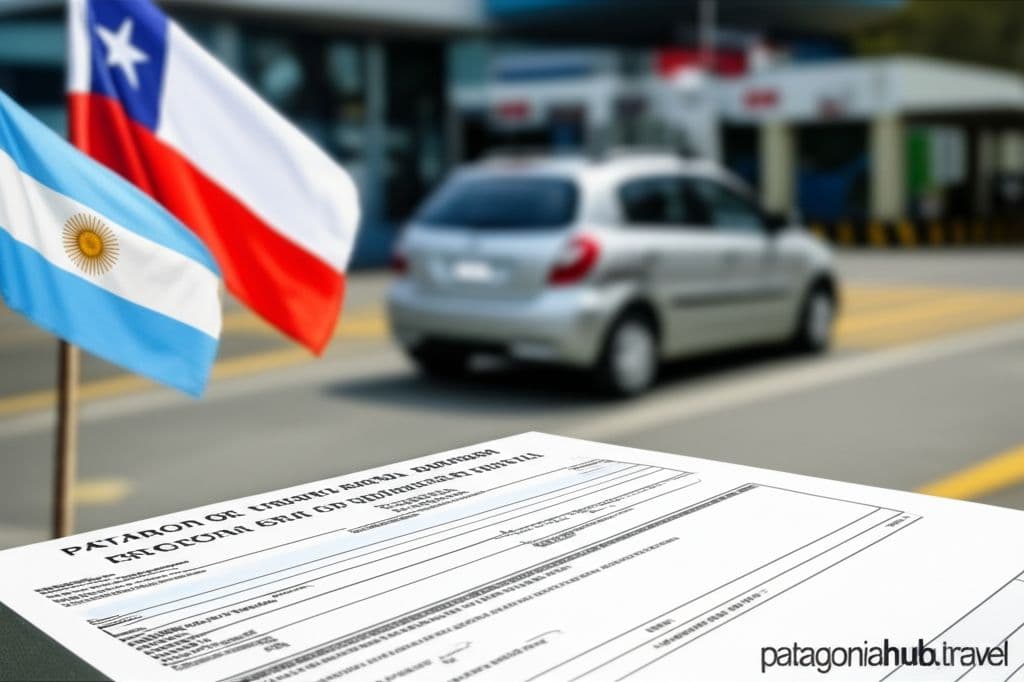
Create a professional photograph showing a car insurance document being reviewed at a border crossing in Patagonia. The scene should include official insurance papers with both Argentine and Chilean flags visible in the background, set at a modern border checkpoint. Include a car in soft focus behind the documents. Style: Professional documentary photography with natural lighting, sharp focus on the insurance documents, 16:9 aspect ratio. Include subtle 'patagoniahub.travel' branding in the bottom right corner.
Related Guides
Chile-Argentina Border Crossing by Car: Complete Guide for Self-Drivers
Everything you need to know about crossing the Chile-Argentina border by car in Patagonia. From permits and documentation to wait times, food restrictions, and step-by-step procedures - your complete 2026 guide.
Border Crossing Permits for Rental Cars: Complete Documentation Guide
Complete guide to border crossing permits for rental cars in Patagonia. Learn about Poder Notarial requirements, costs ($80-$200), processing times (10-14 days), insurance, and essential documents needed to cross Chile-Argentina borders.
Best Time to Cross the Chile-Argentina Border: Wait Time Guide
Strategic timing guide for Chile-Argentina border crossings in Patagonia. Learn the best times of day, days of week, and seasons to minimize wait times, plus what affects delays and how to plan your crossing.
