Border Crossing Permits for Rental Cars: Complete Documentation Guide
Complete guide to border crossing permits for rental cars in Patagonia. Learn about Poder Notarial requirements, costs ($80-$200), processing times (10-14 days), insurance, and essential documents needed to cross Chile-Argentina borders.

At a glance
- Cost
- USD 80–200: budget companies 80–120, international chains 120–180, premium vehicles 150–250. Cross-border insurance adds USD 10–25 per day.
- Lead time
- Request 10–14 business days before you cross; 3–4 weeks in December–February.
- What you get
- A notarized authorization (Poder Notarial) plus the vehicle registration (Padrón) and insurance valid in both countries.
- Who allows it
- Europcar, Hertz, Budget, Avis and Localiza (Argentina) generally do; Econorent and most local budget operators do not.
- One-way across the border
- Rarer and dearer: USD 200–500+ to drop off in the other country, when it is allowed at all.
- Extra drivers
- Every driver must be named on the authorization; expect USD 5–10 per day each.
Crossing the Chile-Argentina border with a rental car requires more than just your driver's license and passport. The vehicle you're renting is registered in one country and legally cannot leave without proper authorization from the owner - the rental company.
This authorization comes in the form of a Poder Notarial (Notarial Power), a legally binding document notarized by a Chilean or Argentine public notary. Without this document, border officials will turn you away, potentially disrupting your entire Patagonia itinerary.
The reality: About 40% of travelers attempting border crossings with rental cars are turned back due to missing or incorrect documentation. This guide ensures you're not one of them.
What Exactly Is a Poder Notarial?
A Poder Notarial is a legal authorization letter that grants you temporary power of attorney to take the rental company's vehicle across international borders. This document must be:
- Notarized by a Chilean or Argentine public notary (Notario Público)
- Written in Spanish with legal terminology specific to vehicle authorization
- Signed by authorized representatives of the rental company
- Original document (photocopies are not accepted at borders)
The document explicitly states:
- Vehicle identification (make, model, year, license plate, VIN)
- Renter's full name and passport number
- Authorized countries (Chile and Argentina)
- Validity dates for the authorization
- Rental company's legal details and signatures
Legal Framework
Both Chile and Argentina require this document under their vehicle import regulations:
Chile: Law 18.483 (Vehicle Taxation) requires written authorization for non-owner vehicle export Argentina: Customs Code Article 440 requires proof of ownership or authorization for temporary vehicle imports
How It Differs From Regular Rental Contracts
| Document | Purpose | Legal Status | Border Recognition |
|---|---|---|---|
| Rental Contract | Proves you rented the vehicle | Private agreement | Not sufficient for borders |
| Poder Notarial | Authorizes international travel | Notarized legal document | Required by law |
| Vehicle Registration | Proves ownership | Government registration | Required + must match authorization |
Critical distinction: Your rental contract only proves you have permission to drive the car in the rental country. The Poder Notarial proves the owner (rental company) consents to the vehicle leaving the country temporarily.
Frequently Asked Questions
What is a Poder Notarial and why do I need it for border crossings?
A Poder Notarial (Notarial Power) is a legal authorization document that gives you permission to take a rental company's vehicle across international borders. It's required because the rental car is registered in Chile or Argentina and cannot legally leave the country without the owner's notarized consent.
How much does a border crossing permit cost for a rental car?
Border crossing permits cost between $80-$200 USD depending on the rental company and vehicle type. Budget companies charge $80-$120, international chains charge $120-$180, and premium vehicles can cost $150-$250. This fee covers the notarization process and administrative work.
How far in advance must I request a border crossing permit?
You must request border crossing permits at least 10-14 business days before your crossing date. During high season (December-February), request 3-4 weeks in advance. The rental company needs time to prepare notarized documents through Chilean or Argentine legal channels.
Which rental car companies allow border crossings in Patagonia?
Major companies that allow border crossings include Europcar, Hertz, Budget, Avis, and Localiza (Argentina). Companies like Econorent and most local budget operators do NOT allow crossings. Always verify border crossing policies during the booking process, not after arrival.
Image Generation Prompt
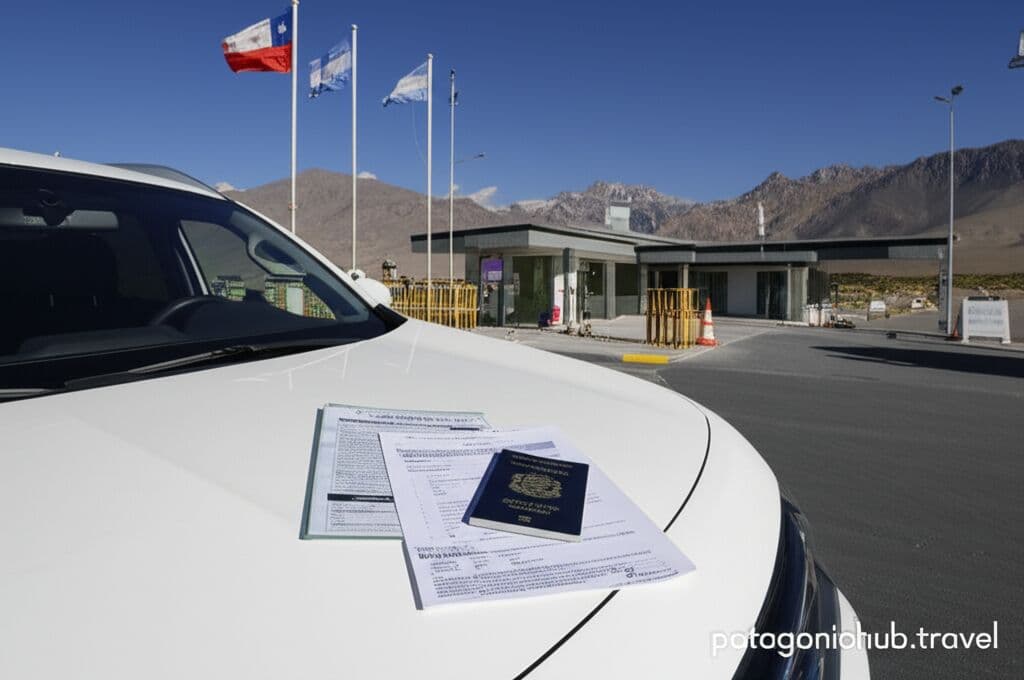
Create a professional photograph showing a modern rental car (SUV) with official border crossing documents displayed on the hood, including a notarized paper (Poder Notarial), vehicle registration, and passport. The scene is set at a Chile-Argentina border checkpoint with the customs building and flags visible in the background. Mountains and clear blue sky frame the composition. Style: Professional travel photography with natural lighting, 16:9 aspect ratio. No people in focus. Include subtle 'patagoniahub.travel' branding in the bottom right corner.
Related Guides
Chile-Argentina Border Crossing by Car: Complete Guide for Self-Drivers
Everything you need to know about crossing the Chile-Argentina border by car in Patagonia. From permits and documentation to wait times, food restrictions, and step-by-step procedures - your complete 2026 guide.
Cancha Carrera Border Crossing: Complete Step-by-Step Guide 2026
Detailed walkthrough of the Cancha Carrera / Río Turbio border crossing between Puerto Natales and El Calafate. Step-by-step procedures, documents, timings, and tips to cross smoothly.
Chile Food Restrictions at Border: What You Can't Bring (2026 Guide)
Complete guide to Chile's strict food import restrictions at border crossings. Learn what's prohibited (fruits, meat, dairy, seeds), allowed items, SAG inspection process, penalties ($200+ fines), and how to avoid confiscation when crossing from Argentina.
Driving Patagonia? Ask us the awkward questions.
Border permits, one-way drop-offs, fuel gaps between towns — tell us your route and dates for El Calafate and we will come back with what actually works.
The advice is free. Booking a car or a tour through us afterwards is entirely optional.
Message written for you — edit or send as is.