Best Time to Cross the Chile-Argentina Border: Wait Time Guide
Strategic timing guide for Chile-Argentina border crossings in Patagonia. Learn the best times of day, days of week, and seasons to minimize wait times, plus what affects delays and how to plan your crossing.
Why Border Wait Times Matter
When planning a cross-border Patagonia road trip, understanding wait times at Chile-Argentina border crossings can make the difference between a smooth journey and a frustrating 4-hour delay. Unlike European borders where you drive through freely, Patagonian crossings involve multiple checkpoints with passport control, vehicle documentation checks, and agricultural inspections.
Smart timing can reduce your crossing from 3+ hours to just 30-45 minutes, giving you more time to explore and less time sitting in queues.
This guide provides data-driven timing recommendations based on seasonal patterns, day-of-week trends, time-of-day analysis, and real-world traveler experiences at the main Patagonian border crossings.
Wait Time Expectations by Season
Peak Summer Season (December - February)
High season brings the longest wait times:
| Period | Weekday Wait | Weekend Wait | Holiday Wait |
|---|---|---|---|
| Early December (1-15) | 45-75 minutes | 90-120 minutes | N/A |
| Holiday Rush (Dec 20-28) | 90-150 minutes | 2-3 hours | 3-4+ hours |
| New Year Week (Dec 28-5) | 120-180 minutes | 2-4 hours | 4-5+ hours |
| January (6-31) | 60-90 minutes | 90-150 minutes | 2-3 hours |
| February (1-28) | 45-75 minutes | 75-120 minutes | 90-150 minutes |
Why summer is busiest:
- International tourist peak season
- Argentine summer vacations (January-February)
- Chilean summer holidays (January)
- Best weather for Torres del Paine and Perito Moreno visits
- Tour buses run at maximum capacity
Strategic tips for summer crossings:
- Cross on weekdays only - Weekend wait times can double
- Arrive before 8:30 AM - Be in the first wave when gates open
- Avoid December 20 - January 5 entirely if possible
- Consider alternative crossings - Dorotea may be less crowded than Cancha Carrera
Shoulder Season (October-November, March-April)
Moderate wait times with pleasant weather:
| Period | Weekday Wait | Weekend Wait |
|---|---|---|
| October | 45-75 minutes | 60-90 minutes |
| November | 50-80 minutes | 75-105 minutes |
| March | 40-70 minutes | 60-90 minutes |
| April | 30-60 minutes | 45-75 minutes |
Why shoulder season is ideal:
- Fewer tourists than summer peak
- Weather still favorable for travel
- Lower rental car costs
- More flexibility in crossing times
- Tour buses operate at reduced frequency
Best value timing:
- Late March and early April have shortest shoulder season waits
- October can still be busy due to spring break travelers
- Easter Week (varies annually) brings temporary spikes
Low Season (May - September)
Shortest wait times but challenging weather:
| Period | Weekday Wait | Weekend Wait |
|---|---|---|
| May | 25-45 minutes | 30-50 minutes |
| June-August | 20-40 minutes | 25-45 minutes |
| September (pre-18th) | 25-45 minutes | 35-55 minutes |
| September 18 weekend | 90-150 minutes | 2-3 hours |
Low season characteristics:
- Minimal tourist traffic
- Local traffic only
- Some crossings reduce operating hours
- Weather can cause temporary closures
- Shortest overall wait times
Important considerations:
- September 18 (Chilean Independence Day) is a major exception - wait times spike to summer levels
- Winter weather can delay crossings due to road conditions, not border traffic
- Reduced staffing may slow processing despite fewer vehicles
Best Times of Day to Cross
Early Morning (8:00-9:30 AM) ⭐ RECOMMENDED
Average wait: 20-50 minutes depending on season
Why it's the best:
- Crossing just opened, minimal queue buildup
- Staff are fresh and processing efficiently
- Tour buses haven't arrived yet
- Day-trippers still departing from hotels
- Ideal lighting for scenic drive ahead
Optimal strategy:
- Leave Puerto Natales by 6:00-6:30 AM
- Arrive at Chilean checkpoint by 8:00-8:15 AM
- Be among the first 5-10 vehicles in line
- Complete crossing by 9:00-9:30 AM
- Arrive in El Calafate before noon
Downsides:
- Requires very early departure
- May miss hotel breakfast
- Dark driving in winter months
- Border may not open exactly at 8:00 AM (sometimes 8:05-8:10)
Late Morning (9:30-11:00 AM)
Average wait: 45-90 minutes depending on season
Why it's moderate:
- Initial morning rush has cleared
- Tour buses starting to arrive
- Steady flow but manageable
- Good compromise for those who can't leave early
Best for:
- Families with children
- Travelers who want hotel breakfast
- Those driving from Torres del Paine (already a long drive)
Midday (11:00-14:00) ⚠️ AVOID
Average wait: 90-180+ minutes depending on season
Why it's the worst:
- Tour buses cluster during this window - Each bus takes 30-45 minutes to process (40+ passengers)
- Lunch breaks reduce staff availability (especially at SAG inspection)
- Day-trippers from both sides converge
- Heat in summer makes waiting uncomfortable
- Peak congestion period
What you'll encounter:
- 3-5 tour buses ahead of you means 90+ minute wait before your turn
- Slower agricultural inspections (more thorough during busy times)
- System slowdowns from processing volume
- Limited restroom availability due to crowds
Early Afternoon (14:00-16:00)
Average wait: 60-90 minutes depending on season
Why it's moderate:
- Lunch rush clearing
- Before late afternoon rush
- Tour buses have mostly crossed
- Better than midday but not ideal
Late Afternoon (16:00-18:00) ⚠️ CAUTION
Average wait: 75-120 minutes depending on season
Why it's busy:
- Day-trippers returning to base
- Travelers rushing to cross before evening
- Rental car returns (people heading back to drop-off cities)
- Pressure to finish before closing time
Risk factors:
- If delayed, you may not complete crossing before closing (8:00-10:00 PM depending on season)
- Staff fatigue can slow processing
- Increased stress and tension among travelers
Evening (18:00-Closing)
Average wait: 30-60 minutes depending on season
Why it's less busy:
- Most tourists have already crossed
- Primarily local traffic
- Smaller queues
- Faster processing
Critical warnings:
- Verify closing time - Varies by season (8:00 PM winter, 10:00 PM summer)
- Don't arrive within 90 minutes of closing - They may turn you away
- If you arrive at 7:00 PM and there's a 2-hour queue, you'll be sent back
- Missing closing time means overnight in Cerro Castillo or Puerto Natales
Best for:
- Low season crossings with late closing times
- Experienced travelers who've timed it correctly
- Those with flexible accommodation on both sides
Best Days of Week to Cross
Tuesday, Wednesday, Thursday ⭐ OPTIMAL
Average wait reduction: 20-40% shorter than weekend waits
Why these days are best:
- Lowest overall traffic volume
- Fewer tour groups (tours often run Fri-Mon or Mon-Fri)
- Business travelers have crossed by Monday
- Weekend travelers haven't started yet
- Staff maintain consistent processing speed
Typical wait times:
- Low season: 20-35 minutes
- Shoulder season: 35-60 minutes
- High season: 45-90 minutes
Monday ⚠️ MORNING RUSH
Morning (8:00-12:00): 50-100% longer waits Afternoon (12:00-closing): Normal wait times
Why Monday mornings are busy:
- Weekend travelers returning from Argentina to Chile (or vice versa)
- Tour groups starting weekly circuits
- Rental car exchanges (weekly rentals end/start)
- Business travelers crossing after weekend
Strategy for Monday crossings:
- Avoid mornings entirely
- Cross after 2:00 PM for normal waits
- Or arrive before 8:00 AM to be first in line
Friday ⚠️ AFTERNOON RUSH
Morning (8:00-13:00): Normal wait times Afternoon (13:00-closing): 50-80% longer waits
Why Friday afternoons are busy:
- Weekend travelers heading to destinations
- Tour groups starting weekend trips
- Locals crossing for weekend getaways
- Rental car pickups (weekly rentals starting)
Strategy for Friday crossings:
- Cross before noon for normal waits
- Avoid after 1:00 PM
- Or wait until Saturday morning if flexible
Saturday & Sunday 🔀 VARIES BY SEASON
Wait time variability: Highly dependent on season and specific weekend
Summer (Dec-Feb):
- Saturday: 90-150 minutes (very busy)
- Sunday: 75-120 minutes (busy returning traffic)
Shoulder (Oct-Nov, Mar-Apr):
- Saturday: 60-90 minutes (moderate)
- Sunday: 50-75 minutes (moderate)
Winter (May-Sep):
- Saturday: 30-50 minutes (minimal impact)
- Sunday: 25-45 minutes (minimal impact)
Weekend patterns:
- Saturday mornings busy with outbound tourists
- Sunday afternoons busy with returning tourists
- Long weekends amplify these patterns significantly
Crossing-Specific Wait Time Analysis
Paso Integración Austral (Cancha Carrera / Río Turbio)
Overall traffic volume: ⭐⭐⭐⭐⭐ (Highest)
Why it's the busiest:
- Most direct Puerto Natales ↔ El Calafate route
- Primary route for Torres del Paine visitors
- All major tour companies use this crossing
- Handles approximately 60% of regional border traffic
Seasonal wait times:
| Season | Low Traffic Time | Peak Traffic Time |
|---|---|---|
| Summer (Dec-Feb) | 60-90 min | 2-4 hours |
| Shoulder | 40-70 min | 90-120 min |
| Winter | 25-45 min | 45-75 min |
Peak congestion periods:
- December 20 - January 5: Extreme delays (3-5 hours possible)
- Weekends in January-February: Very busy (2-3 hours)
- Chilean Independence (Sept 18 weekend): Summer-level traffic
Best times to cross Cancha Carrera:
- ✅ Tuesday-Thursday, 8:00-9:00 AM
- ✅ Low season weekdays, any time 9:00 AM - 6:00 PM
- ⚠️ Weekdays, 2:00-4:00 PM (moderate)
- ❌ Weekends, 11:00 AM - 5:00 PM (very busy)
- ❌ Any time Dec 20 - Jan 5 (extreme delays)
Paso Dorotea
Overall traffic volume: ⭐⭐⭐ (Moderate)
Why it's less busy:
- Alternative route adding ~30 km to journey
- Not highlighted by most rental companies
- Fewer tour operators use this crossing
- Handles approximately 39% of regional border entries
- Preferred by locals who know about it
Seasonal wait times:
| Season | Low Traffic Time | Peak Traffic Time |
|---|---|---|
| Summer (Dec-Feb) | 40-70 min | 90-150 min |
| Shoulder | 25-50 min | 60-90 min |
| Winter | 20-35 min | 35-60 min |
Advantages of Dorotea:
- 20-40% shorter wait times than Cancha Carrera during peak season
- Less likely to encounter tour buses
- More consistent processing speeds
- Good alternative when Cancha Carrera is backed up
Disadvantages:
- Adds 25-30 minutes to total drive time
- Fewer facilities (no duty-free shop, limited restrooms)
- Less frequent updates on real-time status
Best times to cross Dorotea:
- ✅ Anytime during low/shoulder seasons (consistently fast)
- ✅ Summer weekdays, 8:00-10:00 AM
- ✅ Alternative when Cancha Carrera is gridlocked
- ⚠️ Summer weekends still see moderate traffic
Comparative Analysis: Which Crossing to Choose?
Choose Cancha Carrera when:
- Crossing in low season (wait times minimal anyway)
- Crossing early morning weekday (faster route)
- You want facilities (duty-free, cafés, better restrooms)
- You prefer the most direct route
Choose Dorotea when:
- Crossing during peak summer season
- It's a weekend or holiday period
- You hear reports of long waits at Cancha Carrera
- You prioritize shorter wait over shorter drive
Time comparison example (Puerto Natales → El Calafate):
| Scenario | Cancha Carrera | Dorotea | Winner |
|---|---|---|---|
| Low season weekday (minimal wait) | 4h 30min | 5h 0min | Cancha |
| Summer weekday 8 AM (optimal timing) | 5h 0min | 5h 15min | Cancha |
| Summer weekend midday (poor timing) | 6h 30min | 5h 45min | Dorotea |
| Holiday period (extreme delays) | 8h 0min | 6h 30min | Dorotea |
Worst Times to Cross (AVOID)
Absolute Peak Periods: DO NOT CROSS
1. Christmas to New Year (December 20 - January 5)
Expected wait: 3-5+ hours at peak times
Why it's the worst:
- Argentine summer vacation begins (millions traveling)
- International tourist peak
- Local holiday travelers
- Maximum tour bus operations
- Staff may be reduced due to holidays
What you'll face:
- Queues of 30+ vehicles
- 10+ tour buses in line
- 4-5 hour waits common
- Possible delays due to system outages from volume
- Extreme heat in vehicles (summer)
Alternative strategy:
- Cross before December 18 or after January 7
- Consider flying between destinations instead
- Book tours with included transport (avoid driving yourself)
2. Chilean Independence Day Weekend (September 16-19)
Expected wait: 2-4 hours
Why it's terrible:
- Chilean national holiday (biggest celebration of the year)
- Chileans travel en masse to Argentina
- Argentine visitors come to Chile for celebrations
- Multi-day weekend (often Fri-Mon)
- Winter season means reduced operating hours
What you'll face:
- Unexpected winter-season traffic spike
- Shorter operating hours compound the problem
- Both directions heavily congested
- Limited facilities due to low season
Alternative strategy:
- Cross the week before (Sept 10-15)
- Cross the week after (Sept 22-28)
- Avoid this weekend entirely if possible
3. Easter Week (Semana Santa)
Expected wait: 90-180 minutes
Dates vary: March/April depending on liturgical calendar
Why it's busy:
- Major religious holiday in both countries
- School vacation week
- 4-day weekend (Thursday-Sunday)
- Shoulder season traffic spike
What you'll face:
- Long weekend traffic patterns
- Families traveling
- Moderate but noticeable delays
4. Argentine National Holidays
Major Argentine holidays affecting border traffic:
- May 1 (Labour Day) - Long weekend
- May 25 (May Revolution) - Long weekend
- July 9 (Independence Day) - Often extended to long weekend
- August 17 (Death of San Martín) - Regional holiday
Expected waits: 90-150 minutes during long weekends
Why they matter:
- Argentines travel to Chile during extended weekends
- Combined with weekend traffic
- Tour operations increase
5. Long Weekends (Feriados Largos)
Both countries create "bridge" holidays:
Chilean bridges:
- Connecting holidays to weekends for 3-4 day breaks
- Announced annually by government
- Create unexpected traffic spikes
Argentine bridges:
- Similar strategy
- Often different from Chilean dates
- Check calendar before planning
Expected waits during any long weekend: 90-180 minutes
What Affects Border Wait Times
Understanding the factors that influence wait times helps you anticipate delays:
1. Number of Staff on Duty
Impact: ⭐⭐⭐⭐⭐ (Extreme)
How it affects you:
- Each checkpoint has 2-4 immigration officers
- During shift changes (typically 2:00 PM and 8:00 PM), processing slows
- Lunch breaks reduce available staff (12:30-2:00 PM)
- Holiday periods may have reduced staffing despite higher traffic
What you can't control:
- Staffing levels (government-determined)
- Shift schedules
- Staff experience levels
What you can control:
- Avoid crossing during shift change times
- Avoid midday lunch period
- Choose crossings known for better staffing (Cancha Carrera)
2. Tour Buses in Queue
Impact: ⭐⭐⭐⭐⭐ (Extreme)
How much delay each bus adds: 30-45 minutes
Why buses slow everything:
- 40-50 passengers (each passport checked individually)
- Vehicle inspection takes longer (larger vehicle)
- Luggage X-ray for entire bus
- Group dynamics (stragglers, language barriers)
- Simultaneous processing but single queue
Bus timing patterns:
- 10:00 AM - 1:00 PM: Peak bus crossing window
- 4:00 PM - 6:00 PM: Afternoon bus wave
- Weekends: Higher bus frequency
How to avoid bus queues:
- Cross before 9:30 AM (buses haven't arrived)
- Cross after 2:00 PM but before 4:00 PM (between waves)
- Weekday crossings have fewer buses
If you're stuck behind buses:
- Expect 30-45 minutes per bus ahead of you
- 3 buses = add 90-135 minutes to your wait
- Stay patient - cutting in line is prohibited
3. SAG/SENASA Inspection Intensity
Impact: ⭐⭐⭐⭐ (High)
What determines inspection thoroughness:
- Random selection: Some vehicles get "red light" for full inspection
- Suspicious behavior: Nervousness, inconsistent answers
- Vehicle type: Motorhomes and camper vans always inspected thoroughly
- Destination declared: Camping = more thorough inspection
- Previous violations: Repeat offenders flagged in system
Inspection levels:
- Green (Quick): 5-10 minutes - Declaration accepted, visual check only
- Yellow (Standard): 10-20 minutes - Open trunk, check cooler, basic search
- Red (Thorough): 20-45 minutes - Empty vehicle, X-ray luggage, full inspection
How to increase chances of green light:
- Declare everything honestly
- Dispose of all prohibited items beforehand
- Answer questions directly and confidently
- Have organized documentation
- Clean vehicle (shows respect)
4. System Outages and Technical Issues
Impact: ⭐⭐⭐ (Moderate but unpredictable)
Common technical problems:
- Computer system crashes: Halts all processing (15-60 min delays)
- Internet connectivity issues: Slows passport verification
- X-ray machine breakdowns: Forces manual luggage inspection
- Printer malfunctions: Delays document issuance
Frequency:
- More common during peak season (system overload)
- Higher probability in winter (power issues)
- Unpredictable and unforeseeable
What to do if systems are down:
- Don't leave the queue - You'll lose your position
- Be patient - Systems usually restore within 30-60 minutes
- Have snacks and water - You may be waiting in your vehicle
- Use restroom before getting in line - May not be able to leave queue
5. Weather Conditions
Impact: ⭐⭐⭐ (Moderate, seasonal)
How weather affects crossings:
- Heavy snow (winter): Road closures, slower processing, reduced hours
- High winds (year-round): Trailer/truck restrictions slow queue
- Rain (shoulder season): Muddy vehicle inspections take longer
- Extreme cold (winter): Equipment malfunctions, staff rotate more frequently
Weather-related closures:
- Temporary (1-3 hours): Heavy snow, clearing roads
- Extended (6-12 hours): Severe storms, visibility issues
- Rare (24+ hours): Major winter storms (happens 1-2 times per winter)
How to prepare:
- Check weather forecast 24 hours before crossing
- Have flexible accommodation on both sides
- Carry emergency supplies (blankets, food, water)
- Winter crossings: 4WD/AWD strongly recommended
6. Special Events and Unusual Traffic
Impact: ⭐⭐ (Low frequency but high impact)
Examples of unusual traffic spikes:
- Major sports events: Argentina/Chile soccer matches
- Concerts: Big name artists in Patagonia cities
- Marathons/races: Ultra Trail Torres del Paine, marathons
- Festival events: Fishing season openings, local festivals
How to check for special events:
- Search "{destination city} events {month}" before trip
- Ask hotel staff if anything is happening
- Check local Facebook groups
- Monitor rental car company communications
Strategic Timing Tips
1. The "Opening Rush" Strategy
Concept: Be among the first vehicles when the crossing opens
Execution:
- Night before: Stay in Cerro Castillo (15 km from border) or Puerto Natales (160 km)
- Morning of: Depart very early
- From Cerro Castillo: Leave 7:30 AM
- From Puerto Natales: Leave 6:00 AM
- Arrival: Reach border by 7:50-8:00 AM
- Position: Aim to be vehicle #1-10 in line
- Crossing: Complete process by 8:30-9:00 AM
Pros:
- ✅ Minimal wait (20-40 minutes total)
- ✅ Fresh staff, efficient processing
- ✅ No tour buses yet
- ✅ Rest of day ahead for activities
Cons:
- ❌ Very early wake-up (5:00-5:30 AM)
- ❌ May miss hotel breakfast
- ❌ Dark driving in winter
- ❌ Border may open 5-10 minutes late
Best for:
- High season crossings (Dec-Feb)
- Weekend crossings
- Travelers with tight itineraries
- Those willing to sacrifice morning comfort for time savings
2. The "Overnight Near Border" Strategy
Concept: Stay very close to the border to minimize morning drive
Where to stay:
-
Chile side: Cerro Castillo (15 km from border)
- Hotel options: Estancia Cerro Castillo, basic hostels
- Pros: Close to border, quiet, affordable
- Cons: Limited dining, very small town
-
Argentina side: Río Turbio (10 km from border)
- Hotel options: Hotel Capipe, hostels
- Pros: Close to border, more services than Cerro Castillo
- Cons: Industrial mining town, less scenic
Execution:
- Drive to border town day before crossing
- Relax, have dinner, sleep well
- Short drive to border in morning (15-20 min)
- Cross early, continue journey refreshed
When it makes sense:
- ✅ Peak season when early crossing is critical
- ✅ You're exhausted from Torres del Paine trekking
- ✅ You want to avoid long drive + early wake-up
- ✅ You prefer splitting journey into two days
When it doesn't make sense:
- ❌ Low season (wait times short anyway)
- ❌ Budget-conscious travel (adds $50-80 for accommodation)
- ❌ You prefer staying in Puerto Natales/El Calafate
3. The "Buffer Time" Planning Strategy
Concept: Always add buffer time to avoid missed connections
How much buffer to add:
| Season/Situation | Minimum Buffer | Recommended Buffer |
|---|---|---|
| Low season weekday | +1 hour | +1.5 hours |
| Shoulder season weekday | +1.5 hours | +2 hours |
| Summer weekday | +2 hours | +3 hours |
| Summer weekend | +3 hours | +4 hours |
| Holiday period | +4 hours | +5-6 hours |
Example planning:
Without buffer (risky):
- Google Maps: Puerto Natales → El Calafate = 4h 30min
- Planned arrival: 12:30 PM
- Actual arrival if border is busy: 3:30 PM (missed lunch reservation)
With buffer (safe):
- Google Maps: 4h 30min
- Add 2-hour buffer for summer weekday
- Planned arrival: 2:30 PM
- Actual arrival: 12:30 PM if crossing is fast (extra time to explore)
- Actual arrival: 2:30 PM if crossing is slow (still on schedule)
What buffer time protects against:
- Longer-than-expected border wait
- Tour buses ahead of you
- System outages
- Flat tire or vehicle issue
- Fuel stop delays
- Photo stop opportunities
4. The "Real-Time Intelligence" Strategy
Concept: Use current information to optimize crossing time
Information sources:
-
Facebook Groups:
- "Torres del Paine Viajeros" (Spanish)
- "Patagonia Travel Tips" (English)
- "Carretera Austral & Ruta 40" (mixed)
- Search: "border wait time" or "tiempo de espera frontera"
-
Hotel Concierges:
- Call hotels near border (Cerro Castillo, Río Turbio)
- Ask: "What are travelers reporting for wait times today?"
- Front desk staff often have current intel
-
WhatsApp Groups:
- Some tour operators have traveler WhatsApp groups
- Real-time updates from people currently crossing
-
Official websites (limited real-time data):
- Paso a Paso Chile - Shows if crossing is open/closed
- Migraciones Argentina - Basic status
Limitations of official sites:
- ❌ Do NOT show real-time wait times
- ❌ Only show open/closed status
- ❌ May not be updated frequently
- ❌ No queue length information
How to use real-time intel:
- Morning of crossing: Check Facebook groups for recent reports
- Call hotel near border around 7:00 AM to ask about current conditions
- If reports show long waits, consider:
- Delaying crossing by 2-3 hours
- Switching to alternative crossing (Dorotea)
- Postponing to next day if flexible
5. The "Itinerary Flexibility" Strategy
Concept: Build schedule flexibility to adapt to border conditions
Sample flexible itinerary:
Day 1:
- Morning: Torres del Paine W Trek or day hike
- Afternoon: Return to Puerto Natales
- Evening: Dinner, pack, prepare for crossing
- Accommodation: Puerto Natales (or Cerro Castillo if crossing next day)
Day 2 (Crossing Day) - TWO OPTIONS:
Option A (Early Cross):
- 6:00 AM: Depart Puerto Natales
- 8:00-9:30 AM: Cross border
- 11:00 AM: Arrive El Calafate
- Afternoon: Explore El Calafate town, Laguna Nimez
- Evening: Dinner in El Calafate
Option B (Delayed Cross):
- Morning: Leisurely breakfast, last-minute shopping
- 11:00 AM: Depart Puerto Natales
- 1:00-3:00 PM: Cross border (moderate wait)
- 4:00 PM: Arrive El Calafate
- Evening: Quick town tour, dinner
Day 3:
- Full day: Perito Moreno Glacier tour
Why this works:
- No critical connections on crossing day
- Can choose Option A or B based on:
- Energy levels
- Real-time border reports
- Weather conditions
- Day 3 glacier tour is unaffected by crossing timing
- Reduces stress significantly
When flexibility is NOT possible:
- ❌ Catching a flight same day as crossing
- ❌ Pre-booked non-refundable tour departing on arrival
- ❌ Hotel checkout deadlines
- ❌ Rental car return deadlines
Solution for inflexible schedules:
- Add even more buffer time (+3-4 hours minimum)
- Cross the day before if possible
- Consider flying instead of driving
- Book refundable accommodations
Common Itinerary Examples with Timing
El Calafate → Torres del Paine (1 Day)
Route: El Calafate → Cancha Carrera Border → Puerto Natales → Torres del Paine
Distance: 270 km to Puerto Natales, +112 km to Torres del Paine = 382 km total
Recommended timing:
| Departure Time | Border Arrival | Crossing Duration | Puerto Natales Arrival | Torres del Paine Arrival |
|---|---|---|---|---|
| 7:00 AM (optimal) | 9:15 AM | 45 min | 11:30 AM | 2:00 PM |
| 9:00 AM (acceptable) | 11:15 AM | 90 min | 2:00 PM | 4:30 PM |
| 11:00 AM (risky summer) | 1:15 PM | 2-3 hours | 4:30-5:30 PM | 7:00-8:00 PM (too late) |
Best strategy: Depart El Calafate by 7:00 AM, arrive Torres del Paine by early afternoon with time to explore
Puerto Natales → El Chaltén (1 Day)
Route: Puerto Natales → Cancha Carrera Border → El Calafate → El Chaltén
Distance: 270 km to El Calafate, +215 km to El Chaltén = 485 km total
Recommended timing:
| Departure Time | Border Arrival | Crossing Duration | El Calafate Arrival | El Chaltén Arrival |
|---|---|---|---|---|
| 6:00 AM (required) | 8:00 AM | 45 min | 10:15 AM | 1:30 PM |
| 8:00 AM (too late) | 10:00 AM | 90-120 min | 1:00-1:30 PM | 4:30-5:00 PM |
Best strategy: This is a LONG drive. Depart very early (6:00 AM) or split into two days with overnight in El Calafate.
Two-day alternative:
- Day 1: Puerto Natales → El Calafate (cross early, arrive by lunch, explore)
- Day 2: El Calafate → El Chaltén (leisurely 3.5-hour drive, arrive refreshed)
Round Trip: Puerto Natales → El Calafate → Puerto Natales (3 Days)
Recommended timeline:
Day 1 (Outbound crossing):
- 6:00 AM: Depart Puerto Natales
- 8:00-8:45 AM: Cross border (early, minimal wait)
- 10:30 AM: Arrive El Calafate
- Afternoon/Evening: Explore town, Laguna Nimez, dinner
Day 2:
- Full day Perito Moreno Glacier tour
- Evening: El Calafate
Day 3 (Return crossing):
- 8:00 AM: Depart El Calafate
- 10:00-11:00 AM: Cross border (reverse direction often faster)
- 12:30 PM: Arrive Puerto Natales
- Afternoon: Rest or explore
Why this timing works:
- Early crossings both directions minimize wait
- Full day for glacier (no rush)
- Return to Puerto Natales with half day remaining
- Low stress, maximum efficiency
Real-Time Information Sources
Facebook Groups (Most Reliable)
"Torres del Paine Viajeros" (Spanish):
- 25,000+ members
- Very active daily
- Search: "frontera", "cruce", "cancha carrera"
- Recent posts show current conditions
"Patagonia Travel Community" (English):
- 15,000+ members
- Active during peak season
- Search: "border crossing wait time"
How to use:
- Join group 1-2 weeks before trip
- Morning of crossing, search recent posts (last 24 hours)
- Look for keywords: "wait time", "crossing today", "border queue"
- Post your own question: "Crossing Cancha Carrera today at 10 AM - any recent reports?"
Hotel Concierges
Best hotels to call for border intel:
Chile side:
- Hotel Cerro Castillo: +56 9 XXXX XXXX (near border)
- Any Puerto Natales hotel front desk
Argentina side:
- Hotel Capipe, Río Turbio: +54 2902 XXXX (near border)
- El Calafate hotels (less reliable - farther from border)
What to ask:
"Good morning, I'm planning to cross the border today around [TIME]. Have any of your guests who crossed recently mentioned how long the wait was?"
Why this works:
- Hotels near borders hear constant feedback from guests
- Front desk staff often have WhatsApp groups with other hotels
- They may have crossed recently themselves
GPS and Traffic Apps (Limited Effectiveness)
Google Maps:
- ❌ Does NOT show border wait times
- ❌ Does NOT account for crossing delays
- ✅ DOES show road conditions and drive time to border
- ✅ DOES show if road is closed
Waze:
- ⚠️ Very limited coverage in Patagonia
- ⚠️ Few users = unreliable data
- ❌ Border wait times not shown
- May work in Puerto Natales and El Calafate but not between
Why apps don't help:
- Border crossing is not a "traffic jam" that apps detect
- Processing time is administrative, not traffic-based
- Low user density in Patagonia
- Apps can't predict immigration/customs duration
What apps ARE useful for:
- ✅ Checking if roads are open/closed
- ✅ Fuel station locations
- ✅ Drive time to border (before crossing)
Official Government Sites (Status Only)
Chile:
- Paso a Paso Chile: chileatiende.gob.cl/frontera
- Shows: Open/Closed status, operating hours
- Does NOT show: Wait times, queue length
Argentina:
- Migraciones: migraciones.gov.ar/pasos
- Shows: Open/Closed status, special notices
- Does NOT show: Wait times, queue length
When to check:
- ✅ Verify crossing is open before departing
- ✅ Check for any special alerts (closures, reduced hours)
- ❌ Don't rely on these for wait time estimates
Final Recommendations: Your Border Crossing Timing Checklist
2 Weeks Before Crossing
- Check calendar for holidays/long weekends in Chile and Argentina
- Join Facebook travel groups for real-time updates
- Verify border crossing operating hours for your travel dates
- Request border crossing permit from rental company (if not done)
- Check weather forecast trends for crossing week
2 Days Before Crossing
- Finalize crossing date and time
- Decide: Early morning (6-8 AM departure) or flexible timing
- Book accommodation:
- Option 1: Puerto Natales/El Calafate (normal route)
- Option 2: Cerro Castillo/Río Turbio (stay near border)
- Search Facebook groups for recent wait time reports
- Verify all documents are organized and accessible
Morning of Crossing
- Check Facebook groups for reports from people crossing today
- Call hotel near border for current conditions (optional)
- Check official sites for any closure alerts
- Depart on schedule:
- Optimal: 6:00-7:00 AM from Puerto Natales
- Acceptable: 7:00-9:00 AM
- Avoid: 10:00 AM - 2:00 PM
- Have snacks, water, and entertainment ready (in case of delays)
At the Border
- Join correct lane (cars vs. buses/trucks)
- Count vehicles ahead:
- 1-5 vehicles = 20-40 min wait
- 5-10 vehicles = 40-75 min wait
- 10-15 vehicles = 75-120 min wait
- 1 tour bus = add 30-45 min per bus
- Turn off engine if wait exceeds 15 minutes (save fuel)
- Use restroom at Chilean checkpoint if available
- Have all documents ready in hand (not in trunk)
- Declare all food items honestly
After Crossing
- Post your experience in Facebook group to help others
- Note actual wait time for future reference
- Adjust remaining itinerary if crossing took longer than expected
Summary: Optimal Crossing Times
For minimum wait times, cross:
✅ Tuesday, Wednesday, or Thursday ✅ Early morning (8:00-9:00 AM arrival at border) ✅ Low season (May-September) except Sept 18 weekend ✅ Shoulder season (October-November, March-April) weekdays
Avoid crossing:
❌ December 20 - January 5 ❌ September 16-19 (Chilean Independence) ❌ Weekends in summer (December-February) ❌ Midday (11:00 AM - 2:00 PM any day) ❌ Friday afternoons ❌ Easter Week ❌ Argentine long weekends (verify dates annually)
Your best bet for a smooth crossing:
Tuesday morning in late April at 8:15 AM = 25-35 minute crossing
Your worst bet:
Saturday, December 28 at noon = 3-5 hour nightmare
Plan wisely, cross strategically, and enjoy more time exploring Patagonia instead of waiting in queues!
Frequently Asked Questions
What is the average wait time at Chile-Argentina border crossings?
Wait times vary dramatically by season: Low season (May-September) averages 30-45 minutes, shoulder season (October, April) 45-90 minutes, high season (December-February) 1-3 hours, and holiday weekends can exceed 3-4 hours. Early morning crossings (8-9 AM) on weekdays are consistently fastest.
What is the best time of day to cross the border?
The best time is early morning (8:00-9:00 AM) right after the crossing opens, when queues are shortest. Avoid midday (11:00-14:00) when tour buses cluster and late afternoon (16:00-18:00) when day-trippers return. Evening crossings (after 18:00) are less busy but watch for closing times.
Which days of the week have the shortest border wait times?
Tuesday, Wednesday, and Thursday consistently have the shortest wait times. Avoid Mondays (morning rush from weekend travelers) and Fridays (afternoon rush heading into the weekend). Saturday and Sunday wait times vary significantly by season.
What are the worst times to cross the Chile-Argentina border?
The absolute worst times are: December 24-January 5 (holiday season), Chilean Independence Day weekend (September 18), Easter Week, Argentine national holidays (July 9, May 25), and any long weekend. Wait times during these periods can exceed 4 hours.
Image Generation Prompt
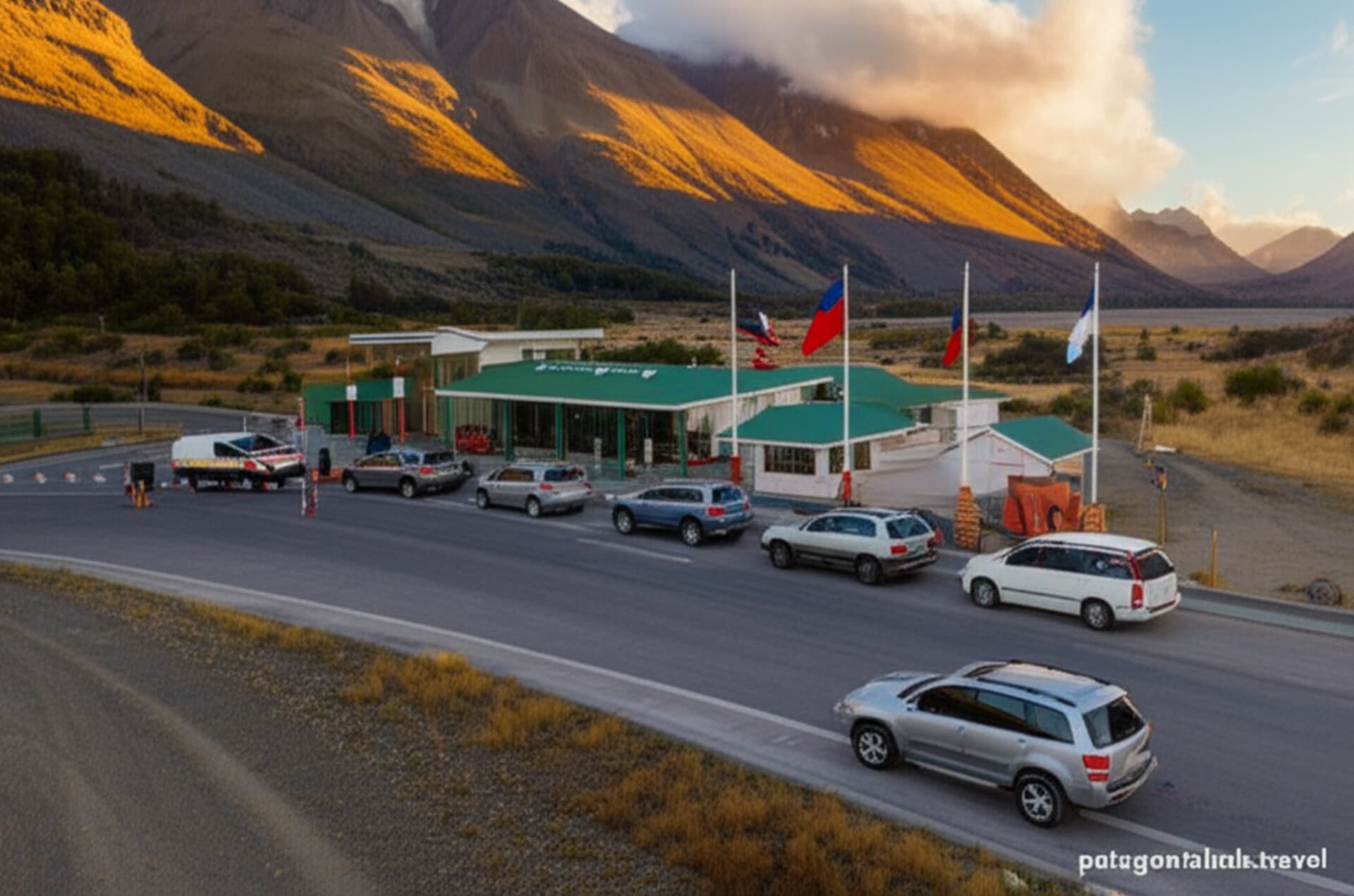
Create a professional photograph showing cars waiting in line at a Patagonian border crossing checkpoint during golden hour. The scene should show 3-4 vehicles queued at the Chilean or Argentine border post with dramatic mountain scenery in the background. Include the border checkpoint building with flags visible. Style: Professional travel photography, warm golden hour lighting, 16:9 aspect ratio, aerial perspective showing the queue. Include subtle 'patagoniahub.travel' branding in the bottom right corner.
Related Guides
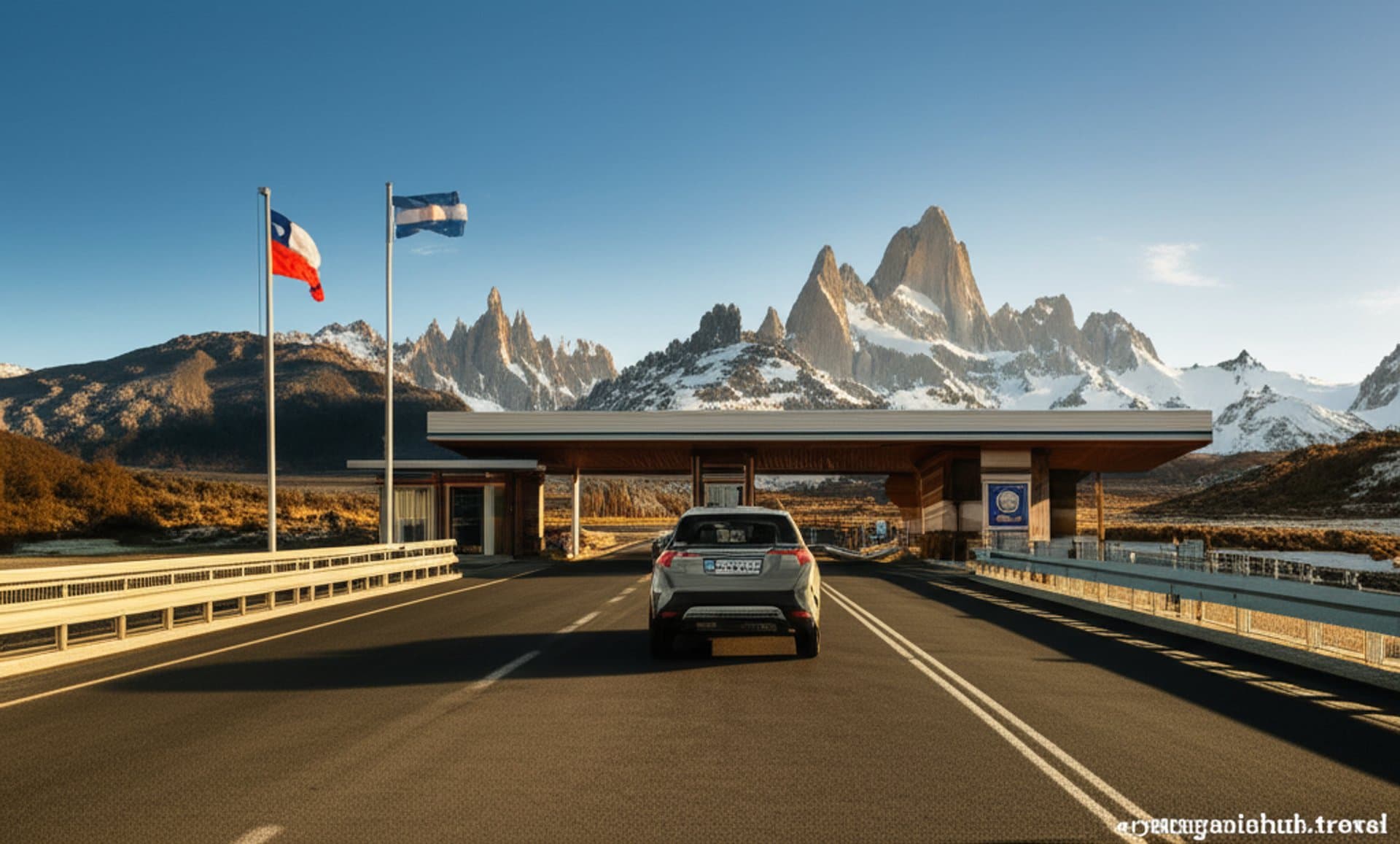
Chile-Argentina Border Crossing by Car: Complete Guide for Self-Drivers
Everything you need to know about crossing the Chile-Argentina border by car in Patagonia. From permits and documentation to wait times, food restrictions, and step-by-step procedures - your complete 2026 guide.
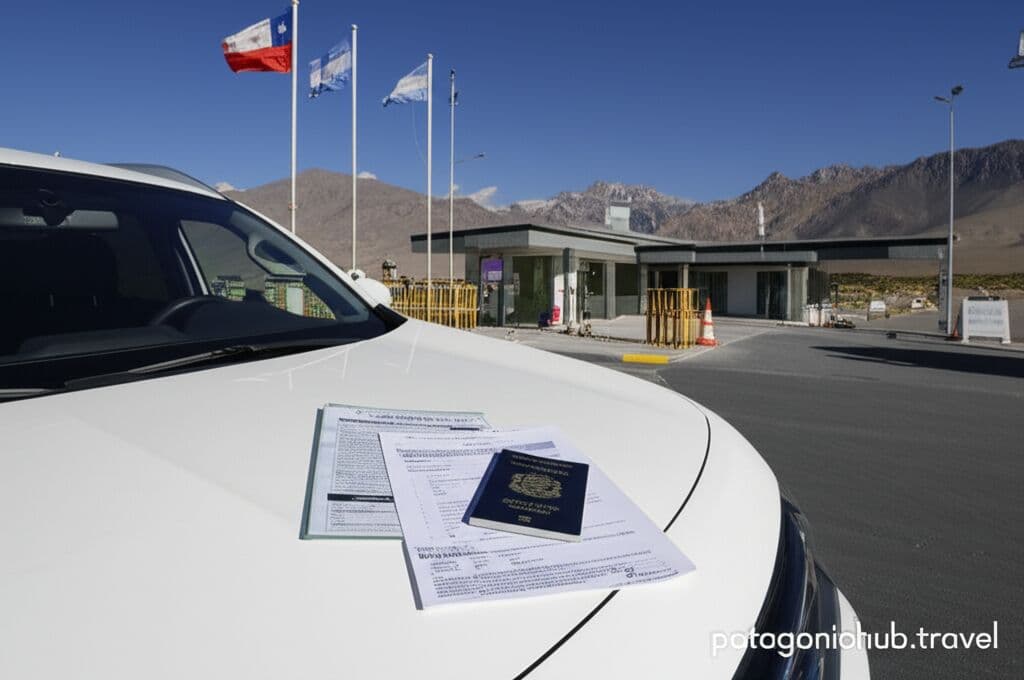
Border Crossing Permits for Rental Cars: Complete Documentation Guide
Complete guide to border crossing permits for rental cars in Patagonia. Learn about Poder Notarial requirements, costs ($80-$200), processing times (10-14 days), insurance, and essential documents needed to cross Chile-Argentina borders.
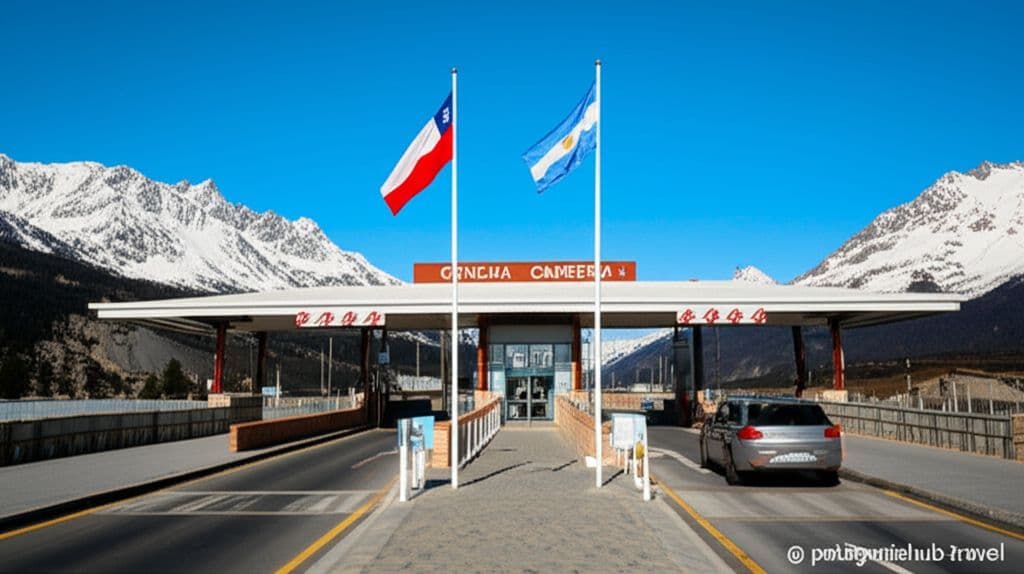
Cancha Carrera Border Crossing: Complete Step-by-Step Guide 2026
Detailed walkthrough of the Cancha Carrera / Río Turbio border crossing between Puerto Natales and El Calafate. Step-by-step procedures, documents, timings, and tips to cross smoothly.
