Patagonia Road Conditions: Gravel vs Paved - Complete Driving Guide
Comprehensive guide to Patagonia's road network: understand gravel vs paved roads, seasonal variations, driving techniques for ripio, route-by-route conditions, and safety tips for self-drive adventures in Chile and Argentina.
Patagonia Road Conditions: Gravel vs Paved - Complete Driving Guide
One of the most common questions from Patagonia self-drive travelers is simple yet critical: "What are the roads really like?" The honest answer requires nuance. Patagonia's roads are a fascinating blend of modern highways and genuine wilderness routes, each with distinct characteristics, seasonal variations, and driving demands.
Unlike most tourist destinations where you can confidently predict road quality, Patagonia rewards preparation with knowledge. The difference between a gravel road (ripio) in summer and winter can mean the difference between smooth driving and dangerous conditions. Understanding these distinctions transforms a Patagonia road trip from anxiety-inducing to genuinely enjoyable.
This guide dissects Patagonia's road network in detail, helping you navigate confidently whether you're planning Ruta 40, the Carretera Austral, or heading to Torres del Paine.
Patagonia Road Network Overview
Patagonia's road infrastructure reflects its geography: sparse settlements, vast distances, and challenging terrain. The region spans over 400,000 square kilometers across Chilean and Argentine territory, yet has fewer major highways than most European countries.
Road Type Distribution:
- Approximately 40% fully paved highways (mostly Ruta 9 in Chile and Argentina's national routes)
- Approximately 50% improved gravel roads (maintained regularly, suitable for standard vehicles)
- Approximately 10% remote/primitive gravel roads (challenging conditions, 4WD recommended)
This composition has improved significantly over the past decade. Argentina and Chile have invested heavily in Patagonia infrastructure, transforming many pure gravel routes into well-maintained improved roads. Yet genuine wilderness routes remain, offering authentic Patagonia experiences for prepared travelers.
Paved Roads (Asphalt): The Modern Patagonia Highway Network
Ruta 9: The Pan-American Highway Through Patagonia
Ruta 9 is Patagonia's primary paved artery, running from Puerto Montt in the north through Chilean and Argentine territory to Ushuaia at South America's southern tip.
Quality Characteristics:
- Northern sections (Puerto Montt to Puerto Varas): Excellent condition, recently upgraded, 4-lane in populated areas
- Central sections (Coyhaique to Rio Turbio): Good condition, 2-lane mostly, well-maintained
- Southern sections (Río Turbio to Ushuaia): Good condition, regularly maintained by Argentine authorities
Maintenance Schedule: The Chilean government maintains Ruta 9 through Vialidad Chile (MOP). Summer (December-February) brings intensive maintenance crews during optimal weather windows. Spring and autumn often see temporary closures for repairs. Winter maintenance focuses on snow removal and ice treatment on higher elevations.
Argentine sections follow similar seasonal patterns, with Vialidad Nacional handling upkeep. The quality remains consistent but occasionally shows impact from harsh winter conditions.
Weather Effects on Asphalt: Patagonian asphalt faces unique challenges. Extreme temperature swings between seasons cause thermal expansion issues. Some sections develop "alligator cracking" (network of interconnected cracks) by early spring. Wind-blown gravel from adjacent areas coats the asphalt, reducing grip during rain.
The most significant weather impact: strong winds. Patagonia's legendary winds (regularly 50+ km/h, gusting to 100+ km/h) affect asphalt roads minimally for vehicle safety but create significant dust and blowing debris. Gravel shoulder areas lose material constantly, creating temporary rough edges.
Driving Conditions and Safety: Paved roads offer predictable handling but demand respect for Patagonia's elements:
- Wind exposure: Open areas (especially near Monte San Valentín, sections near Los Glaciares) experience severe crosswinds
- Visibility: Dust storms can reduce visibility suddenly despite paved conditions
- Temperature extremes: Ice forms quickly on early morning asphalt in winter and shoulder seasons
- Traffic patterns: Sparse traffic means slower emergency response; mechanical failures require self-sufficiency
Other Key Paved Routes
Ruta 40 (Argentine sections): The southern Argentine portions near Magallanes (especially Punta Arenas to Rio Gallegos) are fully paved and well-maintained.
Carretera Austral (Ruta 7 - Chile): Approximately 70% paved in recent years, steadily improving. Northern sections are excellent. Southern sections toward Villa O'Higgins remain partially gravel.
Gravel Roads (Ripio): The Authentic Patagonia Experience
Gravel roads define Patagonia's character. These "ripio" (gravel) routes challenge drivers, reward preparation, and offer profound wilderness experiences unavailable on paved highways.
Understanding Ripio: Gravel Types and Characteristics
Patagonian gravel varies significantly based on local geology:
Quality Categories:
- Improved gravel (ripio mejorado): Compacted, graded regularly, resembles very rough asphalt
- Standard gravel (ripio): Loosely packed stones and dust, typical road condition
- Washboard gravel: Heavily corrugated, creates rhythmic vibration
- Rough/primitive gravel: Large stones, rocks, minimal maintenance
Most traveled Patagonia routes fall into categories 1-2. Remote sections venture into 3-4 territory.
Composition: Southern Patagonian gravel typically contains:
- Dark volcanic stone (from Patagonian volcanic activity)
- Calcareous (chalky) material
- Iron-rich red soil in some regions
- Large stones migrating from higher elevations during erosion cycles
The fine dust component creates the famous "Patagonia dust" that coats vehicles, infiltrates cabins, and reduces visibility. This dust isn't merely inconvenient—it's a driving consideration affecting traction and visibility.
Seasonal Maintenance and Variations
Summer (December-February): Peak maintenance season. Vialidad crews (both Chilean and Argentine) work aggressively:
- Weekly or bi-weekly grading operations
- Stone filling in eroded sections
- Dust palliative application (calcium chloride) to reduce dust and harden surfaces
- Ideal driving conditions: firm, predictable gravel
Spring/Autumn (September-November, March-May): Variable conditions:
- Weather-dependent maintenance (rain delays grading operations)
- Newly thawed sections show winter damage
- Wind erosion creates deep ruts in exposed areas
- Conditions change daily based on recent weather
Winter (June-August): Challenging conditions:
- Maintenance reduced or halted during extreme weather
- Ice forms on gravel sections at high elevations and shaded areas
- Rutting increases, creating deep channels
- Snow closures affect Carretera Austral and remote sections
- Grip reduced significantly; standard vehicles may struggle
Dust Storms and Visibility
Patagonian dust storms (tormentas de polvo) deserve respect. These spontaneous events occur when:
- Wind gusts exceed 60-70 km/h in dry conditions
- Recent grading operations disturb dust
- Vehicles ahead stir up large dust clouds
Impact on driving:
- Visibility can drop from 1 km to 20 meters in seconds
- Following vehicles trigger massive dust clouds in tailwind directions
- Wind gusts of 100+ km/h combined with dust create hazardous conditions
- Dust penetrates vehicles, affects visibility through windshields
Safety responses:
- Reduce speed immediately upon dust visibility decrease
- Turn on headlights and hazard lights
- Increase following distance significantly (300+ meters from vehicles ahead)
- Consider stopping if visibility drops below 50 meters
- Avoid passing during dust events
Washboard Effects and Erosion Patterns
Washboards form through repeated vehicle passage combined with Patagonian weather cycles. These rhythmic corrugations (typically 20-30 cm apart) create:
Driving challenges:
- Resonant vibration matching vehicle suspension frequency
- Speed amplifies washboard impact significantly
- Excessive bouncing reduces braking control
- Loose cargo becomes projectiles
Erosion patterns: Patagonian gravel roads develop distinct erosion characteristics:
- Center depression: Heavy traffic creates center trough, forcing vehicles toward shoulders
- Outside drainage ruts: Rain runoff carves channels along road edges
- Pothole development: Depressed areas collect water, freeze-thaw cycles deepen holes
- Wind tunnels: Strong winds in exposed valleys carve distinctive erosion patterns
Route-by-Route Condition Analysis
Ruta 40: Argentina's Legendary Gravel Route
Overall composition: 60% improved gravel, 30% paved, 10% rough gravel
Condition breakdown by section:
Northern sections (San Juan to La Rioja): Mostly paved with excellent modern highway conditions. Not true Patagonia road experience but fast transit option.
Central sections (Mendoza to Neuquén): Mixed paving and improved gravel. Recent road upgrades have transformed many sections. Most sections suitable for standard vehicles in summer.
Patagonian sections (Perito Moreno to Tres Lagos): The legendary Ruta 40 experience. This 400+ km section features:
- Improved gravel suitable for standard vehicles
- Spectacular mountain and lake views
- Wildlife viewing opportunities (guanacos, rheas, Andean condors)
- Minimal traffic (0-2 vehicles per hour typical)
- Summer conditions: firm, predictable gravel
- Winter conditions: challenging, occasional closures
Southern sections (Tres Lagos to Punta Arenas): Increasingly paved in recent years. The final stretch into Punta Arenas is fully paved.
Key considerations:
- No fuel between certain sections (200+ km stretches)—plan carefully
- Support services minimal—bring spares and tools
- Spectacular but remote—respect the wilderness
- Summer travel highly recommended for reliable conditions
Ruta 9: Pan-American Highway Through Patagonia
Overall composition: 85% paved, 15% improved gravel (mostly in remote sections)
Condition breakdown by section:
Chilean sections (Puerto Montt to Puerto Natales): Generally excellent. Modern infrastructure reflects Chilean government investment. Occasional gravel sections near Coyhaique.
Argentine sections (Punta Arenas to Río Gallegos and beyond): Fully paved and well-maintained. Some wind-swept sections show surface deterioration but remain safe year-round.
Key characteristics:
- Fastest route between major destinations
- Most developed support infrastructure
- Most expensive in tolled sections (Chile charges for Carretera Austral improvements)
- Best winter conditions among major routes
- Less scenic than Ruta 40 in many sections
Carretera Austral (Ruta 7): Chile's Remote Adventure Route
Overall composition: 70% paved (improving), 30% improved gravel
Condition breakdown by section:
Northern section (Puerto Montt to Villa Transportadora, ~230 km): Increasingly paved with recent government investment. Good condition, suitable for standard vehicles year-round.
Central section (Villa Transportadora to Villa Santa Lucía, ~350 km): Mix of paved and improved gravel. Significant personality—includes:
- Marble Caves near General Carrera Lake (world-famous)
- Remote communities
- Wilderness camping opportunities
- Recent paving improvements
Southern section (Villa Santa Lucía to Villa O'Higgins, ~200 km): More gravel than paved. Increasingly upgraded but retains adventure character. Remote, challenging in winter.
Key characteristics:
- Least developed route of major options
- Most dramatic scenery
- Ferry crossings required in some sections
- Road condition varies seasonally dramatically
- Winter travel not recommended for unprepared travelers
- Most authentic "Patagonia wilderness road" experience
Road to Torres del Paine National Park
Overall composition: 90% paved (the main approach), 10% improved gravel (interior park roads)
Condition breakdown:
Puerto Natales to park entrance (Ruta 9, ~60 km): Fully paved, excellent condition, wind-swept sections.
Interior park roads: Gravel maintained by CONAF (Chilean park service). Quality varies:
- Main loop road: Improved gravel, suitable for standard vehicles
- Interior access roads: More challenging gravel, 4WD helpful but not required in summer
- Remote camps access: Rough gravel, 4WD recommended
Key characteristics:
- Park entrance road straightforward for all vehicles
- Park interior roads more challenging but manageable
- Summer conditions highly predictable
- Winter requires caution; some roads close seasonally
- Park maintenance dedicated to visitor safety
Road to El Calafate and Glaciar Perito Moreno
Overall composition: 95% paved
Route: Ruta 9 from either direction provides paved access. Recently upgraded to modern standards.
Characteristics:
- Most predictable road conditions in Patagonia
- Year-round passable for all vehicles
- Modern highway standards
- Excellent for winter travel
- Less wilderness experience than alternatives
Seasonal Road Condition Variations
Summer Conditions (December-February)
Advantages:
- Peak maintenance season
- Gravel roads firm and well-maintained
- Longest daylight hours
- Minimal snow or ice
- All routes passable
- Most predictable conditions
Disadvantages:
- Peak tourist season (traffic increases)
- Accommodation fully booked (advance reservations essential)
- Strong winds common
- Some accommodations have limited availability despite being booked
- Dust storms more likely in peak heat periods
Planning approach: Ideal for all vehicle types and experience levels. Only time when unprepared travelers face minimal risk.
Spring/Autumn Conditions (September-November, March-May)
Advantages:
- Fewer tourists than summer
- Excellent scenery (fall colors March-May, spring flowers September-November)
- Still passable for standard vehicles
- Better accommodation availability
Disadvantages:
- Unpredictable weather
- Maintenance operations sometimes halt during bad weather
- Gravel conditions variable (muddy after rain)
- Winter conditions can appear suddenly (especially May, September)
- Early winter storms can cause closures
Planning approach: Requires flexibility. Build extra days into itinerary for weather delays. Monitor road conditions closely. 4WD helpful. Experienced drivers recommended.
Winter Conditions (June-August)
Advantages:
- Fewest tourists
- Some routes offer stunning snow-covered landscapes
- Solitude and wilderness experience
- Lowest accommodation prices
Disadvantages:
- Severe weather: blizzards, high winds, extreme cold
- Gravel roads hazardous: ice, deep snow
- Carretera Austral and remote routes often closed
- Short daylight hours (only 8-9 hours)
- Emergency services minimal in remote areas
- Mechanical failures become serious situations
Planning approach: Only experienced winter drivers should attempt self-drive adventures. Standard vehicles not recommended. Even 4WD vehicles require specialized winter tires, survival equipment, and advanced skills. Many travelers opt for shuttle services rather than self-driving.
Vehicle Impact on Road Preservation
Patagonia's roads face significant stress from climate and geography. Vehicle selection affects both personal experience and road preservation.
Heavy vehicles (trucks, large RVs):
- Create deeper ruts in gravel
- Accelerate washboard development
- Cause rapid deterioration of marginal roads
- Increase dust generation
- Require specific permits in some areas (Carretera Austral)
Standard vehicles:
- Cause minimal additional deterioration
- Less fuel consumption
- Better fuel availability
- More suitable for gravel conditions than often assumed
4WD vehicles:
- Off-road capability enables private road exploration
- Can avoid some deteriorated sections by using alternate routes
- Higher vehicle weight increases cumulative road stress
- Useful but not essential for maintained roads
Environmental consideration: Using established roads and respecting closures helps preserve Patagonia's infrastructure for future travelers. Driving on unmarked terrain contributes to erosion and environmental damage.
Gravel Driving Techniques for Patagonia
Mastering gravel driving transforms Patagonia road trips from anxious to enjoyable. These techniques apply to Patagonian conditions specifically.
Speed Management on Gravel
Critical principle: Slower is faster and safer on gravel.
Recommended speeds:
- Firm, well-maintained gravel (ripio mejorado): 60-80 km/h
- Standard gravel: 40-60 km/h
- Washboard sections: 30-40 km/h (below resonant frequency)
- Rough gravel or after rain: 20-40 km/h
- Dust storm conditions: 10-20 km/h or stop
Physics principle: Gravel grip is fundamentally different from asphalt. Excessive speed:
- Reduces tire grip on loose surface
- Increases braking distance dramatically
- Creates uncontrollable skids
- Kicks up dust clouds affecting visibility
- Damages road surface
Practical benefit: Maintaining appropriate gravel speeds actually reaches destinations faster than alternating between fast sections and emergency stops.
Dust Management and Visibility
In dust conditions:
- Reduce speed to 20 km/h or slower
- Turn on headlights and hazard lights
- Increase following distance to 300+ meters
- Avoid passing other vehicles
- Consider stopping completely if visibility drops below 50 meters
Approaching other vehicles:
- Reduce speed early to minimize dust generation
- Pull to shoulder if road is one-lane gravel (standard courtesy)
- Pass only when visibility is good
Dust in vehicle:
- Keep windows closed in dust storms
- Use vehicle air recirculation mode if available
- Plan daily cleaning of windscreen and mirrors
- Consider dust filters for air intake if making extended gravel travel
Washboard Management
Proper technique:
- Identify washboard frequency (usually 20-30 cm spacing)
- Speed at which vehicle bounces synchronously with washboard creates resonance (typically 30-50 km/h depending on suspension)
- Find speed just below or well above resonant frequency
- Most effective: slow down to 20-30 km/h to reduce impact
Suspension care:
- Washboard impacts accelerate shock absorber wear
- Proper tire pressure reduces washboard sensitivity
- Slightly lower pressure (0.2 bar below recommendation) helps with large stones but increases tire overheating risk
- Check tire pressure frequently on long gravel sections
Narrow Road Etiquette and Vehicle Meeting
Patagonian gravel roads often narrow to single lanes, especially in remote sections. Proper technique prevents conflicts and potential accidents.
Meeting other vehicles on narrow gravel:
- Pull to side with widest shoulder (sometimes requiring careful maneuvering)
- Reduce speed and proceed cautiously
- Driver pulling to narrower side offers courtesy gesture (hand wave)
- Pass only when completely clear; full vehicle length required plus safety margin
- Consider stopping if uncertain about passing space
Cattle and wildlife:
- Guanacos (wild relatives of llamas) frequently cross roads
- Rheas (large ostrich-like birds) sometimes linger
- Slow down for any animal sightings
- Never intentionally approach wildlife
Road Condition Reporting Resources
Real-time condition information:
Chile:
- Ministerio de Obras Públicas (MOP): Direct road authority, posts maintenance schedules
- Vialidad Chile: Twitter/social media updates on road conditions
- CONAF: National park roads information
Argentina:
- Vialidad Nacional: Federal road authority
- Provincial transportation ministries for local information
- Argentina tourism websites often have road condition pages
Third-party resources:
- Google Maps sometimes includes current travel conditions (limited in remote areas)
- International travel forums (4x4 communities) share recent experiences
- Local tourism offices in major towns have current information
- Radio 1000 (Argentine) broadcasts highway conditions
Before traveling:
- Check official sources 48 hours before departure
- Contact local tourism office or accommodations
- Report any hazardous conditions to authorities after traveling
- Share experiences on traveler forums for community benefit
Comparing Patagonia Roads to Other Regions
versus Atacama Desert (Northern Chile):
- Atacama roads often better maintained but in harsher environment
- Patagonia roads face more weather-driven deterioration
- Both require similar careful driving but different skill sets
versus Carretera Austral in Central Chile:
- Patagonia Carretera Austral more challenging than northern sections
- Southern sections more gravel-heavy
- Winter closures more likely in Patagonia
versus Australian Outback:
- Patagonia roads generally better maintained
- Patagonia weather more extreme (wind particularly)
- Similar remoteness and support challenges
- Australian roads often have better signage
versus East African safari routes:
- Patagonia roads generally more challenging
- East African roads often supported by lodges
- Both require similar caution
Essential Tips Summary
- Check conditions before travel: Official sources provide most reliable information
- Respect seasonal limitations: Winter requires preparation or alternatives
- Maintain appropriate speed: Gravel driving differs fundamentally from asphalt
- Plan fuel stops carefully: Remote sections have significant distances between services
- Prepare for wind: Patagonian winds affect all vehicles, even paved roads
- Allow flexibility: Weather changes conditions quickly, especially shoulder seasons
- Carry spares and tools: Remote location means self-sufficiency crucial
- Drive defensively: Minimal traffic means slower emergency response
- Respect other travelers: Pull aside for approaching vehicles, share conditions information
- Report hazards: Help future travelers by reporting dangerous conditions
Final Thoughts: The Patagonia Road Experience
Understanding Patagonia's diverse road conditions transforms them from obstacles into integral parts of the adventure. A washboard gravel section isn't a problem to overcome—it's part of the authentic Patagonia experience that creates stories and memories.
The combination of paved highways and gravel roads gives travelers choice: speed on Ruta 9, adventure on Ruta 40, or the middle path via the improving Carretera Austral. Each route offers distinct advantages depending on your travel style, time frame, and risk tolerance.
Patagonia's roads aren't the best-maintained in South America, but they're improving steadily. More importantly, they're engineered for the environment and maintained by people who understand Patagonian conditions intimately. Respect the roads, prepare appropriately, and you'll find them not just passable but genuinely excellent gateways to one of Earth's greatest wilderness regions.
The road less traveled often has gravel beneath it. In Patagonia, that's precisely where the best adventures begin.
Image Generation Prompt
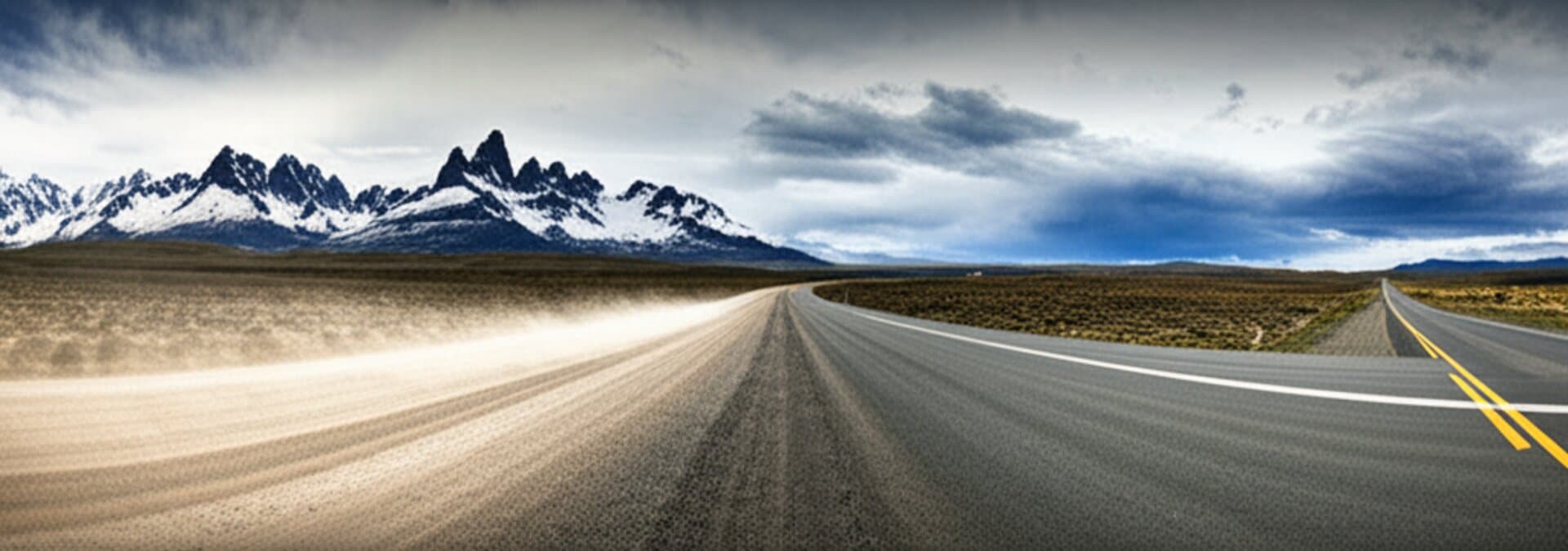
Dramatic wide-angle landscape photograph of two contrasting Patagonia roads meeting at a fork: one weathered gravel road with dust swirling in the breeze leading toward dramatic mountains, and one paved highway reflecting light under a dramatic cloud-filled sky, showcasing the Patagonia wilderness and driving adventure.
Related Guides
14-Day Ultimate Patagonia Self-Drive Loop: Complete Two-Week Itinerary
Master the ultimate 14-day Patagonia road trip loop covering Torres del Paine, El Calafate, El Chaltén, and Perito Moreno Glacier. Complete day-by-day itinerary with distances, border crossings, fuel planning, and accommodation tips.
7-Day Patagonia Road Trip Itinerary: El Calafate to Torres del Paine
The ultimate week-long Patagonia road trip combining Argentina's glaciers and Chile's iconic national park. Complete day-by-day itinerary with driving routes, hiking recommendations, accommodation options, and practical tips.
Best Time to Drive Patagonia: Month-by-Month Guide for Self-Drive Road Trips
Discover the best time to drive through Patagonia with our detailed month-by-month guide covering weather, road conditions, crowds, and pricing for optimal road trip planning.
