road-trip

Patagonia Wind Safety Guide: Safe Driving Techniques for Self-Drivers

Complete guide to understanding and safely navigating Patagonia's dangerous winds. Learn wind patterns, safety techniques, and how to drive safely in extreme wind conditions.

PatagoniaHub Travel Team
15 min read
January 6, 2026

Patagonia Wind Safety Guide: Safe Driving Techniques for Self-Drivers

Every year, experienced travelers arrive in Patagonia unprepared for one of the region's most formidable natural forces: the wind. This relentless element doesn't appear in dramatic storms that announce themselves—instead, it builds gradually through the day, testing your vehicle's stability and your nerves mile after mile. For self-drive travelers, understanding wind safety isn't optional—it's critical to your journey.

Wind is Patagonia's defining characteristic. It shapes the landscape, sculpts the mountains, and bends even sturdy vegetation into permanent sideways curves. More importantly, it claims vehicles on roads and makes countless drivers abort their plans or pull off the road in fear. This guide equips you with the knowledge and techniques to navigate Patagonia's winds safely and confidently.

Why Wind Matters for Patagonia Self-Drivers

If you're planning a Patagonia road trip, wind will likely be your biggest weather challenge—more threatening than rain, snow, or cold. Here's why:

  • Constant presence: Wind isn't occasional; it's nearly daily during peak season
  • Underestimated danger: Many travelers arrive unaware of the magnitude of wind hazards
  • Vehicle vulnerability: Standard rental cars lack weight and aerodynamics to handle extreme gusts
  • Unpredictable intensity: Wind can accelerate rapidly, catching drivers off-guard
  • Cumulative fatigue: Hours of wind-fighting driving exhausts concentration and reflexes
  • Affects all routes: No major Patagonia road escape the wind challenge

Understanding wind patterns, your vehicle's limitations, and proven driving techniques transforms wind from a threat into a manageable—even expected—element of your adventure.

Why Is Patagonia So Windy? Understanding the Meteorology

Patagonia sits in a unique position that makes it one of Earth's windiest inhabited regions. Understanding why helps you anticipate conditions and take them seriously.

The Southern Hemisphere Jet Stream

The roaring forties—so named because winds in the 40-50 degree southern latitude band average over 40 miles per hour—dominate Patagonia's weather. This powerful jet stream of fast-moving air circles Antarctica and collides with South America at Patagonia's latitude. During austral summer (December-February), this jet stream intensifies, bringing the region's most powerful winds.

The Andes Barrier Effect

The Andes Mountains create a dramatic weather phenomenon. Trade winds from the Atlantic Ocean approach from the east, climbing the mountain range. As this air rises and cools, it loses moisture on the windward (eastern) side. When it crosses the peaks and descends on the western side, it compresses, warms, and accelerates—a process called the föhn effect. This creates a tunneling effect where wind speed increases dramatically on the leeward (western) side.

Anticyclone Systems

High-pressure systems (anticyclones) regularly develop over the South Atlantic and move toward the Patagonian region. These systems drive consistent, powerful winds that can persist for days. When multiple systems line up, they create persistent wind corridors.

Geographic Funneling

Patagonia's flat, open terrain west of the Andes provides no obstacles to slow or divert wind. The landscape resembles a natural funnel, channeling wind into concentrated corridors. Specific valleys and geographic passages—like areas approaching the Strait of Magellan—concentrate this funnel effect into extreme conditions.

The combination of these factors creates conditions where 60+ km/h winds are routine during summer, and 80+ km/h gusts occur regularly.

Seasonal Wind Patterns: When to Expect What

Wind intensity varies dramatically by season. Understanding these patterns helps you plan routes and timing strategically.

Summer (December-February): The Peak Wind Season

Summer brings Patagonia's strongest and most consistent winds. This paradox—the best season for tourism is also the windiest—catches many travelers off-guard.

Characteristics:

  • Strongest winds: average 50-70 km/h, frequent gusts to 80+ km/h
  • Most consistent and predictable patterns
  • Afternoon peaks: winds accelerate as day progresses, usually worst 2 PM-6 PM
  • Early morning relative calm: 6 AM-10 AM offers best driving conditions
  • Occasional wind-free days: rare but magical

Why so windy: The jet stream is at its closest approach to Patagonia, intensifying the atmospheric pressure gradient that drives wind.

Summer wind reality: Most accidents and nerve-wracking driving experiences occur in summer despite it being the best season overall. Plan accordingly.

Spring and Fall (September-November, March-May): Highly Variable

These transition seasons feature unpredictable wind patterns.

Characteristics:

  • Highly variable: can be calm one day, extremely windy the next
  • Less consistent than summer or winter
  • Still capable of strong gusts (60-80 km/h)
  • Mix of frontal systems bringing change
  • Fewer multi-day wind events than summer

Why variable: Competing weather systems—cold fronts moving north, subtropical systems moving south—create atmospheric chaos. The jet stream position isn't locked as it is in summer.

Travel implications: Wind forecasting becomes more important. You might plan for summer wind intensity but encounter spring's unpredictability.

Winter (June-August): Cold and Strong

Winter brings a different wind character: smaller wind speeds but combined with cold temperatures and shorter daylight.

Characteristics:

  • Slightly lower average wind speeds than summer (40-60 km/h typical)
  • Intensified by cold temperatures (feels more dangerous)
  • Shorter daylight limits driving window
  • More isolated conditions if stranded
  • Occasional extreme cold wind gusts

Why moderate winds: The jet stream moves slightly north during winter, reducing its direct impact on Patagonia.

Travel reality: Winter winds feel more dangerous despite being slightly less extreme, because cold makes fatigue and exposure threats more serious.

Wind Speed Scales: Understanding Measurement and Effects

Different wind measurements confuse travelers. Here's how to interpret wind speed and understand its effects.

Measurement Conversions

Wind speeds appear in multiple formats:

  • Kilometers per hour (km/h): Most common in Argentina and Chile
  • Miles per hour (mph): Used in some forecasts and vehicle references
  • Knots: Maritime and aviation measurement
  • Beaufort scale: Descriptive scale from 0 (calm) to 12 (hurricane)

Quick conversions: 1 knot = 1.85 km/h = 1.15 mph

Wind Speed Categories and Driving Effects

40 km/h (Beaufort 6 - Strong Breeze):

  • Vehicle effect: Noticeable buffeting; steering requires active correction
  • Sensation: Feels windy but manageable
  • Driving impact: Standard cars handle; constant attention needed
  • High-profile vehicles: Noticeable sway
  • Risk level: Low to moderate

60 km/h (Beaufort 7-8 - Gale/Strong Gale):

  • Vehicle effect: Significant lateral forces; loss of steering control possible
  • Sensation: Frightening even for experienced drivers
  • Driving impact: Requires slow speed, strategic positioning
  • High-profile vehicles: Dangerous; pulling over advised
  • Trailers: Extremely dangerous; pulling over mandatory
  • Risk level: Moderate to high

80+ km/h (Beaufort 9+ - Strong/Violent Storm):

  • Vehicle effect: Severe lateral forces; loss of control likely
  • Sensation: Terrifying; disorienting
  • Driving impact: Dangerous to drive; pulling over mandatory
  • All vehicles: High risk; stopping essential
  • Risk level: Extreme

Critical distinction - Gusts vs. Sustained Wind:

Wind speed appears in two forms:

  • Sustained wind: Average speed over 10-minute period
  • Gusts: Brief speed spikes; can be 25-50% higher than sustained speed

A forecast showing "50 km/h sustained, gusts to 80 km/h" means baseline conditions at 50 km/h with periodic violent 80 km/h surges. This gust effect is often what surprises drivers.

Dangerous Locations: Patagonia's Wind Hotspots

Wind intensity varies dramatically across Patagonia. Some routes carry concentrated risk.

Rio Turbio Area (The Notorious Zone)

Rio Turbio in Argentine Patagonia holds a reputation for extreme wind. This small mining town sits in a natural wind tunnel between mountains.

Characteristics:

  • Highest average wind speeds in Patagonia
  • Wind can exceed 100 km/h regularly
  • Morning winds often as fierce as afternoon
  • Year-round intensity; seasonal variation smaller than other areas
  • Local residents expect multi-day wind events

Routes affected:

  • Ruta 28 approaching Rio Turbio from the north
  • RN 40 south of Rio Turbio toward Los Antiguos
  • Local roads around town

Traveler reality: Rio Turbio generates more nervous stories than any other Patagonian location. Local guides recommend avoiding this region during high wind periods or driving very early morning.

Carretera Austral Exposed Sections

The famous Carretera Austral isn't uniformly windy, but several sections sit in wind corridors.

High-risk sections:

  • Villa Santa Lucía to Puyuhuapi: exposed steppe sections
  • Futaleufu valley approach: funneling effect
  • Marble Caves access roads: open water exposure
  • Cochrane to Villa O'Higgins: remote, exposed transitions

Characteristics:

  • Often more exposed than protection from nearby terrain
  • Afternoon escalation more pronounced than morning
  • Less traffic means fewer local warnings

Traveler reality: These sections build gradually into discomfort rather than sudden extreme conditions.

Ruta 40 High-Altitude Exposures

Ruta 40 in Argentina crosses high-elevation steppe with minimal wind protection.

High-risk sections:

  • Between Gobernador Gregores and Los Antiguos
  • Meseta approaches from north
  • Transitions between valleys

Characteristics:

  • Extreme exposure; minimal shelter
  • Wind speed increases with altitude
  • Vehicle options limited; few places to pull over safely

Traveler reality: Ruta 40 sections often surprise drivers with sustained high-wind conditions over many kilometers.

Torres del Paine Park Entrances

The main road approaching Torres del Paine from Puerto Natales carries concentrated wind risk.

Characteristics:

  • Final 50 km most dangerous
  • Wind accelerates through valley funneling
  • Afternoon conditions progressively worse
  • Peak gusts near park gates

Traveler reality: Many visitors enter Torres del Paine via early morning driving specifically to avoid this section's afternoon escalation.

Cross-Country Highway Transitions

Wind intensifies at transition points between protected valleys and open steppe.

Watch zones:

  • Exits from sheltered towns into open roads
  • Mountain pass summits
  • Transitions between different terrain types
  • Long stretches without landmarks for wind speed perception

Vehicle-Specific Wind Hazards: What Your Rental Says About Your Risk

Not all vehicles handle Patagonia wind equally. Your rental's characteristics directly impact wind safety.

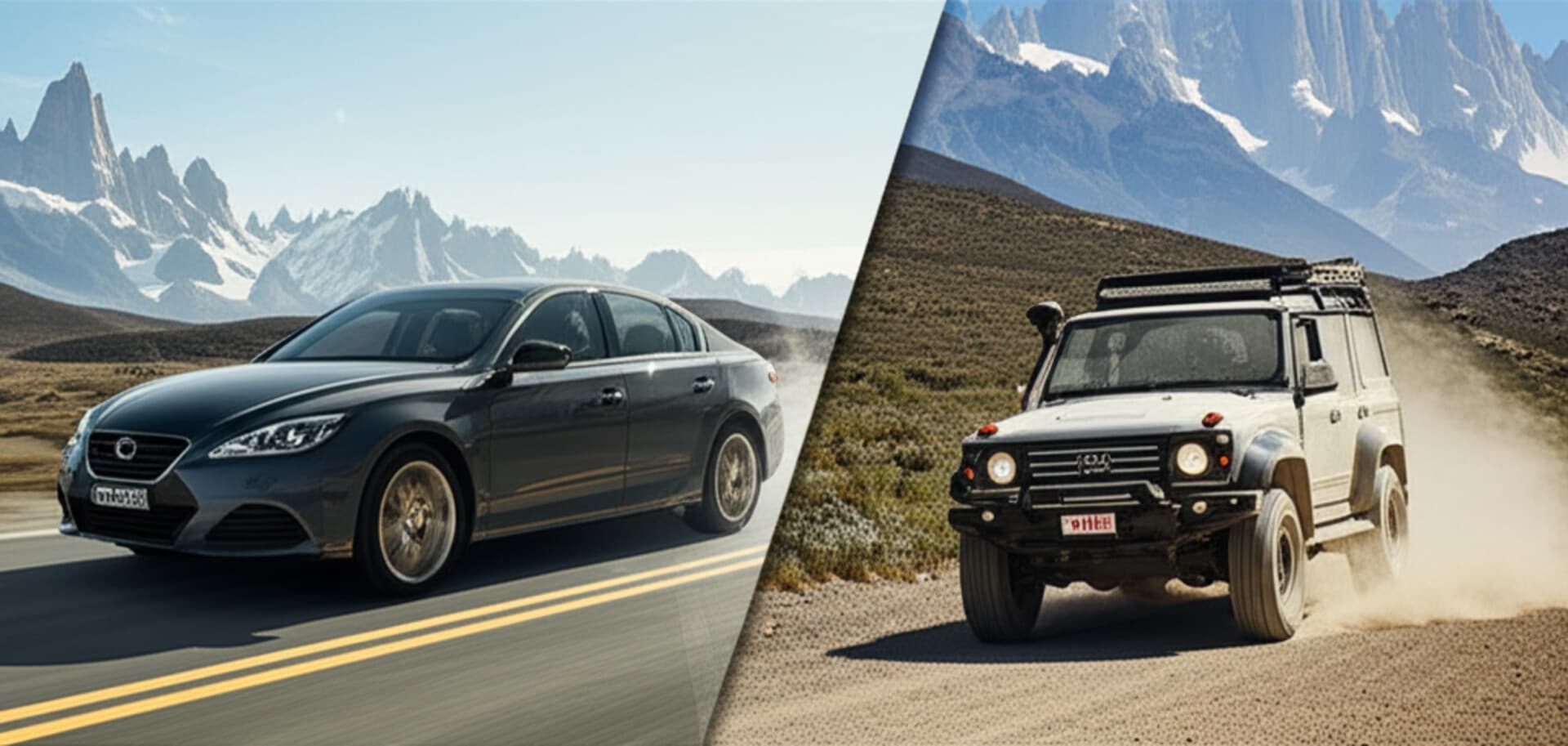
Pickup Trucks: Highest Risk

Pickup trucks seem like logical rentals for rough roads, but they're problematic in wind.

Why dangerous:

  • High center of gravity with extended cargo area
  • Lightweight empty truck—no weight anchoring stability
  • Square profile catches wind like a sail
  • Top-heavy design amplifies sway
  • Poor aerodynamics create turbulence

In wind conditions:

  • 60 km/h winds feel like 80+ km/h in pickup
  • Gusts create dramatic sway
  • Trailer towing exponentially increases danger
  • Empty trucks more dangerous than loaded ones

Traveler reality: Experienced Patagonia drivers specifically avoid pickup trucks during windy season. If you must use one, add significant caution.

SUVs: Moderate Risk

SUVs represent a middle ground—more stable than pickups, less stable than sedans.

Characteristics:

  • Higher profile than sedans; catches more wind
  • Better weight distribution than pickups
  • Moderate center of gravity
  • Decent aerodynamics compared to trucks
  • Generally manageable in wind with care

In wind conditions:

  • 60 km/h winds manageable with experienced driving
  • Gusts cause noticeable response but manageable
  • Towing trailers still risky; avoid if possible

Sedans: Most Stable

Standard sedan or compact car rentals offer the best wind stability.

Why better:

  • Low center of gravity—resists tipping/sway
  • Lighter construction—flexibility helps with gusts
  • Aerodynamic profile—wind pushes rather than buffets
  • Better weight anchoring
  • Most predictable handling

In wind conditions:

  • 60 km/h winds require attention but feel manageable
  • Gust response gentler; recovery faster
  • Wind effect noticeable but not frightening

Traveler reality: If wind concerns you, deliberately rent the smallest sedan available, not a truck or SUV.

Weight Distribution Principles

Empty vehicles: Most dangerous when lightly loaded. Wind pressure affects the car more because less weight anchors it.

Fully loaded vehicles: Better stability when packed with supplies, though not immune to extreme wind.

Strategy: Pack heavy items low (fuel containers, water) rather than on roof racks. Roof loads amplify wind effects and raise center of gravity.

Tire Pressure Matters

Slightly higher tire pressure (within manufacturer specifications) improves road grip slightly, but don't overinflate. Proper pressure provides the best balance of grip and stability. Check pressure before entering known wind areas.

Safe Driving Techniques: Mastering Wind Navigation

Knowing how to drive in wind separates safe travelers from those white-knuckling the wheel in terror.

The Fundamental Principle: Slow Down

There's no technique that substitutes for reduced speed. The physics are simple: wind force increases exponentially with speed. At 60 km/h, wind force is roughly double what it is at 40 km/h.

Speed reduction strategy:

  • In 50-60 km/h wind: reduce normal speed by 30-40%
  • In 70+ km/h wind: reduce to 40 km/h maximum
  • In 80+ km/h sustained wind: don't drive; pull over

Grip Management on Curves

Curves amplify wind danger. Lateral wind forces combine with centrifugal forces.

Safe curve technique:

  1. Reduce speed significantly before entering curve (not during)
  2. Maintain steady throttle through curve (no acceleration/deceleration)
  3. Use gentle steering inputs; avoid sharp corrections
  4. Hold line slightly to interior of curve (wind pushes outward)
  5. Avoid braking mid-curve

Why this works: Steady inputs and speed give your tires maximum grip. Erratic inputs or speed changes reduce grip when you need it most.

Handling Sudden Gusts

Violent gusts surprise even prepared drivers.

Gust response technique:

  1. Keep hands on wheel, relaxed grip (tension reduces responsiveness)
  2. Don't panic-correct; let steering wheel move slightly
  3. After gust passes, gently correct back to center
  4. Never overcorrect; this often causes vehicles to swing opposite direction
  5. If you do start to skid, steer into skid, don't brake

Why calm response works: Overcorrecting turns a gust into a crash. Most gust responses resolve themselves if you don't fight them.

Lane Position Strategy

In high wind, optimal lane position isn't always center.

Positioning strategy:

  • In left-lane wind: keep right side of lane (wind pushes left)
  • In right-lane wind: keep left side of lane (wind pushes right)
  • This gives you margin for lateral movement
  • Watch for oncoming traffic; don't cross center line

Why this matters: Gives you buffer room for wind-induced drift without crossing lane boundaries.

Safe Times to Drive

Best window: 6 AM - 10 AM

Morning hours offer calm conditions because air temperature is coolest and atmospheric mixing hasn't begun. Wind accelerates as sun heats ground and air becomes unstable.

Manageable window: 10 AM - 2 PM

Pre-peak afternoon; winds building but not yet maximum.

Dangerous window: 2 PM - 7 PM

Afternoon peak; wind at maximum strength and most turbulent. Most accidents occur here.

Recovery window: 7 PM - 9 PM

Wind eases as day cools; conditions improve dramatically.

Practical implications:

  • Drive your highest-wind-risk sections in early morning
  • Plan rest in town during afternoon peak hours
  • Resume driving in evening if needed

When to Pull Over and Stop

Pulling over safely is a crucial skill.

Pull-over indicators:

  • You feel genuinely frightened (trust your instinct)
  • Steering becomes difficult despite slow speed
  • Vehicle is swaying noticeably
  • Visibility reduced by dust (wind-driven debris)
  • Sustained wind 80+ km/h

Safe pull-over technique:

  1. Reduce speed gradually and smoothly
  2. Signal well in advance
  3. Pull off road completely; get far from traffic lane
  4. Turn off engine (reduces wind resistance on door opening)
  5. Don't leave vehicle on road edge; get completely off pavement
  6. Stay with vehicle unless services visible; walking in severe wind is dangerous

What to do while stopped:

  • Let wind pass; most events last 30-60 minutes
  • Check weather; reassess route if needed
  • Rest and collect yourself; concentration fatigue is real
  • Don't resume until you feel confident

Health and Psychological Effects: Wind Fatigue Is Real

Wind affects your body and mind, not just your car.

Wind Fatigue

Driving in constant wind creates unique fatigue pattern:

  • Physical fatigue: Tense muscles holding steering wheel, fighting wind pressure
  • Mental fatigue: Constant decision-making and micro-corrections exhaust concentration
  • Emotional fatigue: Fear and anxiety consume mental resources

Combined effect: After 3-4 hours in strong wind, even confident drivers feel exhausted out of proportion to distance traveled.

Management strategy:

  • Limit high-wind driving to 3-4 hour blocks
  • Take 20-30 minute breaks between blocks
  • Don't push through fatigue; pull over
  • Stay hydrated and eat regular meals
  • Avoid driving high-wind sections at trip end when fatigue is maximum

Physical Effects

Sustained wind exposure creates physical responses:

  • Dehydration: Wind dries skin and mucous membranes; drink more water
  • Stress hormone elevation: Adrenaline remains elevated in fear-inducing conditions
  • Muscle tension: Sustained grip and body tension creates soreness
  • Sensory overload: Constant noise and motion

Recovery strategy:

  • Increase water intake during windy driving days
  • Take longer breaks; allow nervous system reset
  • Stretch between driving blocks
  • Use quiet time in evenings to recover

Psychological Impact

Wind creates psychological pressure beyond physical danger:

  • Anxiety: Legitimate concern about vehicle control
  • Decision fatigue: Constantly deciding whether conditions are safe
  • Anticipatory stress: Dreading windy sections ahead
  • Confidence erosion: Repeated scary experiences undermine confidence

Psychological management:

  • Acknowledge that wind is real hazard but manageable with technique
  • Build confidence with safe early-season driving
  • Share driving with partner if possible
  • Don't rush through scary sections; take your time
  • Remember that local drivers live here; it's manageable

Wind Forecasting and Route Planning: Essential Tools

Predicting wind enables strategic route planning.

Before Departure: Multi-Day Forecasting

Check 7-10 day forecasts at departure planning stage:

  • Windy.com (excellent for Patagonia; shows wind vectors)
  • Weather.com/Wunderground (standard forecasts)
  • Local Chilean/Argentine meteorological services
  • Regional tourism websites

What to look for:

  • Multiple days of 60+ km/h winds: plan alternative activities or delay
  • Build-up pattern: wind intensifying over days: plan escape from exposed areas before peak
  • Isolated windy day: plan rest day in town
  • Clear pattern: plan high-wind sections for early morning

Real-Time Monitoring: Apps and Services

Essential apps:

  • Windy.com: Animated wind vectors; shows current + 10-day forecast
  • GFSOP (Global Forecast System): Detailed meteorological model
  • Local radio: AM stations broadcast wind and weather in Spanish

Strategy:

  • Check forecast each morning during breakfast
  • Adjust daily plans based on current conditions
  • Don't be rigid; flexibility is asset when dealing with weather
  • Ask locals; they know current conditions and what's coming

Understanding Local Predictions

Local guides, hotel staff, and service station attendants offer invaluable wind forecasts based on experience and current conditions.

Helpful questions:

  • "Is it normal for today?" (assessing if current conditions are routine)
  • "What's the forecast for the next days?" (local knowledge)
  • "When do winds usually pick up?" (time-of-day prediction)
  • "What route do you recommend?" (avoiding known dangerous areas)

Why locals matter: They drive daily; they know conditions deeply.

When to Postpone Travel

Flexibility saves lives. Sometimes the best decision is staying put.

Postponement indicators:

  • Sustained forecast of 80+ km/h wind for days
  • Multiple travelers reporting accidents or abandonment of routes
  • Local guides recommending postponement
  • Your gut feeling; you're frightened

Practical postponement:

  • Most Patagonia towns are pleasant for extra rest days
  • Activities (museums, restaurants, local hikes) fill downtime
  • Better to arrive a day late than to exhaust yourself or take risks

Additional Wind Concerns: Beyond Driving

Wind creates secondary challenges for self-drive travelers.

Campsite Setup and Tent Damage

Strong wind threatens camping experiences.

Tent positioning:

  • Never face tent opening into wind direction
  • Position tent with lowest profile to wind
  • Take advantage of natural wind blocks (trees, terrain)
  • Use all guy lines; never skip corners to save time

Damage prevention:

  • Don't leave awnings extended in high wind
  • Stake tents thoroughly; standard tent stakes inadequate for 50+ km/h wind
  • Use rock weights if ground too hard for stakes
  • Consider hotel stays during forecast high-wind nights

Equipment Loss Prevention

Loose items transform into dangerous projectiles.

Securing equipment:

  • Never leave items on roof racks unsecured
  • Weight down lightweight items
  • Close windows and doors completely
  • Store everything inside vehicle during high wind
  • Don't leave tent straps or lines loose

Dust and Visibility

Wind-driven dust reduces visibility dramatically.

Dust management:

  • Reduce speed in dust storms; visibility nil at speed
  • Use headlights even during day in dust
  • Pull off road completely if visibility extreme
  • Keep vehicle sealed; dust penetrates poorly sealed cars
  • Clean windshield frequently; dust scratches glass

Positive Aspects: Wind As Experience

For all its challenges, Patagonian wind creates remarkable experiences.

Wind Sports Opportunities

Patagonia's constant wind makes it world-class for:

  • Windsurfing: Stunning lakes with reliable wind
  • Kitesurfing: Flat-water conditions, strong wind
  • Paragliding: Thermals and ridge soaring
  • Kite flying: Simple enjoyment of wind power

Many travelers dedicated to these sports time their Patagonia visits specifically for wind season.

Psychological Resilience

Safely navigating challenging wind conditions builds confidence and resilience. The accomplishment of driving through Patagonian wind creates lasting memories and self-assurance.

Natural Beauty Enhanced

Patagonian wind creates remarkable visual drama—windswept trees, sculptured rock formations, dramatic cloud formations. The wildness you fear driving through creates breathtaking scenery you'll remember for years.

Final Wind Safety Essentials: Your Checklist

Before heading into Patagonian wind:

  • Vehicle check: Proper tire pressure, stable load, consider sedan rental
  • Route planning: Identify highest-wind sections; plan early-morning driving
  • Forecast review: Check wind forecast before departure; be willing to adjust plans
  • Techniques practiced: Review safe driving techniques; understand your vehicle's limits
  • Fatigue awareness: Plan break schedule; don't drive more than 4 hours in high wind
  • Local knowledge: Ask locals; they know conditions and safe routes
  • Flexibility: Most important factor—willingness to slow down, pull over, or postpone

Patagonian wind isn't your enemy; it's a natural force to respect, understand, and work with skillfully. Countless travelers navigate Patagonia's wind safely each year by respecting its power and driving with appropriate caution. You can too.

Your Patagonia self-drive adventure awaits—wind and all. Drive safely, respect the conditions, and enjoy one of Earth's most remarkable landscapes.

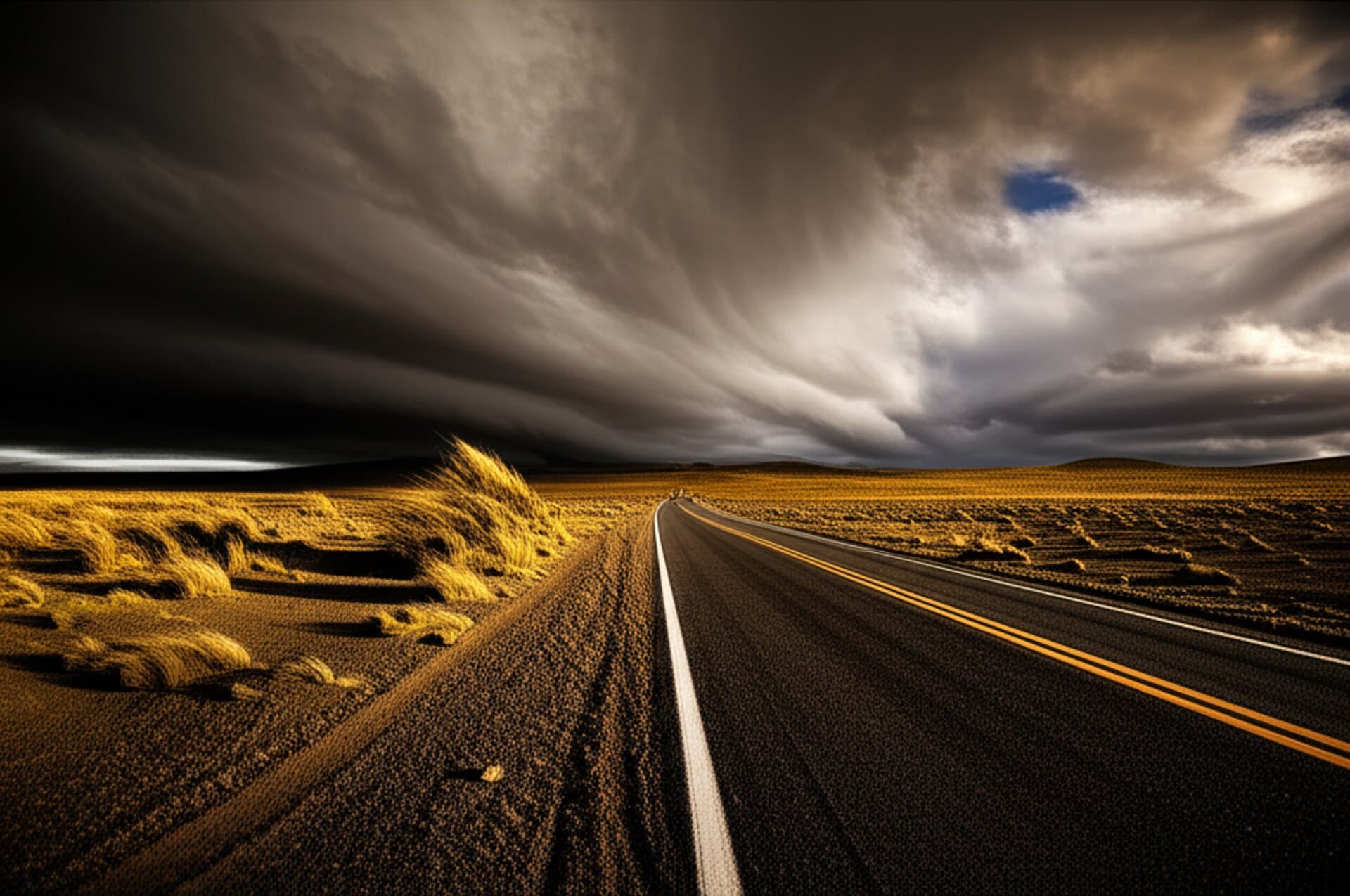
Image Generation Prompt
Dramatic landscape of a powerful wind storm sweeping across Patagonian steppe with dark dramatic clouds, empty winding road stretching into distance, windswept vegetation bending violently, cinematic composition capturing the raw power and danger of Patagonian winds, golden hour lighting, wide-angle perspective

Related Guides
Did you find this guide helpful?

Share:

|

|