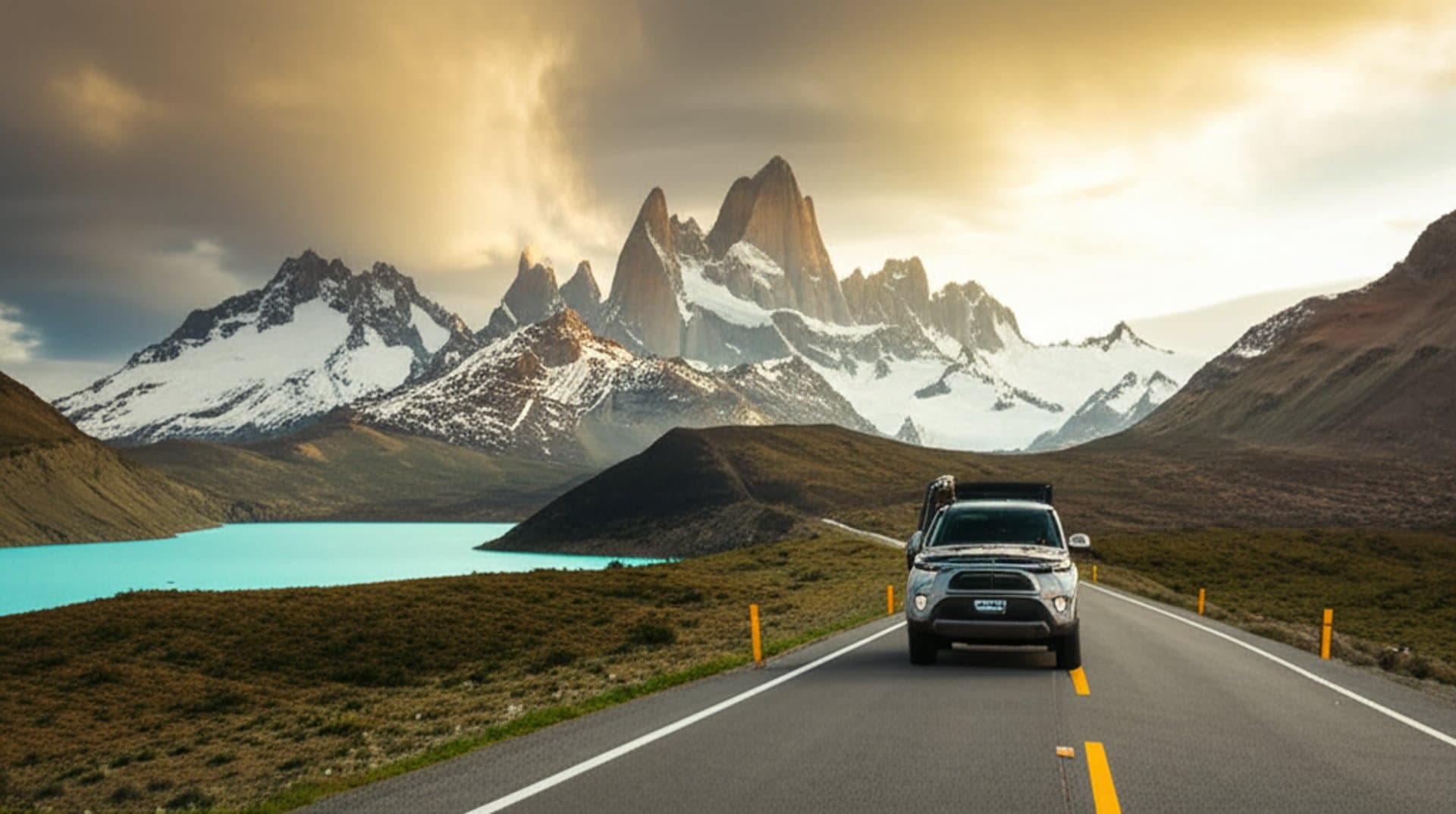
14-Day Ultimate Patagonia Self-Drive Loop: Complete Two-Week Itinerary
Master the ultimate 14-day Patagonia road trip loop covering Torres del Paine, El Calafate, El Chaltén, and Perito Moreno Glacier. Complete day-by-day itinerary with distances, border crossings, fuel planning, and accommodation tips.

14-Day Ultimate Patagonia Self-Drive Loop: Complete Two-Week Itinerary
Two weeks. One epic loop. Unforgettable landscapes that will redefine your understanding of natural beauty.
The 14-Day Ultimate Patagonia Self-Drive Loop is the gold standard for experiencing the best of both Chilean and Argentine Patagonia in a single trip. This carefully designed itinerary balances driving time with exploration, combining iconic highlights like Torres del Paine and Perito Moreno Glacier with hidden gems only accessible by car.
Unlike rushed tours that glimpse Patagonia's surface, this self-drive loop gives you the freedom to stop at remote viewpoints, adjust for weather, and truly absorb landscapes that have taken millions of years to form. You'll cross international borders multiple times, drive alongside turquoise glacial lakes, and camp beneath the sharpest peaks on Earth.
This guide provides everything you need to execute this journey successfully: detailed day-by-day itinerary, exact distances and driving times, border crossing logistics, fuel planning, accommodation strategies, budget breakdowns, and contingency options.
The Route at a Glance
Total Distance: Approximately 1,950 km (1,210 miles) Driving Days: 8 days Exploration Days: 6 days Border Crossings: 2-3 (depending on route variations) Countries: Chile and Argentina Starting/Ending Point: Punta Arenas or Puerto Natales (Chile)
Route Highlights
Chilean Side:
- Torres del Paine National Park (2-3 days)
- Puerto Natales base town
- Patagonian steppe landscapes
- Potential Marble Caves extension
Argentine Side:
- El Calafate and Perito Moreno Glacier
- El Chaltén hiking paradise (Fitz Roy, Cerro Torre)
- Ruta 40 epic drives
- Lago Argentino panoramas
Why This Itinerary Works
Perfect Balance: This 14-day route provides adequate time to:
- Experience Torres del Paine without rushing the W Trek or day hikes
- Explore El Chaltén's world-class trails properly (2-3 full days)
- Add Perito Moreno Glacier without it feeling like a checkbox
- Allow buffer days for weather or spontaneous discoveries
Logical Flow: The circular route minimizes backtracking while hitting all major highlights in a natural progression.
Flexibility Built-In: Rest days and buffer time accommodate weather delays, vehicle issues, or simply falling in love with a place and wanting to stay longer.
Seasonal Optimization: Works best November-March, with slight variations for shoulder vs peak season.
Day 1: Arrival in Punta Arenas / Transfer to Puerto Natales
Route: Punta Arenas Airport → Puerto Natales Distance: 247 km (153 miles) Driving Time: 3 hours Overnight: Puerto Natales
Today's Focus: Arrive, collect rental car, acclimate, and prepare for the journey ahead.
Morning/Afternoon:
- Land at Punta Arenas Airport (most international connections)
- Collect rental vehicle (ensure cross-border authorization, spare tire, full tank)
- Document vehicle condition thoroughly (photos/video)
- Purchase initial supplies at Punta Arenas supermarkets (better selection than Puerto Natales)
Drive to Puerto Natales:
- Straightforward paved drive through Patagonian steppe
- First exposure to infamous Patagonian wind
- Wildlife spotting opportunities (guanacos, rheas, foxes)
- Fuel available midway at Morro Chico if needed
Evening in Puerto Natales:
- Check into accommodation
- Explore town center and waterfront
- Dinner at local restaurant (try Patagonian lamb)
- Purchase final supplies for Torres del Paine (groceries, camping fuel if needed)
- Confirm Torres del Paine park entrance reservation
Pro Tips:
- Exchange some Argentine pesos in Punta Arenas (better rates than border)
- Fill rental car with fuel before leaving Punta Arenas
- Book Puerto Natales accommodation near town center for walkability
Budget (Per Person):
- Hostel: $20-35 / Mid-range hotel: $50-75
- Meals: $25-40
- Groceries: $15-25
Day 2: Puerto Natales → Torres del Paine National Park
Route: Puerto Natales → Torres del Paine (Laguna Amarga entrance) Distance: 112 km (70 miles) Driving Time: 2 hours Overnight: Inside Torres del Paine (campground or refugio)
Today's Focus: Enter Torres del Paine, settle at base, explore initial viewpoints.
Morning:
- Early departure from Puerto Natales (8:00 AM recommended)
- Stop at park entrance Laguna Amarga
- Pay entrance fee (approximately $30 USD high season)
- Receive park map and ranger briefing
Drive into Park:
- Road becomes gravel (well-maintained)
- First spectacular viewpoints appear
- Stop at Mirador Laguna Amarga (Paine Massif views)
- Wildlife abundant (guanacos, condors, foxes)
Afternoon:
- Check into accommodation (campground or refugio)
- Set up camp or settle into refugio
- Short exploration: Salto Grande waterfall (15-minute walk)
- Sunset at Mirador Cuernos (dramatic horns of Paine)
Evening:
- Prepare camp meals or eat at refugio restaurant
- Plan next day's hiking based on weather forecast
- Stargazing (incredibly dark skies if clear)
Important Notes:
- Book accommodation months in advance for peak season
- Camping requires reserving specific campgrounds
- Park is EXTREMELY windy - secure all gear
- Vehicle doors can be ripped off by wind - always brace when opening
Budget (Per Person):
- Park entrance: $30
- Camping: $10-20 / Refugio: $80-150
- Food: $15-30 (self-catering) or $40-60 (refugio meals)
Day 3: Full Day in Torres del Paine - Base Torres Hike
Route: Hiking day (no driving) Distance: 0 km driving / 19 km hiking (round trip) Hiking Time: 8-10 hours Overnight: Same accommodation in Torres del Paine
Today's Focus: Summit the iconic Base Torres trail for sunrise views.
Pre-Dawn Start (3:30-4:30 AM):
- Alpine start for sunrise at Base Torres
- Headlamps essential for first hour
- Trail begins at Las Torres sector
- Gradual ascent through lenga forest
Morning Ascent:
- Challenging final boulder scramble (45 minutes)
- Arrive at Base Torres lagoon for sunrise (weather permitting)
- Witness towers illuminate in golden light
- Time at viewpoint: 30-60 minutes
Return:
- Descend same route (easier but still demanding)
- Return to trailhead by early afternoon
- Total elevation gain: 800m (2,625 ft)
Afternoon:
- Rest and recover at accommodation
- Light exploration: drive to Lago Pehoé viewpoint
- Visit Salto Grande if missed yesterday
- Photograph Cuernos del Paine from various angles
Evening:
- Early dinner and rest (exhausted from hiking)
- Plan tomorrow based on weather and energy levels
Alternative if Weather is Poor:
- Postpone Base Torres hike
- Drive park circuit: Lago Grey, Pudeto sector
- Multiple shorter trails and viewpoints
- Flexibility is key in Patagonia
Pro Tips:
- Start early even if not aiming for sunrise (avoid crowds, better weather)
- Bring multiple layers (temperature swings dramatically)
- Poles highly recommended for descent
- Pack lunch and plenty of water (no services on trail)
Budget (Per Person):
- Same accommodation: $10-20 camping / $80-150 refugio
- Food: $20-40
Day 4: Torres del Paine Exploration & Drive to El Calafate
Route: Torres del Paine → Cerro Castillo Border → El Calafate (Argentina) Distance: 305 km (190 miles) Driving Time: 5-6 hours (including border crossing) Overnight: El Calafate
Today's Focus: Final Torres del Paine highlights, cross to Argentina, reach El Calafate.
Morning in Park:
- Early drive to Lago Grey sector (1 hour from most accommodations)
- Viewpoints of Grey Glacier
- Optional: Short hike to Grey Glacier viewpoint (1-2 hours)
- Depart park by noon
Border Crossing (Cerro Castillo / Cancha Carrera):
- Exit Torres del Paine via Laguna Amarga
- Chilean border post: 20-30 minutes
- Exit stamp in passport
- Vehicle export documentation
- Declare no food/produce
- 20 km to Argentine border post
- Argentine border: 20-30 minutes
- Entry stamp
- Vehicle import documentation
- Possible vehicle inspection
- Total crossing time: 1-2 hours (longer in peak season)
Drive to El Calafate:
- Paved road (RN 40 and RP 11)
- Dramatic landscape shift: greener to drier steppe
- Fuel available in El Calafate
- Arrive late afternoon/early evening
Evening in El Calafate:
- Check into accommodation
- Explore town center (Avenida Libertador)
- Dinner (Argentine beef and Malbec)
- Book Perito Moreno Glacier tour for tomorrow if desired
Border Crossing Tips:
- Have rental car paperwork ready (cross-border authorization essential)
- Empty refrigerator/cooler of prohibited items before border
- Carry both passports and driver's licenses
- Be patient - delays happen
- See our complete Border Crossing Guide for details
Budget (Per Person):
- Accommodation El Calafate: $30-50 hostel / $60-100 hotel
- Meals: $30-45
- Fuel: $40-60 (shared)
Day 5: Perito Moreno Glacier Full Day
Route: El Calafate → Perito Moreno Glacier → El Calafate Distance: 160 km (100 miles) round trip Driving Time: 2 hours each way Overnight: El Calafate
Today's Focus: Experience the world-famous Perito Moreno Glacier.
Morning:
- Early departure (8:00 AM) to beat tour buses
- Drive RP 11 west from El Calafate (paved, excellent condition)
- Enter Los Glaciares National Park (entrance fee ~$30 USD)
- First glacier viewpoint: Mirador Perito Moreno
Mid-Morning/Afternoon:
- Explore extensive boardwalk system (multiple viewpoints)
- Witness glacier calving (ice chunks falling into lake - thunderous)
- Multiple viewing platforms at different elevations
- Time at glacier: 3-4 hours minimum
Optional Activities (additional cost):
- Boat tour to glacier face: Fantastic perspective ($60-80 USD)
- Ice trekking on glacier: Half-day or full-day ($80-150 USD)
- Kayaking near glacier: For adventurous ($100+ USD)
Return to El Calafate:
- Drive back late afternoon
- Wildlife spotting along route
- Sunset over Lago Argentino
Evening:
- Relax in town
- Stock up on groceries for upcoming days
- Prepare for tomorrow's drive to El Chaltén
Perito Moreno Glacier - What Makes It Special:
- One of few advancing glaciers worldwide
- Actively calving (chunks fall frequently)
- Accessible without technical climbing
- 60m (200 ft) high ice wall
- Vivid blue ice
Pro Tips:
- Arrive early (tour buses arrive 10-11 AM)
- Bring lunch and snacks (expensive at glacier)
- Dress in layers (glacier creates microclimates)
- Waterproof jacket essential (spray from calving)
- Spend minimum 3 hours to increase calving odds
Budget (Per Person):
- Park entrance: $30
- Boat tour (optional): $60-80
- Accommodation: $30-50 hostel / $60-100 hotel
- Meals: $30-45
Day 6: El Calafate → El Chaltén
Route: El Calafate → El Chaltén Distance: 213 km (132 miles) Driving Time: 3 hours Overnight: El Chaltén
Today's Focus: Scenic drive to Argentina's trekking capital, settle in, acclimatize.
Morning:
- Leisurely departure (no rush)
- Fuel up in El Calafate (last reliable fuel before El Chaltén)
- Drive north on RN 40 and RP 23
Scenic Drive:
- Lago Viedma views (turquoise glacial lake)
- Fitz Roy massif appears in distance
- Mirador del Fitz Roy viewpoint (mandatory stop)
- Photo opportunities every few kilometers
- Wildlife: guanacos, condors, eagles
Arrival in El Chaltén:
- Check into accommodation
- Visit ranger station (mandatory briefing for trails)
- Obtain trail maps and weather forecast
- Explore tiny town (San Martín main street)
Afternoon:
- Short acclimatization hike: Mirador de los Cóndores (1 hour, great town views)
- Or rest and prepare for upcoming full hiking days
- Grocery shopping (limited selection, stock up)
Evening:
- Dinner at local restaurant or hostel kitchen
- Plan hiking itinerary based on weather forecast
- Early to bed (big hiking days ahead)
El Chaltén Overview:
- Population: ~2,000 (triples in summer)
- All trails free (no park entrance fee)
- World-class hiking accessible from town
- Very small town - limited services
- Hiking capital of Argentina
Pro Tips:
- Book accommodation months ahead for summer
- Ranger station briefing is informative - don't skip
- Withdraw cash in El Calafate (ATM in El Chaltén often empty)
- Rent hiking poles if needed (available in town)
Budget (Per Person):
- Accommodation: $25-40 hostel / $60-90 hotel
- Meals: $25-40
- Groceries for trails: $15-25
Day 7: Full Day Hike - Laguna de los Tres (Fitz Roy Base)
Route: Hiking day (no driving) Distance: 0 km driving / 20 km hiking (round trip) Hiking Time: 8-10 hours Overnight: El Chaltén
Today's Focus: Summit the legendary Laguna de los Tres trail for Fitz Roy views.
Pre-Dawn Start (3:30-4:30 AM for sunrise):
- Alpine start for sunrise at Laguna de los Tres
- Headlamps essential for first 90 minutes
- Trailhead at north end of town (walk from accommodation)
Hike Details:
- Distance: 20 km (12.4 miles) round trip
- Elevation gain: 760m (2,500 ft)
- Time: 8-10 hours total
- Difficulty: Moderate to Challenging
Route Breakdown:
- First section (2 hours): Gradual through lenga forest to Río Blanco camp
- Mid section (1 hour): Steeper to Poincenot camp
- Final ascent (45 minutes): Brutal steep climb to Laguna de los Tres
- At viewpoint: Fitz Roy reflection in lagoon (weather permitting), 30-60 minutes
- Return: Same route (easier but long)
Weather Considerations:
- Fitz Roy visible only ~30% of days
- Check forecast and flexibility is key
- Clouds often clear mid-morning
- Have backup plan if Fitz Roy obscured
Alternative if Weather Poor:
- Postpone Fitz Roy hike
- Do Laguna Torre hike instead (different trailhead)
- Or rest day for upcoming hikes
Pro Tips:
- Pack layers (temperature swings 40°F/20°C possible)
- Bring plenty of food and water
- Trekking poles reduce knee strain on descent
- Start early even if not chasing sunrise (fewer people, better conditions)
- Weather changes rapidly - always carry rain gear
Budget (Per Person):
- Same accommodation: $25-40 hostel / $60-90 hotel
- Trail food/snacks: $10-15
Day 8: Full Day Hike - Laguna Torre (Cerro Torre Base)
Route: Hiking day (no driving) Distance: 0 km driving / 18 km hiking (round trip) Hiking Time: 6-8 hours Overnight: El Chaltén
Today's Focus: Hike to Laguna Torre for Cerro Torre views.
Morning Start (7:00-8:00 AM):
- Trailhead west of town (15-minute walk from center)
- Gentler ascent than Fitz Roy trail
- Better suited for second consecutive hiking day
Hike Details:
- Distance: 18 km (11 miles) round trip
- Elevation gain: 400m (1,300 ft)
- Time: 6-8 hours total
- Difficulty: Moderate
Route Breakdown:
- First section (1.5 hours): Flat through forest and meadows
- Mid section (30 minutes): Cross Río Fitz Roy bridge
- Final section (1 hour): Gradual ascent to Laguna Torre
- At viewpoint: Cerro Torre spire with glacier, icebergs in lagoon
- Return: Same route
Cerro Torre Highlights:
- Often considered world's most difficult climb
- Knife-edge granite spire
- Massive ice mushroom on summit
- Icebergs float in Laguna Torre
- Less crowded than Fitz Roy trail
Afternoon:
- Return to town by mid-afternoon
- Rest and recover
- Resupply groceries for upcoming drive
- Celebrate two epic hikes completed
Evening:
- Final dinner in El Chaltén
- Early to bed (tomorrow is long driving day)
Alternative Option:
- If exhausted from previous days, make this a rest day
- Short walks around town
- Prepare vehicle for upcoming border crossing
Pro Tips:
- This trail is less strenuous than Fitz Roy - good second day
- Bring swimsuit if adventurous (glacial water swimming!)
- Wind can be extreme at lagoon - secure gear
- Combined with Fitz Roy, you've done El Chaltén's two best hikes
Budget (Per Person):
- Same accommodation: $25-40 hostel / $60-90 hotel
- Trail food/snacks: $10-15
- Celebratory dinner: $30-50
Day 9: El Chaltén → Ruta 40 → Puerto Natales (Chile)
Route: El Chaltén → Río Turbio Border → Puerto Natales Distance: 445 km (276 miles) Driving Time: 7-8 hours (including border crossing) Overnight: Puerto Natales
Today's Focus: Long drive back to Chile, cross border, return to Puerto Natales base.
Morning:
- Early departure (7:00 AM recommended)
- Fuel up in El Chaltén if possible (small station, limited hours)
- Otherwise, fuel available in Río Turbio near border
Drive to Border:
- El Chaltén → Río Gallegos intersection (RN 40): 3 hours
- Turn west toward Río Turbio: 1 hour
- Dramatic steppe landscapes
- Wildlife common (guanacos, rheas)
Border Crossing (Dorotea / Río Turbio):
- Argentine exit: 20-30 minutes
- Exit stamp
- Vehicle export documentation
- Chilean entry: 20-30 minutes
- Entry stamp
- Vehicle import documentation
- Declare no food/produce (discard before border)
- Total crossing: 1-2 hours
Drive to Puerto Natales:
- Río Turbio → Puerto Natales: 2-3 hours
- Road conditions vary (mix of paved and gravel)
- Arrive late afternoon/early evening
Evening in Puerto Natales:
- Check into accommodation
- Familiar town after starting here
- Resupply groceries if needed
- Plan remaining days
Long Driving Day Tips:
- Bring snacks and drinks (limited services)
- Take breaks every 90-120 minutes
- Fuel strategy: Top off in Río Turbio before border
- Driver fatigue is real - share driving if possible
- Border can have delays - patience required
Budget (Per Person):
- Accommodation Puerto Natales: $25-40 hostel / $50-75 hotel
- Meals: $25-40
- Fuel: $60-80 (shared)
Day 10: Rest Day in Puerto Natales / Optional Cueva del Milodón
Route: Optional: Puerto Natales → Cueva del Milodón → Puerto Natales Distance: 50 km (31 miles) round trip Driving Time: 1 hour total Overnight: Puerto Natales
Today's Focus: Rest and recover from hiking/driving, optional light exploration.
Morning:
- Sleep in (well-deserved after multiple 4 AM starts)
- Leisurely breakfast
- Laundry if needed
- Vehicle maintenance check (tire pressure, fluids, clean windshield)
Optional Activity: Cueva del Milodón:
- Drive 25 km north of Puerto Natales (paved)
- Visit massive cave where prehistoric sloth remains discovered
- Entrance fee: ~$8 USD
- Short easy walks (~1 hour total)
- Good for families or non-hikers
Afternoon:
- Explore Puerto Natales waterfront
- Visit local craft market
- Relax at café with Lago views
- Plan remaining route options
Evening:
- Excellent restaurant options in Puerto Natales
- Replenish supplies for final days
- Decision point: extend route or start return?
Alternative Rest Day Activities:
- Kayaking in Last Hope Sound (half-day tour)
- Visit local museum (history of region)
- Simply rest and read/journal
- Vehicle cleaning and reorganization
Route Decision Point:
- Standard 14-day loop: Begin return to Punta Arenas tomorrow
- Extended loop (16-18 days): Add Carretera Austral extension north
- See Alternative Routes section below
Budget (Per Person):
- Accommodation: $25-40 hostel / $50-75 hotel
- Cueva del Milodón entrance: $8
- Meals: $30-45
Day 11: Puerto Natales → Punta Arenas (or Begin Carretera Austral Extension)
Route (Standard Loop): Puerto Natales → Punta Arenas Distance: 247 km (153 miles) Driving Time: 3 hours Overnight: Punta Arenas
Today's Focus: Return to Punta Arenas, explore Strait of Magellan region.
Morning:
- Depart Puerto Natales mid-morning
- Retrace arrival route (familiar now)
- Stop at viewpoints missed on Day 1
Afternoon in Punta Arenas:
- Check into accommodation
- Explore Plaza de Armas and historic center
- Visit Museo Nao Victoria (ship replicas)
- Walk along Strait of Magellan waterfront
Optional Activities:
- Penguin colony visit: Isla Magdalena or Seno Otway (seasonal, Sep-March)
- Cemetery tour: Historic 1900s cemetery (fascinating)
- Mirador Cerro La Cruz: Panoramic city views
Evening:
- Final Chilean dinner (king crab specialty in Punta Arenas)
- Organize luggage for departure
- Reflect on incredible journey
Alternative: Carretera Austral Extension (Days 11-14+): If extending trip, instead drive north from Puerto Natales toward:
- Villa Cerro Castillo: Turquoise lake hikes (add 2 days)
- Marble Caves (Capillas de Mármol): Stunning boat tour (add 2 days)
- Queulat Hanging Glacier: Dramatic glacier (add 2 days)
See Alternative Routes for detailed extension options.
Budget (Per Person):
- Accommodation Punta Arenas: $30-50 hostel / $60-90 hotel
- Penguin tour (optional): $50-80
- Meals: $30-45
Day 12: Explore Punta Arenas / Begin Return North
Route: Punta Arenas exploration (no long drive) Distance: Minimal (city exploration) Overnight: Punta Arenas
Today's Focus: Deep dive into Magellan Strait region, cultural exploration.
Morning Options:
- Penguin Colony Trip: Half-day tour to Magdalena Island (boat) or Otway Sound (drive)
- Best season: October-March
- See thousands of Magellanic penguins
- Book tour in advance
- Fort Bulnes: Historic 1843 fort replica, 60 km south
- First Chilean settlement in region
- Strait of Magellan views
Afternoon:
- Palacio Sara Braun (opulent 1890s mansion)
- Regional Museum (indigenous history, exploration era)
- Shopping for last-minute souvenirs
- Prepare for vehicle return tomorrow
Evening:
- Final farewell dinner
- Early to bed for departure day
Alternative for Extended Trips: If doing Carretera Austral extension, today would be driving day toward Cerro Castillo or Marble Caves region.
Budget (Per Person):
- Penguin tour: $50-80
- Fort Bulnes entrance: $5
- Accommodation: $30-50 hostel / $60-90 hotel
- Meals: $30-45
Day 13: Punta Arenas → Fly Home / Continue Extension
Route: Return rental car, fly home Today's Focus: Journey ends (or continues if extended).
Morning:
- Final breakfast
- Check vehicle condition
- Return rental car at airport
- Ensure full fuel tank (per rental agreement)
Vehicle Return Checklist:
- Compare condition to pickup photos
- Return with full fuel (or pay premium)
- Remove all personal belongings
- Get final receipt and confirmation
Flight Departure:
- Most international flights depart afternoon/evening
- Allow 3 hours for domestic connections
- Santiago connection common
Alternative - Extended Trip Continues: If doing Carretera Austral extension:
- Days 13-16+: Drive north through Chilean Patagonia
- Villa Cerro Castillo, Marble Caves, Queulat Glacier
- Return to Punta Arenas for flight or one-way rental to Puerto Montt
- Adds 3-5 days minimum
Journey Reflection:
- You've completed one of world's great road trips
- ~2,000 km driven through two countries
- Multiple border crossings
- Iconic hikes completed
- Glaciers, peaks, wildlife experienced
- Memories for lifetime
Day 14: Buffer Day / International Flight Home
Today's Focus: Final buffer day for delays, travel home.
Why Buffer Day is Smart:
- Weather delays (common in Patagonia)
- Vehicle issues may have added days
- You may have fallen in love with a place and extended
- Border crossing delays
- Flexibility reduces stress
If All Went Smoothly:
- You departed Day 13
- This day is backup insurance
If Used All 14 Days:
- International flight home today
- Exhausted but transformed
This 14-day loop involves 2-3 border crossings between Chile and Argentina.
Border Crossing #1: Cerro Castillo (Chile) / Cancha Carrera (Argentina)
When: Day 4 (Torres del Paine → El Calafate) Location: West of El Calafate Direction: Chile → Argentina
Operating Hours: Typically 8 AM - 8 PM (verify seasonally)
Chilean Exit Process:
- Stop at Chilean border post (Cerro Castillo)
- Present passports and driver's license
- Receive exit stamp
- Complete vehicle export form (keep copy)
- Declare no prohibited items (fruit, vegetables, dairy, meat)
- Possible luggage inspection (brief)
Drive Between Posts: ~20 km (15 minutes)
Argentine Entry Process:
- Stop at Argentine border post (Cancha Carrera)
- Present passports and driver's license
- Receive entry stamp
- Complete vehicle import form (temporary import)
- Possible vehicle inspection
- Proceed to El Calafate
Total Time: 1-2 hours (longer during peak season December-February)
Border Crossing #2: Río Turbio (Argentina) / Dorotea (Chile)
When: Day 9 (El Chaltén → Puerto Natales) Location: Northwest of Río Turbio Direction: Argentina → Chile
Operating Hours: Typically 8 AM - 8 PM (verify seasonally)
Process: Similar to above but reverse
- Argentine exit stamp and vehicle export
- Chilean entry stamp and vehicle import
- Discard all prohibited food items before Chilean entry
- Total time: 1-2 hours
Essential Border Crossing Tips
Before Crossing:
- Have rental car cross-border authorization (in writing)
- Carry both driver's license and International Driving Permit
- Have passports easily accessible
- Empty cooler/refrigerator of prohibited items
- Have patience - delays normal
Prohibited Items (Chile Entry):
- Fresh fruits and vegetables
- Dairy products
- Meat products
- Plants and seeds
- Honey
Money:
- No fees for most nationalities
- Have small bills for possible photocopies
- Exchange currency before borders (poor rates at border)
Vehicle Documentation:
- Rental agreement with cross-border authorization
- Insurance documents valid in both countries
- Driver's license and IDP
- Passport
For complete border crossing guide with photos and detailed procedures, see our Border Crossing Guide.
Fuel availability varies dramatically across Patagonia. Strategic planning prevents expensive mistakes.
Fuel Stations by Segment
Segment 1: Punta Arenas → Puerto Natales (Day 1)
- Fuel in Punta Arenas before departure (last major city)
- Morro Chico has small station (midway)
- Puerto Natales has multiple stations
- Strategy: Full tank in Punta Arenas
Segment 2: Puerto Natales → Torres del Paine (Day 2)
- Fuel in Puerto Natales
- NO fuel inside Torres del Paine park
- Strategy: Full tank before park entry
Segment 3: Torres del Paine → El Calafate (Day 4)
- NO fuel between park and border
- First reliable fuel in El Calafate
- Strategy: Full tank at Puerto Natales lasts until El Calafate (verify range)
Segment 4: El Calafate → Perito Moreno Glacier (Day 5)
- Fuel in El Calafate before glacier trip
- NO fuel at glacier
- Round trip ~160 km
- Strategy: Don't need full tank but ensure 1/2+ tank
Segment 5: El Calafate → El Chaltén (Day 6)
- Fuel in El Calafate
- NO reliable fuel until El Chaltén (small station, limited hours)
- 213 km distance
- Strategy: Full tank in El Calafate
Segment 6: El Chaltén → Border → Puerto Natales (Day 9)
- El Chaltén fuel limited (small station)
- Río Turbio has fuel near border
- Puerto Natales has multiple stations
- 445 km total - LONGEST segment
- Strategy: Absolutely fuel in Río Turbio before crossing
Segment 7: Puerto Natales → Punta Arenas (Day 11)
- Multiple stations in both cities
- Strategy: Straightforward, fuel anywhere
Fuel Costs
Chile (CLP - Chilean Pesos):
- Approximately $1.20-1.50 USD per liter
- Approximately $4.50-5.70 USD per gallon
- Higher in remote areas
Argentina (ARS - Argentine Pesos):
- Approximately $0.80-1.20 USD per liter (highly variable due to exchange rate)
- Approximately $3.00-4.50 USD per gallon
- Generally cheaper than Chile
Strategy: Fill up in Argentina when possible (El Calafate, Río Turbio)
Total Fuel Budget Estimate
Vehicle Type Assumptions:
- Compact SUV: 9-10 L/100km (26 mpg)
- Full-size SUV: 11-13 L/100km (20 mpg)
Total Distance: ~1,950 km
Fuel Consumption:
- Compact SUV: ~195 liters
- Full-size SUV: ~240 liters
Cost Range:
- Compact SUV: $235-293 USD
- Full-size SUV: $290-360 USD
Shared Among 2-4 People: $60-180 per person
Never Let Tank Below Half: Golden rule in Patagonia. Distances deceive, stations close, detours happen.
For comprehensive fuel station map with GPS coordinates and operating hours, see our Patagonia Fuel Stations Guide.
2WD vs 4WD for This Loop
This specific 14-day loop CAN be done in 2WD during summer (December-February) because:
- Torres del Paine main road is well-maintained gravel
- El Calafate → El Chaltén is fully paved
- Main border crossings are accessible
- No off-road exploration planned
HOWEVER, 4WD is STRONGLY RECOMMENDED for:
- Better handling on Torres del Paine gravel roads
- Peace of mind in variable weather
- Crossing potential mud/snow in shoulder season
- Flexibility to explore side roads
- Higher ground clearance for rough sections
4WD is REQUIRED if:
- Traveling shoulder season (October-November, March-April)
- Adding Carretera Austral extension
- Planning off-main-road detours
- Encountering unexpected weather
Recommended Vehicle Types
Best Choice: Mid-Size SUV (4WD):
- Toyota RAV4, Nissan X-Trail, similar
- Balance of capability, comfort, fuel economy
- Adequate storage for 2-4 people
- Ground clearance for gravel
Budget Option: Compact SUV (2WD):
- Acceptable for summer, main roads only
- Lower cost
- Smaller storage
Luxury Option: Full-Size SUV (4WD):
- Toyota Land Cruiser, similar
- Maximum comfort and capability
- Best for groups or Carretera Austral extension
- Higher fuel costs
Essential Vehicle Features
Must Have:
- Spare tire (full-size, good condition)
- Jack and tire tools
- Cross-border authorization (in writing)
- Insurance valid Chile AND Argentina
- Good tire tread (critical on gravel)
- Working heating system
- Adequate luggage capacity
Highly Recommended:
- GPS or smartphone mount
- USB charging ports
- Fog lights (dawn/dusk wildlife)
- Roadside assistance 24/7
- Recent service/maintenance
Nice to Have:
- Cruise control (long straight sections)
- Roof rack (extra storage)
- All-weather floor mats
Rental Company Selection
Recommended Companies:
- Hertz, Avis, Europcar (international chains with local presence)
- Reputable local companies: Andes Rent a Car, Patagonia Rent a Car
Critical Questions Before Booking:
- "Is cross-border to Argentina included?"
- "Is insurance valid in both countries?"
- "What's the roadside assistance number?"
- "Are there mileage limits?" (Unlimited recommended)
- "What's the fuel policy?" (Full-to-full standard)
Booking Tips:
- Book 3-6 months ahead for summer travel
- Pickup in Punta Arenas, return same location
- Thoroughly document condition at pickup (photos/video)
For complete rental guide including company comparisons and insurance details, see our Patagonia Car Rental Guide.
Peak Season: December - February (Summer)
Recommended For: First-time visitors, families, guaranteed access
Pros:
- Best weather (warmest, most stable)
- All services open and fully operational
- Longest daylight (18-20 hours in December)
- All roads accessible
- Wildflowers (January-February)
- Best wildlife viewing
Cons:
- Highest prices (50-100% premium)
- Crowded (Torres del Paine, Fitz Roy trails)
- Accommodation requires months-advance booking
- Stronger winds (especially January)
- Tour buses everywhere
Average Temperatures:
- Daytime: 15-20°C (59-68°F)
- Nighttime: 5-10°C (41-50°F)
- Can drop to freezing at night in mountains
Shoulder Season: November & March
Recommended For: Budget travelers, photographers, crowd-avoiders
Pros:
- 30-50% cheaper than peak season
- Far fewer tourists
- Still good weather (less predictable)
- Fall colors (March) spectacular
- Wildlife more active
- Easier accommodation availability
Cons:
- More variable weather
- Some services closed or reduced hours
- Cooler temperatures
- Shorter days (especially March)
- Occasional trail closures
November (Spring):
- Spring awakening, lambing season
- Wildflowers beginning to bloom
- Days warming up
- Unpredictable weather
March (Fall):
- Beautiful autumn colors (lenga forests turn gold)
- Harvest season (wine regions)
- Less wind than summer
- Cooling temperatures
Not Recommended: April - October (Fall/Winter)
Why Not:
- Many accommodations/restaurants closed
- Severe weather (snow, ice, extreme cold)
- Very short days (8-10 hours daylight)
- Torres del Paine partially closed
- Roads potentially impassable
- Extremely challenging driving
Exception: Experienced winter adventurers, ski enthusiasts, extreme budget travelers with winter driving experience.
Best Months Ranked
- January: Best weather, fully operational, most crowded, most expensive
- February: Excellent weather, slightly less crowded, very expensive
- December: Great weather, building crowds, high prices
- March: Good weather, fewer crowds, moderate prices, fall colors
- November: Variable weather, low crowds, good prices, spring awakening
- October: Hit or miss weather, very quiet, cheaper, limited services
Our Recommendation: February or March offer best balance of weather, crowds, and prices.
Complete cost analysis for 14-day loop (per person, shared rental among 2-4 people).
Major Cost Categories
1. Car Rental (14 days):
- Compact 2WD: $420-700 / person (if split between 2-3)
- Mid-size SUV 4WD: $490-840 / person (if split between 2-3)
- Insurance: $15-35/day (Collision Damage Waiver recommended)
- Cross-border fee: $50-100 (one-time)
2. Fuel:
- Compact SUV: $235-293 total / $80-145 per person (2 people) / $60-75 per person (4 people)
- Full-size SUV: $290-360 total / $95-180 per person (2 people) / $73-90 per person (4 people)
3. Accommodation (13 nights):
Budget (camping + hostels):
- Torres del Paine camping (2 nights): $20-40
- Hostels elsewhere (11 nights): $275-440
- Total: $295-480
Mid-Range (mix hostels and hotels):
- Torres del Paine refugio/camping (2 nights): $80-200
- Mix budget hotels and hostels (11 nights): $550-825
- Total: $630-1,025
Comfort (hotels and lodges):
- Torres del Paine refugio/lodge (2 nights): $160-300
- Hotels elsewhere (11 nights): $660-990
- Total: $820-1,290
4. Food (14 days):
Budget (self-catering + occasional restaurant):
- Self-catering: $15-25/day × 14 days = $210-350
- Occasional restaurant meals: $100-150
- Total: $310-500
Mid-Range (mix self-catering and restaurants):
- Breakfast/lunch self-catering: $15/day × 14 = $210
- Dinners out: $30-40/day × 10 days = $300-400
- Total: $510-610
Comfort (mostly restaurants):
- $50-70/day × 14 days = $700-980
5. Activities and Park Entrances:
- Torres del Paine entrance: $30
- Los Glaciares entrance: $30
- Perito Moreno boat tour (optional): $60-80
- Cueva del Milodón (optional): $8
- Penguin colony tour (optional): $50-80
- Essential Total: $60
- With Optional Activities: $178-278
6. International Flights (not included in daily budget):
- Varies widely by origin
- Santiago → Punta Arenas round trip: $150-400
- International flights to Santiago: highly variable
Total Budget by Traveler Type (Per Person)
Budget Traveler:
- Car rental (shared among 3): $235-280
- Fuel (shared among 3): $78-98
- Accommodation (camping/hostels): $295-480
- Food (self-catering): $310-500
- Activities (essentials only): $60
- TOTAL: $978-1,418 ($70-101 per day)
Mid-Range Traveler:
- Car rental (shared among 2-3): $400-560
- Fuel (shared among 2-3): $95-145
- Accommodation (mix): $630-1,025
- Food (mix): $510-610
- Activities (some optional): $118-178
- TOTAL: $1,753-2,518 ($125-180 per day)
Comfort Traveler:
- Car rental (shared among 2): $560-700
- Fuel (shared among 2): $145-180
- Accommodation (hotels): $820-1,290
- Food (restaurants): $700-980
- Activities (all included): $178-278
- TOTAL: $2,403-3,428 ($172-245 per day)
Note: International flights not included (add $500-2,000+ depending on origin).
Money-Saving Tips
- Travel shoulder season: Save 30-50% on accommodation and rentals
- Share rental car among 3-4 people: Dramatically reduces per-person cost
- Camp in Torres del Paine: Save $60-130 vs refugio
- Self-cater most meals: Supermarkets reasonable, restaurants expensive
- Free hiking: Fitz Roy and Cerro Torre trails are FREE (best experiences)
- Fill up in Argentina: Fuel significantly cheaper than Chile
- Book in advance: Better rates than walk-ins
- Skip optional tours: Perito Moreno walkways are incredible without boat tour
What's NOT Included
- International flights
- Travel insurance
- Souvenirs and shopping
- Alcoholic beverages (can add $10-30/day)
- Tips and gratuities
- Equipment rental (hiking poles, sleeping bags, etc.)
- Extra activities beyond listed
Booking accommodation requires different strategies for different locations.
Book Months in Advance (3-6 months for summer)
Torres del Paine:
- Highest demand in entire Patagonia
- Refugios and campgrounds book out 4-6 months ahead (December-February)
- Options: Campgrounds, refugios (basic), ecolodges (luxury)
- Strategy: Book immediately after confirming travel dates
El Chaltén:
- Small town with limited beds
- Books up 2-4 months ahead for peak season
- Options: Hostels, small hotels, campgrounds
- Strategy: Book 2-3 months ahead minimum
Book 1-2 Months Ahead
El Calafate:
- Larger town with more options
- Still wise to book ahead
- Options: Wide range from hostels to luxury hotels
- Strategy: Book 1-2 months ahead for summer
Flexible (Can Book Last Minute)
Puerto Natales:
- Many accommodation options
- Tourist infrastructure well-developed
- Can often book week before or even day-of (shoulder season)
- Strategy: Book 2-4 weeks ahead for peace of mind
Punta Arenas:
- Major city with ample accommodation
- Rarely fully booked
- Strategy: Book 1-2 weeks ahead
Accommodation Types Explained
Camping:
- Pros: Cheapest ($5-20/night), immersive experience, flexible
- Cons: Requires gear, weather-dependent, can be cold/windy
- Best For: Budget travelers, experienced campers
- Where: Torres del Paine, El Chaltén, some campgrounds along route
Hostels:
- Pros: Affordable ($15-35/night dorm, $40-70 private), social, traveler info
- Cons: Shared facilities, variable quality, can be noisy
- Best For: Solo travelers, couples on budget, social atmosphere
- Where: All towns (El Calafate, El Chaltén, Puerto Natales, Punta Arenas)
Refugios (Mountain Huts):
- Pros: Unique experience, convenient location in parks
- Cons: Expensive ($80-150/night), basic, book far ahead
- Best For: Those wanting park immersion without camping
- Where: Torres del Paine, some near El Chaltén trails
Budget Hotels:
- Pros: Private room, reasonable price ($50-90/night)
- Cons: Limited amenities, variable quality
- Best For: Couples or small groups wanting privacy
- Where: All major towns
Mid-Range Hotels:
- Pros: Comfort, amenities (WiFi, breakfast), good service ($90-150/night)
- Cons: Moderate expense
- Best For: Most travelers seeking comfort/value balance
- Where: El Calafate, Puerto Natales, Punta Arenas
Luxury Lodges:
- Pros: Exceptional service, unique locations, all-inclusive options ($200-500+/night)
- Cons: Very expensive
- Best For: Special occasions, luxury travelers
- Where: Torres del Paine (ecolodges), near El Calafate
Recommended Nightly Breakdown
- Day 1: Puerto Natales (budget hotel or hostel)
- Days 2-3: Torres del Paine (camping or refugio) - BOOK EARLY
- Day 4: El Calafate (hostel or mid-range hotel)
- Day 5: El Calafate (same accommodation)
- Days 6-8: El Chaltén (hostel or small hotel) - BOOK EARLY
- Day 9: Puerto Natales (same as Day 1 if available)
- Day 10: Puerto Natales (same)
- Days 11-12: Punta Arenas (hostel or hotel)
- Day 13: Depart (or extend)
Booking Platforms
International Platforms:
- Booking.com (most comprehensive)
- Hostelworld (for hostels)
- Airbnb (some private rooms/apartments)
Regional Platforms:
- Torres del Paine specific: Book through park concessionaire websites
Direct Booking:
- Often best rates
- Email/WhatsApp common in Patagonia
- Flexibility in negotiations (shoulder season)
Carretera Austral Extension (Add 4-7 Days)
Route: Puerto Natales → Villa Cerro Castillo → Marble Caves → Queulat → Return
Why Extend:
- Access Chilean Patagonia's most pristine wilderness
- Marble Caves (Capillas de Mármol) are stunning
- Queulat Hanging Glacier
- Far fewer tourists than main loop
Requires:
- Additional 4-7 days minimum
- 4WD highly recommended (gravel roads)
- Ferry bookings (Carretera Austral has ferry crossings)
- Higher budget (remote = expensive)
Extended Itinerary Outline:
Day 11: Puerto Natales → Villa Cerro Castillo (Chile)
- Distance: 420 km
- Highlights: Cerro Castillo turquoise lakes
- Overnight: Villa Cerro Castillo camping/hostel
Day 12: Cerro Castillo hiking day
- Laguna Cerro Castillo day hike (stunning)
Day 13: Villa Cerro Castillo → Puerto Río Tranquilo (Marble Caves)
- Distance: 280 km
- Highlights: Marble Caves boat tour
- Overnight: Puerto Río Tranquilo
Day 14: Marble Caves exploration
- Boat tour through marble caverns
- Photography paradise
Day 15: Begin return south or continue north to Queulat
Total Addition: 4-7 days minimum
Bariloche Northern Loop (Add 5-7 Days)
Route: El Chaltén → Bariloche → Lakes District → Return
Why Extend:
- Add Argentina's Lake District
- Bariloche alpine town (Swiss-style architecture)
- Multiple beautiful lakes
- Different ecosystem (forests vs steppe)
Extended Itinerary Outline:
Day 10: El Chaltén → Bariloche
- Distance: 735 km (LONG day or split into 2 days)
- Overnight: Bariloche
Days 11-13: Explore Bariloche region
- Cerro Catedral skiing (winter) or hiking (summer)
- Circuito Chico drive
- Multiple lake viewpoints
Day 14: Bariloche → Return south via Ruta 40
Total Addition: 5-7 days
Ushuaia Extension (Add 3-4 Days)
Route: El Calafate → Ushuaia (Argentina) → Return
Why Extend:
- Reach "End of the World" (southernmost city)
- Tierra del Fuego National Park
- Beagle Channel boat tours
- Penguin colonies
Logistics:
- Requires border crossing to Chile (Tierra del Fuego island)
- Then back to Argentina (Ushuaia)
- Additional fuel and time
- Can fly one-way (Ushuaia → Punta Arenas) to save driving
Extended Itinerary Outline:
Day 10: El Calafate → Río Grande (Tierra del Fuego)
- Distance: 550 km
- Overnight: Río Grande
Day 11: Río Grande → Ushuaia
- Distance: 210 km
- Overnight: Ushuaia
Day 12: Explore Ushuaia
- Tierra del Fuego NP
- Beagle Channel boat tour
- Train to End of World
Day 13: Ushuaia → Fly to Punta Arenas (or drive back)
Total Addition: 3-4 days (with flight) or 6-7 days (driving round trip)
Shorter Variations (If Limited Time)
10-Day Abbreviated Loop:
- Skip El Chaltén (focus only El Calafate/Perito Moreno)
- OR skip Torres del Paine (focus only Argentine side)
- Reduces hiking days but hits main highlights
7-Day Express Loop:
- See our dedicated 7-Day Patagonia Road Trip Guide
- Very tight schedule, driving-focused
Clothing (Layering System Critical)
Base Layers:
- Merino wool or synthetic (avoid cotton)
- 2-3 sets for multi-day treks
Mid Layers:
- Fleece or down jacket
- Light synthetic insulated jacket
Outer Layers:
- Waterproof/windproof shell jacket (ESSENTIAL - wind is extreme)
- Waterproof pants (for hiking and rain)
Bottoms:
- Hiking pants (2 pairs)
- Shorts (optional, summer only)
- Thermal base layer pants
Accessories:
- Warm hat (wind and cold)
- Sun hat with brim
- Buff or neck gaiter (wind protection)
- Sunglasses (glacier glare)
- Gloves (even in summer for early mornings)
Footwear:
- Hiking boots (broken in, waterproof)
- Camp shoes or sandals (for hostels/driving)
Hiking Gear
Essential:
- Daypack (30-40L)
- Trekking poles (reduce knee strain significantly)
- Headlamp with extra batteries
- Water bottles or hydration system (3L capacity)
- Sunscreen SPF 50+ (high UV at altitude)
- Insect repellent (minimal but some areas)
Optional but Recommended:
- Gaiters (for mud and scree)
- Microspikes (shoulder season, icy trails)
Camping Gear (If Camping)
- 4-season tent (wind-rated)
- Sleeping bag rated to -10°C / 14°F minimum
- Sleeping pad (insulated)
- Camp stove and fuel (buy fuel locally, can't fly with it)
- Cooking gear and utensils
- Headlamp
Vehicle Supplies
Essential:
- Phone mount for navigation
- Car charger/USB cables
- Offline maps downloaded (Maps.me, Google Maps offline)
- Spare phone battery pack
- Physical map backup (cell service spotty)
Highly Recommended:
- Cooler (for groceries and drinks)
- Reusable shopping bags
- Snacks and emergency food
- Extra water (5-10L)
- Basic tools (rental should have tire tools)
- Duct tape (fixes everything temporarily)
Documents and Money
Essential Documents:
- Passport (valid 6+ months)
- Driver's license
- International Driving Permit (IDP)
- Rental car documents
- Insurance papers
- Accommodation confirmations (printed backup)
Money:
- Mix of USD cash and credit cards
- ATM withdrawals in major towns
- Small bills for tolls/tips
- Emergency cash reserve
Electronics
- Smartphone with offline maps
- Camera (landscapes are incredible)
- Extra memory cards and batteries
- Power bank
- Adapters (Chile/Argentina use Type C and Type L plugs, 220V)
- Headphones/earbuds for long drives
First Aid and Toiletries
First Aid Kit:
- Blister treatment (Compeed or moleskin)
- Pain relievers (ibuprofen)
- Anti-diarrheal
- Altitude sickness medication (if susceptible)
- Prescription medications (bring extra)
- Bandages and antiseptic
Toiletries:
- Biodegradable soap (camping)
- Toilet paper (trail emergencies)
- Hand sanitizer
- Lip balm with SPF
- Wet wipes
What NOT to Bring
- Excessive clothing changes (laundry available in towns)
- Heavy books (use e-reader)
- Expensive jewelry
- Hair dryer (most accommodations have them)
- Full-size toiletries (buy locally or travel-size)
Space-Saving Tips
- Roll clothing instead of folding
- Use packing cubes
- Wear bulkiest items on flight
- Compression bags for sleeping bags/jackets
- Share items with travel partners (first aid kit, maps, etc.)
The 14-Day Ultimate Patagonia Self-Drive Loop is more than a road trip—it's a pilgrimage to some of Earth's most spectacular landscapes. From the granite towers of Torres del Paine to the ice walls of Perito Moreno Glacier, from the jagged peaks of Fitz Roy to the endless steppes of Ruta 40, this journey compresses a lifetime of scenery into two transformative weeks.
This itinerary gives you:
- Freedom to explore at your own pace
- Access to hidden gems tour buses never reach
- Flexibility to adjust for weather and inspiration
- Experiences that will recalibrate your sense of scale and beauty
Keys to Success:
- Book early: Accommodation in Torres del Paine and El Chaltén requires months-advance planning
- Prepare for wind: It's extreme and constant - physically and mentally prepare
- Fuel strategically: Never let tank below half; use our fuel station guide
- Embrace flexibility: Weather changes plans - have backup options
- Drive safely: Gravel, wind, and wildlife require constant attention
- Respect the wilderness: Leave no trace, follow park rules, protect this pristine environment
The road calls. The peaks await. Your Patagonia adventure begins now.
For detailed planning of each aspect of this journey, explore our related guides:
- Complete Patagonia Road Trip Planning Hub
- Fuel Stations Guide
- Border Crossing Guide
- 7-Day Patagonia Road Trip (shorter alternative)
Start planning today. The adventure of a lifetime is waiting.
Prompt para Gerar Imagem
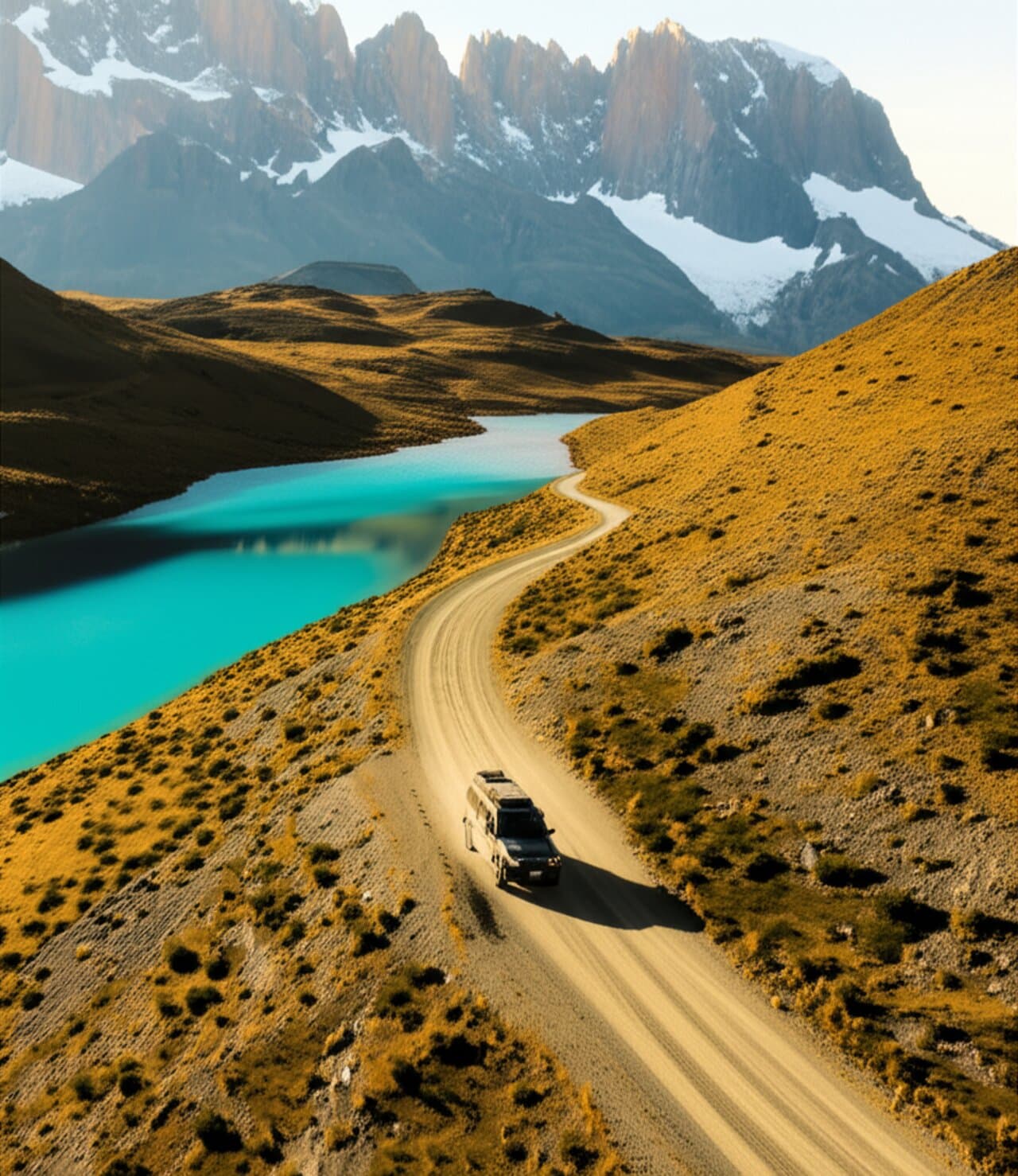
Aerial view of a 4x4 vehicle driving on a winding gravel road through dramatic Patagonian landscape, with Torres del Paine granite peaks in background, turquoise lake on one side, golden hour lighting, sense of adventure and epic road trip journey